Monday, June 30, 2025

Today in History (general history)/ On This Day in Confederate History/ Confederate General Birthday, June 30.

Click πŸ‘‰Today in History (general history) June 30. 

On This Day in Confederate History, June 30.

1862:  The Battle of Frayser's Farm (Glendale) was the sixth battle in the Seven Days Battles. It is considered Gen. Robert E. Lee's last real chance of destroying the Army of the Potomac in the campaign. The Federals had 40,000 men in the battle, and the Confederates 45,000. Confederates under Maj. Gen. Benjamin Huger and Maj. Gen. Stonewall Jackson was delayed at White Oak Swamp by Brig. Gen. William B. Franklin's Corps. But divisions under Major Generals James Longstreet and A.P. Hill succeeded in breaking through Federal lines near Glendale at Wills Church. However, a Federal counterattack sealed the breach. Also Maj. Gen. Theophilus H. Holmes made an attack on the blue coats at Turkey Creek, but it was also unsuccessful. The Northern army's retreat continued. The Confederates had 3,297 total casualties and the Federals 3,673.

Confederate infantryman holding a
D-guard bowie knife, a rifle with a fixed bayonet. 
(Liljenquist Collection, Library of Congress)

Painting of a typical Confederate cavalryman
by artist William Ludwell Sheppard, 1903
who was a Confederate veteran himself.

1863: In the Gettysburg Campaign on this day, there was a skirmish at Sporting Hill in Pennsylvania. A cavalry brigade from Ewell's Corps under Brig. Gen. Albert G. Jenkins skirmished with the 22nd and 37th New York Militia under Federal Maj. Gen. Darius N. Couch before retreating. Ewell's plan to capture Hamburg, Pennsylvania, was foiled. The Confederates lost 16 killed and between 20 and 30 wounded. The Federals lost 11 men wounded.

Brothers and privates William H. Landis and John A. Landis
of Company F, 23rd Tennessee Infantry Regiment.
(Confederate Veteran Magazine)

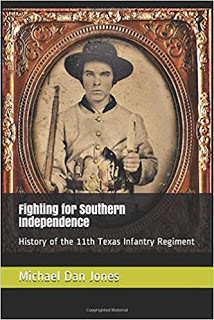
This is the history of one of the hardest-fighting infantry regiments in the War for Southern Independence, the 23rd Tennessee Infantry. The regiment was raised predominantly from the Middle Tennessee counties, where there was considerable support for secession and Southern Independence. The men were overwhelmingly made up of yeoman farmers of predominantly Anglo-Celtic descent who were to face some of the largest, bloodiest, and most memorable battles of the war, both in the West and the East. They got their baptism of fire in the Battle of Shiloh, followed by the battles of Perryville, Murfreesboro, Hoover's Gap, Chickamauga, and Knoxville in the West with the famed Army of Northern Virginia. They were then transferred to the East, where they fought in the Bermuda Hundred Campaign in Virginia, under the legendary General P.G.T. Beauregard, and then in the famed Army of Northern Virginia in the Petersburg Campaign, and ended the war with the great General Robert E. Lee at Appomattox Courthouse. The book covers the history of the regiment from letters, diaries, memoirs, and official records to cover both officers and men in a personal way. It also has an annotated roster of some 1,164 men who served in the regiment, as well as maps, photos, illustrations, bibliography, footnotes, and an index.

1864: The Confederacy lost two of its best fighting colonels on this day in action at the Bermuda Hundred (Howlett's) siege line in Virginia. On this day, Johnson's Tennessee Brigade, commanded at that time by Colonel John S. Fulton of the 44th Tennessee Infantry, was supporting Brigadier General Archibald Gracie's Alabama Brigade, which was under heavy bombardment. The enemy had advanced with a skirmish line followed by a battle line. When the Confederates opened up, the Federals hit the ground and then retreated to their lines. But their bombardment did serious damage. Killed was Colonel Richard H. Keeble of the 17th/23rd Tennessee Infantry Consolidated Regiment, who was hit by a small ball while in the rear of the trenches by the railroad tracks and was found dead later that evening. Mortally wounded was Colonel Fulton, who was hit by a shell fragment in the skull. He lingered until July 4, 1864, and then died. Johnson's Brigade lost a total of  2 killed and 11 wounded in the action. Gracie's Brigade lost 5 killed and 17 wounded; Ransom's Brigade 1 killed and 12 wounded, and Elliott's Brigade 4 killed and 5 wounded.

Confederate General Birthdays, June 30.

None.

Sunday, June 29, 2025

Click πŸ‘‰Today in History (general history) June 29. 

On This Day in Confederate History, June 29.

1862: The Battle of Savage Station, Va., takes place in the Seven Days Battles. The battle began at 9 o'clock in the morning along the Richmond & York Railroad, and when Maj. Gen. John B. Magruder's Confederate division, numbering 14,000 men, attacked Brig. Gen. Edwin Sumner's 26,000-man II Corps, which was the rear guard of Maj. Gen. G.B. McClellan's retreating Army of the Potomac. Stonewall Jackson's divisions were supposed to reinforce Magruder, but did not show up because they were stalled at the Chickahominy River. The battle ended in a stalemate. Confederate casualties totaled 473, while the Federal casualties totaled 1,038.

Maj. Gen. John B. Magruder
led Confederate troops in the
Battle of Savage Station.
(Cdv, M.D. Jones Collection)

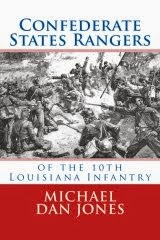
This is the history of Company K, Confederate States Rangers, and the regiment to which it belonged, the 10th Louisiana Infantry. It fought in nearly every major engagement of General Robert E. Lee's Army of Northern Virginia, including the Yorktown Peninsula of 1862, the Seven Days, Cedar Run, Second Manassas, Sharpsburg (Antietam), Fredericksburg, Chancellorsville, Gettysburg, Mine Run, The Wilderness, Spotsylvania Court House, the Shenandoah Valley Campaign of 1864, Petersburg and Appomattox. The book features photographs, illustrations, maps, a bibliography and an Index.

1863: At the Siege of Vicksburg, Brig. Gen. Francis A. Shoup reports: "Enemy seems to change his point of attack. It is at work in front of the stockade [redan], between the Redan and [27th Louisiana] lunette. The declivity is so great that we can do him little harm. [We} Are using hand grenades on him."

In the Gettysburg Campaign, the Battle of Westminster, MD, occurred on this day between Maj. Gen. J.E.B. Stuart's Confederate Cavalry and Maj. Napoleon B. Knight's Federal 1st Delaware Cavalry. Maj. Knight was absent, and Captain Charles Corbit was in charge. When Corbit got word that Confederate cavalry was approaching the town, Corbit led the 1st Delaware with less than 100 men in a futile charge, not realizing he was facing Stuart's whole corps. There was a sharp clash between the two sides before the Delaware horse soldiers were overpowered, and many were captured, including Captain Corbit. Two Federal cavalrymen were killed, and 11 were captured. The Confederates lost two officers killed and 10 enlisted men wounded. This skirmish became known as "Corbit's Charge."

1864:  In the Atlanta Campaign on this day, Captain Samuel Foster of the 24th Texas Cavalry (Dismounted), Granbury's Brigade, Cleburne's Division, along the Kennesaw Line, writes: "We are ordered to make preparations to clean the ground in rear of our breastworks, and make preparations for a regular campground. There is still a cessation in our front, but our pickets are still at their posts. They talk across the lines and occasionally exchange newspapers, and our men give them Tobacco for Coffee." (One of Cleburne's Command, 1980)

Confederate General Birthdays, June 29.

None

Saturday, June 28, 2025

Today in History (general history)/ On This Day in Confederate History/ Confederate General Birthdays, June 28.

Click πŸ‘‰Today in History (general history) June 28. 

On This Day in Confederate History, June 28.

1862: The Battle of Garnett's and Golding's Farm continues on the fourth day during the Seven Days' Battles in Virginia. Maj. Gen. John B. Magruder orders the brigade of Brig. Gen. Robert A. Toombs to make another reconnaissance in force, which turns into a battle. It is supported by Col. George T. Anderson's brigade. The Federals counterattack with the 49th Pennsylvania Infantry and 43rd New York Infantry. Maj. Gen. George McClellan decides to continue his retreat to the safety of Harrison's Landing on the James River, and the protection of the big guns of U.S. Navy warships. The Confederates recorded 438 casualties to 189 for the Federals.

Pvt. John Rigby, Co. D, 35th Ga. Inf.
Brig. Gen. J.R. Anderson's Brigade
Maj. Gen. A.P. Hill's Division
(Liljenquist Collection, Library of Congress)

Col. (later Brig. Gen.) George T. Anderson
led a Georgia Brigade in the Seven Days Battles.

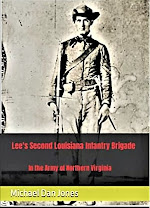
This is the history of one of the hardest-fighting brigades in Gen. Robert E. Lee's legendary Army of Northern Virginia, the Second Louisiana Infantry Brigade. It was one of Lee's most reliable infantry brigades, often used in some of his most dangerous situations, and it never let him down. The brigade included the 1st, 2nd, 9th, 10th, 14th, and 15th infantry regiments, and the 1st Battalion Louisiana Zouaves. The brigade was commanded over the course of the war by outstanding brigadiers, including Brig. Gen. William E. Starke, Brig. Gen. Francis T. Nicholls and Brig. Gen. Leroy Stafford. The brigade fought in such epic battles as Second Manassas, Sharpsburg (Antietam), Fredericksburg, Chancellorsville, Gettysburg, Mine Run, the Wilderness, Spotsylvania Courthouse, Petersburg, and many other smaller battles and skirmishes. The men of the brigade were representative of the diverse population of Louisiana of the time, including typical Southern farm boys, ruffians from the New Orleans waterfront, as well as refined gentlemen from some of Louisiana's finest families. There was also a virtual Babylon of foreign languages spoken in the brigade. This is their story, from secession to Appomattox.

1863: At the Siege of Vicksburg, Miss., Brig. Gen. Francis A. Shoup reports: The enemy fired upon and drove in our working parties, which were attempting to construct a picket on the outside of the lunette. No change is observable in the enemy's doings. Colonel [L.D.] Marks, Twenty-seventh Louisiana, mortally wounded. He was a gallant officer."

Col. Leon D. Marks, 27th La. Inf.
Mortally wounded at Vicksburg

In the Gettysburg Campaign, General Robert E. Lee orders the Army of Northern Virginia to concentrate at Gettysburg, Pa. General Ewell is at Carlisle, Pa., and Generals Longstreet and A.P. Hill are at Chambersburg, Pa. The Federal Army is now under the command of Maj. Gen. George Meade is concentrating on 100,000 men at Fredericksburg, Md. There is also skirmishing at Chambersburg on this day.

1864: Continued fighting on the Kennesaw Mountain, Georgia line, but without any more futile Federal frontal assaults, while Maj. Gen. W.T. Sherman looks for a way around Gen. J.E. Johnston's Confederate defense line. Cpl. Sam Watkins of Co. H, 1st & 28th Tenn. Reg'ts wrote of the aftermath of the battle: "We remained here three days after the battle. In the meantime, the woods had taken fire, and during the nights and days, of all, that time continued to burn, and at all times, every hour of the day and night, you could hear the shrieks and  screams of the poor fellows who were left on the field, and a stench, so sickening as to nauseate the whole, of both armies, arose from the decaying bodies of the dead left lying on the field."

Confederate General Birthdays, June 28.

Brigadier General William Tatum Wofford was born on this day in 1824 in Habersham County, Georgia. He served in the Mexican-American War as captain of the Georgia Mounted Volunteers. After that experience, he was a planter, elected to the state legislature, and practiced law. Wofford also became editor of the Cassville Standard newspaper. Although he opposed secession, when war came, he served as colonel of the 18th Georgia Infantry in Hood's Texas Brigade, fighting at Eltham's Landing, Seven Pines, and Second Manassas (during which he commanded the Texas Brigade). Transferred to Brig. Gen. Thomas R.R. Cob's brigade, he assumed command of the brigade when Cobb was mortally wounded at the Battle of Fredericksburg, Va. Wofford was promoted to brigadier general on Jan. 17, 1863. He led his brigade at Chancellorsville, Gettysburg, Chickamauga, the Wilderness, and Spotsylvania Court House. He was given command of a district in Georgia in 1865, where he ended the war when paroled on May 2, 1865, at Resaca. Following the war, Wofford practiced law and was active in politics, and Confederate veteran affairs. He died May 22, 1884, in Cassville, Ga., and was buried in Cassville Cemetery.

Brig. Gen. William T. Wofford

Friday, June 27, 2025

Today in History (general history)/ On This Day in Confederate History/ Confederate General Birthdays, June 27.

On This Day in Confederate History, June 27.

1862: The third battle of the Seven Days Battles occurred this day at the Battle of Gaines' Mill, Va. General Robert E. Lee's Army of Northern Virginia attacked the V Corps of Brig. Gen. Fitz John Porter, who is strongly dug in behind Boatswain's Swamp on Turkey Hill. The terrain was a nightmare for the attacking Confederates. Successive Confederate charges were repulsed. Finally, at 7 p.m., Maj. Gen. John Bell Hood led a successful charge with his Texas Brigade in the center, and the 20th North Carolina on the left broke the Federal line, and Porter's blue coats were driven back. The Confederates lost 894 killed, 3,107 wounded, and 2,836 missing or captured. The Federals lost 1,483 killed, 6,402 wounded, and 108 missing or captured.

Col. (later Brig. Gen.) Jerome B. Robertson
led the 5th Texas Infantry at the Battle of
Gaines' Mill.
This is the story of Lieutenant Colonel Kindallis "King" Bryan, original commander of Company F (Invincibles No. 1), 5th Texas Infantry Regiment, Hood's Texas Brigade. Bryan, a native of St. Mary Parish, Louisiana, moved to Texas as a 16-year-old and then fought in the War for Texas Independence of 1835-36. He was a farmer and rancher in Liberty County, Texas, a county sheriff, and a state legislator before the War for Southern Independence. During the war, he led the company, and later his regiment, in some of the most famous battles of the war, including Gaines' Mill, Second Manassas, Gettysburg, and the Wilderness. Wounded three times, he commanded Hood's Texas Brigade for about three months in the winter of 1863-64. Bryan was one of the most aggressive and respected regimental officers in the brigade, but was also respected and admired by his men, who appreciated a leader who took the same or greater risks than they.

1863: At the Siege of Vicksburg, Miss., Brig. Gen. Francis Shoup reports: "Our mines at the Redan were sprung last night with success. The wire undercharged mines. No damage was done to the counter-scarp of the ditch. It is still perfect. Must have done the enemy much harm."

1864: The Battle of Kennesaw Mountain, Ga., occurred on this day. Gen. Joseph E. Johnston's Army of Tennessee is strongly dug in on the mountain when Maj. Gen. W.T. Sherman's three combined armies attack and are bloodily repulsed. Captain Samuel Foster of the 24th Texas Infantry, Granbury's Brigade, Cleburne's Division, writes, "Weather fine and cool, Firing (sic) all going on. At 9 AM, the cannon opened on our right and left from both Armies, and at about 10 AM, the Yanks charged (sic) our works on our left. Our men drive them back, capturing a good many of them. (One of Cleburne's Command, 1980). The Federals lost 3,000 men in the battle and the Confederates 1,000.

Confederate General Birthdays, June 27.

Brigadier General Junius Daniel was born on this day in 1828 in Halifax, North Carolina. He graduated 33rd out of a class of 42 cadets in the West Point Class of 1851. Daniel served in the U.S. Army and fought the Apache Indians in 1855 and resigned in 1858 to be a planter in Louisiana. In the War Between the States, Daniel became colonel of the 45th North Carolina Infantry. He then became a brigade commander as a colonel and served in the Seven Days Battles from June 26-July 1 1862 but his brigade was not involved in the fighting. He was then promoted to brigadier general on Sept. 1, 1862. His brigade played a key role on the first day of the Battle of Gettysburg July 1, 1863. General Daniel was mortally wounded at the Battle of the Mule Shoe, Va. on May 12, 1864, and died the next day in a field hospital. He was buried in Colonial Cemetery in Halifax, N.C.

Brig. Gen. Junius Daniel

Thursday, June 26, 2025

Today in History (general history)/ On This Day in Confederate History/ Confederate General Birthdays, June 26.

Click πŸ‘‰ Today in History (general history) June 26.

On This Day in Confederate History, June 26.

1862: On the second day of the Seven Days Battles, in the Battle of Beaver Dam Creek, Va. (Mechanicsville), General Robert E. Lee unleashes his newly reorganized Army of Northern Virginia on the slow-moving Army of the Potomac, commanded by Major General George B. McClellan. Leading the counter-offensive is Major General A.P. Hill's "Lightning" Division. Lee planned the attack for early in the morning, but the late arrival of Major General Stonewall Jackson's Division from the Shenandoah Valley slowed the starting time. Believing, mistakenly, that Jackson had arrived at 3 p.m. and was attacking the strong Federal position at Beaver Dam Creek, Hill launched his men. Jackson's Division arrived late in the afternoon after Hill's men had been bloodily repulsed. However, McClellan decided to retreat that night, which handed over the initiative to Lee, turning the whole campaign around. The Federals lost a total of 361 men while the Confederates lost 1,484.

Lt. Gen. A.P. Hill

A history of Company B, 1st Special Battalion (Wheat's), Louisiana Volunteers in the War Between the States. The Tiger Rifles, Company B, of Wheat's Battalion became famous because of their flashy Zouave uniforms, their famous battalion commander, Major Roberdeau Wheat, and their heroics at the First Battle of Manassas. Their nickname, Tigers, became attached, first to the battalion, and then to all Louisiana troops serving in the Army of Northern Virginia. The book tries to separate fact from myth concerning the Tigers. The men became so notorious for their antics in camp, they got blamed for a lot of things they didn't do, although they did plenty on their own to deserve their reputation. Also examined is the possible real identity of their company commander, Captain Alexander White. His name is an alias, but as far as is known, his real identity has been a mystery. The book focuses tightly on the men of the Tiger Rifles and brings them to life as much as the limited resources allow.

1863:  At the Siege of Vicksburg, Miss., Brigadier General Louis Hebert, commanding the Third Louisiana Redan, reports: "Kept out at the trenches during the entire night, and afflicted today with a fever, I have failed to this time to hand in my usual daily report. The night of the 24th passed off with little firing on my line, and no change was visible, except the nearer approach of saps and the addition of newly thrown-up earth at several points. During the 25th, the enemy continued his labors, but no movements of troops were seen. The skirmishing was as usual. ... At that hour [5:30 p.m.] the enemy spring his mine under the main [Third Louisiana] redan, on the left of the road, and advanced to the assault. His attempt was a feeble one, and was easily defeated. . .."

1864: At the Atlanta Campaign in Georgia, the Army of Tennessee takes up strong positions on Kennesaw Mountain with Hood's Corps on the right, Loring's Corps covering Hood's left and the crest of the mountain, Hardee's Corps on the left flank. Captain Samuel  Foster notes in his diary that there was heavy firing all night.

Confederate General Birthdays, June 26.

None.

Wednesday, June 25, 2025

Today in History (general history)/ On This Day in Confederate History/ Confederate General Birthdays, June 25.

Click πŸ‘‰Today in History (general history) June 25.

On This Day in Confederate History, June 25.

1862: The Seven Days Battles begin this day with the Battle of King's School House (Oak Grove). In this battle, Maj. Gen. George B. McClellan was trying to move his forces closer to the Confederate fortifications before Richmond, Va. Gen. Robert E. Lee had one division involved, Maj. Gen. Benjamin Huger's versus three brigades of the Federal III Corps. There was much confusion on the part of the Federals, but by nightfall, they had managed to move 600 yards closer. Federal casualties were 68 killed, 503 wounded, and 55 missing for a total of 626. Confederates lost 66 killed, 362 wounded, and 13 missing for a total of 441. General Lee would seize the initiative the following day.

1863: SIEGE OF VICKSBURG: First Lt. John Y. Sanders II of Co. B, 26th La. Inf., Shoup's Brigade, writes in his daily diary at Vicksburg, Miss. "As usual, in pits all day. Men make peach preserves & purslane greens in order to enlarge their rations - poor fellows, they suffer a good deal - but we get enough to 'live on.' All were roused at 1/4 of 5 this evening by tremendous cannonading on the right. All of my opinion that it's Johnston coming in. May it be so! Sat up till late, 12 o'clock. Angry sharpshooting where the charge was made this evening on the right. Saw Vicksburg paper of the 25th, which says Lee is in Pennsylvania." (Diary in Gray, Young-Sanders Center, 1994, Franklin, La.)

1st Lt. Jared Y. Sanders
Co. B, 26 La. Inf.
Shoup's Brigade

1864: Captain Samuel T. Foster of the 24th Texas Cavalry, Granbury's Brigade, Cleburne's Division, writes in his diary in the Atlanta Campaign: "Weather clear and warm. Skirmish firing still going on night and day, but no cannonading of any consequence since the day before yesterday -- No change in our lines yet. This evening, there is heavy cannonading by the enemy. Skirmish firing still going on all the time. Sometimes it nearly amounts to a fight, then it eases off to the same old bang, bang, like water dropping off the eaves of a house. The bullets go zip zip over our breastworks day and night, making the men bow their heads."

Confederate General Birthdays, June 25.

None.

Tuesday, June 24, 2025

Today in History (general history)/ On This Day in Confederate History/ Confederate General Birthdays, June 24.

Click πŸ‘‰Today in History (general history) June 24.

On This Day in Confederate History, June 24.

1863: SIEGE OF VICKSBURG: Brig. Gen. Francis Shoup reports on his part of the Confederate defense line at Vicksburg, Miss., "Comparatively quiet. Rained during the night. Think the enemy is making galleries. An attempt was made to spring our mines; it failed. The train was laid in gas pipes; it will not communicate. Find by experiment that powder, when confined in a long tube, when ignited, will burst the tube a few feet from the end, and will not burn farther."

Brig. Gen. Francis Shoup


 This is the story of one of the most unique and famed Louisiana units in the War for Southern Independence, the 1st Louisiana Zouaves. Made up largely of foreigners from many countries, the men wore the gaudy French Zouave uniform and fought with a fierce determination for the new Southern Republic.

1864: Maj. Gen. Wade Hampton's Confederate cavalry tries to block Maj. Gen. Phillip Sheridan's Federal cavalry from raiding Trevilian Station, Va. Sheridan countered by fighting a delaying action to protect a Federal supply train. The Yanks then return to their base at Bermuda Hundred.

Brothers Private Stephen D. and Private Moses M. Boynton
 of Co. C, Beaufort District Troop, Hampton Legion 
South Carolina Cavalry Battalion, with pistol.
(Liljenquist Collection, Library of Congress)

In the Wilson-Kautz Raid, Kautz skirmishes with Confederate cavalry home guardsmen at Burkesville, Va., while Wilson's men tear up the railroad tracks of the Richmond and Danville Railroad.

Confederate General Birthdays, June 24.

Brigadier General Birkett Davenport Fry was born on this day in 1822 in Kanawha County, Virginia. He attended both the Virginia Military Academy and West Point but didn't graduate with his Class of 1846. Fry then became a lawyer and served in the Mexican-American War as a first lieutenant. He moved to California after the war and became a filibusterer in William Walker's Nicaragua Campaign. After returning to California, he moved to Tallahassee, Alabama, where he ran a cotton Mill business. Fry was appointed the colonel of the 13th Alabama Infantry in the Confederate Army and took part in the Peninsula Campaign, was wounded and in the Battle of Seven Pines, Va. Fry then fought at the battles of Sharpsburg (wounded), Chancellorsville (wounded), and Gettysburg (wounded & captured). After being exchanged, he was in the Siege of Petersburg and promoted to brigadier general on May 28, 1864. Fry finished the war by commanding a military district in South Carolina and Georgia. Following the war, he moved to Cuba and lived in a hotel with other Confederates. He returned to Tallahassee, Alabama, and resumed his business career. He expanded his cotton mill to Florida and Virginia and moved to Richmond, Va. Fry died on January 21, 1891, in Richmond and was buried in Oakwood Cemetery in Montgomery, Alabama. 

Brig. Gen. Brikett D. Fry
πŸ‘±
Brigadier General (Maj. Gen. in the Georgia Militia) Henry Rootes Jackson was born on this day in 1820 in Athens, Tennessee. He served in the Mexican-American War as the colonel of the 1st Georgia Infantry. After that war, Jackson was a Georgia judge, U.S. ChargΓ© d'affaires to the Austrian Empire, and was a prominent lawyer and popular speaker. During the War Between the States, Jackson served as a judge in the Confederate courts and was then made a brigadier general in the Confederate Army in June 1861, and was promoted to Major General in the Georgia Militia. His battles and campaigns included Cheat Mountain, the Atlanta Campaign, the Franklin-Nashville Campaign, and the Battle of Nashville. Following the war, he resumed his law and political careers and served as the minister to Mexico in 1885 and 1886. Jackson was also a railroad executive and banker, and served 23 years as the president of the Georgia Historical Society. Jackson died May 23, 1877, in Savannah, Georgia, and was buried in Bonaventure Cemetery in Thunderbolt, Georgia.

Brig. Gen. Henry R. Jackson
πŸ‘‹

Monday, June 23, 2025

Today in History (general history)/ On This Day in Confederate History/ Confederate General Birthdays, June 23.

 Click πŸ‘‰Today in History (general history) June 23. 

On This Day in Confederate History, June 23.

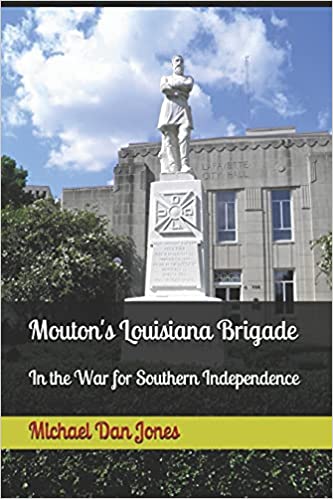
1863: Attack on Brashear City, La.: Maj. Gen. Richard Taylor's audacious plan to attack the large Federal supply depot west of New Orleans at Brashear City (modern-day Morgan City) is a complete success. With his small Army of Western Louisiana, he managed to coordinate a land-sea attack on Brashear City that came off like clockwork which began at about 6 a.m. both by land and sea by widely scattered Confederate forces. The Yankee soldiers were taken completely by surprise and were overwhelmed and surrendered by 7:30 a.m. Besides mountains of supplies taken, there were also 1,000 enemy soldiers captured, 10 heavy siege guns, two train engine cars, small arms, uniforms, food rations, and large quantities of cotton, and between 200 and 300 wagons and tents. Also captured by Brig. Gen. James Patrick Major's cavalry brigade were the railroad stations east of the city, including 300 blue coat garrison troops, and more mountains of food. The usually hungry Confederates temporarily lost control of themselves feasting on captured food. But Mouton's Louisiana Infantry Brigade soon had order and discipline restored. The Confederates lost 3 men killed and 18 wounded. Federal casualties were 46 killed, 40 wounded, and the prisoners.

Brig. Gen. James P. Major and staff. Major is
standing in the center wearing a kepi.
(Avery Island, La. Archives) (Click on the image to enlarge)

1864: On the last day of the Battle of Jerusalem Plank Road, Va. the Federal VI Corps made a second attempt to take the Weldon Railroad. The Federals briefly took it and were beginning to tear up the railroad tracks when Maj. Gen. William Mahone's Division counterattacked and drove the Yankees off. The Federals suffered 2,962 casualties to 572 for the Confederates. 

In the ongoing Wilson-Kautz Raid, the Federal raiders were challenged by Confederate Brigadier General Rooney Lee's Confederate cavalry. The Federals managed to damage 30 miles of track of the Richmond and Danville Road. The Confederates were able to make quick repairs.

Confederate General Birthdays, June 23.

Maj. Gen. Daniel Smith Donelson was born on this day in 1801 in Summer County, Tennessee. He graduated from West Point in 1825 but resigned from the Army six months later Jan. 26, 1826, and became a planter in Tennessee. Donelson also served in the Tennessee State Legislature and became a general in the Tennessee militia.  He died of disease on April 17, 1863, near Knoxville, Tennessee. Fort Donelson, Tennessee was named in his honor. He became a brigadier general in the Confederate Army and commanded a brigade in Gen. Robert E. Lee's Western Virginia Campaign, the Battle of Perryville, Ky., and was promoted to major general rank from Jan. 17, 1863. His career was cut short when he died of disease on April 22, 1863, near Knoxville, Tenn., and was buried in the Presbyterian Cemetery in Hendersonville, Tenn.

Maj. Gen. Daniel S. Donelson
πŸ‘±

Brigadier General Young Marshall Moody was born on this day in 1822 in Chesterfield County,  Virginia. Prior to the war, he was a teacher, merchant, and clerk of the circuit court in Marengo County, Alabama. During the war, he became a captain and company commander of Company A, 11th Alabama Infantry in the Army of Northern Virginia, and later lieutenant colonel of the 43rd Alabama Infantry in the Army of Tennessee and before the end of the war in the ANV again. He was promoted to brigadier general on March 4, 1865. His battles and campaigns included the Battle of Perryville, Ky., the Battle of Chickamauga, Ga. the Siege of Chattanooga, Tenn, the Siege of Knoxville, Tenn., and the Battle of Bean's Station, Tenn. Moody then went back to Virginia and fought in the Battle of Drewry's Bluff, Va., the Battle of Proctor's Creek, the Bermuda Hundred Campaign, and in the Siege of Petersburg, Va., was wounded Dec. 2, 1864. Moody was leading a brigade when captured on April 8, 1865, at Appomattox Court House and was paroled the next day. After the war, he moved to Mobile, Ala. to continue his business career but died of yellow fever on Sept. 18, 1866, in New Orleans, La., and was buried in Greenwood Cemetery there.

Brig. Gen. Young M. Moody

Sunday, June 22, 2025

Today in History (general history)/ On This Day in Confederate History/ Confederate General Birthdays, June 22.

Click πŸ‘‰Today in History (general history) June 22

On This Day in Confederate History, June 22.

1861: Pro-South Missouri Gov. Claiborne Fox Jackson continues his support for the Confederacy after a pro-Union convention meets and votes to establish a new state government in St. Louis. Missouri's secessionist state government continued throughout the war, mostly in absentia. The state also had a number of battles and skirmishes on its soil, including one of the first, the Battle of Oak Hill (Wilson's Creek). It supplied men and regiments to both armies, North and South.

1863: Under pressure to relieve besieged Port Hudson, La., Confederate Maj. Gen. Richard Taylor launches an attack on the large Federal supply base at Brashear City, La. Taylor plans a complex attack involving a cavalry raid on the railroad between New Orleans and Brashear City and a seaborne attack from Berwick's Bay. Some of the boats moved out on the night of June 22, some troops paddling the 12 miles there in sugar coolers for a coordinated attack the next morning. It was one of the most audacious plans in the war.

Brig. Gen. Thomas Green's
volunteers for Taylor's "Mosquito
Fleet" for the attack on Brashear
City, La. was drawn from his brigade
and the 2nd La. Cav. (Archives, Tex. State Lib.)

1864: The second day of the Battle of Jerusalem Plank Road near Petersburg, Va. continues with Lt. Gen. A.P. Hill's Third Corps of the Army of Northern Virginia preventing Lt. Gen. U.S. Grant's II Corps and VI Corps from capturing the Weldon Railroad. 

Also on this day, Grant launches the Wilson-Kautz Raid to destroy railroad tracks south and southwest of Petersburg. Carrying out the raid is Brig. Gen. James H. Wilson and Brig. Gen. August Kautz's divisions. 

Confederate General Birthdays, June 22.

None.

Today in History (general history)/ On This Day in Confederate History/ Confederate General Birthdays, June 21.

Click πŸ‘‰Today in History (general history) June 21. 

On This Day in Confederate History, June 21.

1863: Gettysburg Campaign: As the Confederate Army of Northern Virginia progressed toward Pennsylvania in Gettysburg, there were skirmishes near Gainesville, Va., Frederick, Md., and an engagement at Upperville, Va. The Army of Northern Virginia was at the peak of its power, coming off tremendous victories at Fredericksburg, Va., and Chancellorsville, Va. General Robert E. Lee had established himself as a military genius who had the confidence of the Confederate people. The ANV at that time totaled between 75,000 and 80,000 battle-hardened veterans. The army also included 270 artillery pieces and some 9,500 crack cavalrymen led by Maj. Gen. J.E.B. Stuart. The three corps were under the command of Lieutenant Generals James Longstreet, First Corps; Richard S. Ewell, Second Corps; and A.P. Hill, Third Corps.

Pvt. Robert M. Wilson, Co. G, 5th S.C. Inf.
wearing a Richmond Depot shell jacket like those issued to the ANV.

Confederates of the ANV marching through Frederick, Md., in 1862 or 1864. Click on the image to enlarge

This is the history of one of the hardest-fighting Louisiana units in the War for Southern Independence, the Confederate Guards Response Battalion. It covers the organization in New Orleans, the Battle of Shiloh, and their campaigns in Louisiana. The book includes photographs, maps, illustrations, a bibliography, and an index.

On the second day of the Battle of LaFourche Crossing, La., Colonel Charles L. Pyron's 2nd Texas Mounted Rangers of Confederate Brig. Gen. James P. Major's brigade and Federal Lt. Col. Albert Stickney resume skirmishing in the late afternoon, and there is an artillery duel at 7 o'clock P.M. The Confederates then returned to Thibodaux. The two days of fighting resulted in 48 casualties for the Federals and 219 for the Confederates.

1864: The Battle of Jerusalem Plank Road, Va. began on this day as the Confederates under Lt. Gen. A.P. Hill and Brig. Gen. William Mahone battled to stop Federals under Maj. Gen. David Birney and Maj. Gen. Horatio Wright extended their line at Petersburg, Va., to cut off supplies to the Confederates from the three remaining railroads open to Petersburg. Mahone, a railroad engineer before the war and familiar with the terrain, set up an ambush for the blue coats for the following day.

Maj. Gen.William Mahone 

Confederate General Birthdays, June 21.

Brigadier General John Decatur Barry was born on this day in 1839 in Wilmington, North Carolina. He was a graduate of the University of North Carolina at Chapel Hill and was working as a clerk in Wilmington when the war started. He joined the 18th North Carolina Infantry as a private at the beginning of the war. However, when the Confederate Army was reorganized in April 1862, he was elected captain. Promotions followed to major, colonel, and brigadier general. Barry was wounded at the Battle of Frayser's Farm in 1862. He was then in the Battle of Sharpsburg and at the Battle of Chancellorsville in 1863, where he gave the command to his regiment to fire on approaching horsemen, which resulted in the mortal wounding of Lt. Gen. Stonewall Jackson. But he went on to be promoted to colonel of the 18th North Carolina. Barry led his regiment at Pickett's Charge at Gettysburg. He was appointed temporary brigadier general when the leader of his brigade was wounded at the Battle of Cold Harbor in 1864. Barry was then wounded in the hand at the First Battle of Deep Bottom on July 27, 1864, and because the wound rendered him physically unfit for field command, his temporary appointment as a brigadier general was canceled. He finished the war as a colonel in command of a department in North Carolina. He was still in poor health after the war and died on March 24, 1867. He was buried in Oakdale Cemetery in Wilmington.

Brig. Gen. John D. Barry.

Friday, June 20, 2025

Today in History (general history)/ On This Day in Confederate History/ Confederate General Birthdays, June 20.

Click πŸ‘‰Today in History (general history) June 20. 

On This Day in Confederate History, June 20.

1862:  A skirmish occurs between Confederate Col. Edwin Waller Jr.'s 13th Battalion Texas Cavalry and the 8th Vermont Infantry at Bayou des Allemands, La.

1863: The Battle of LaFourche Crossing takes place near Thibodaux, La., between the Confederate cavalry brigade of Brig. Gen. James P. Major and a Federal detachment of 838 men under Lt. Col. Albert Stickney. The Confederates drove Stickney's detachment out of Thibodaux and down Bayou Lafourche. They exchanged fire with the Federals before the Confederates returned to Thibodaux and feasted on the Northern food supplies they captured there. The skirmishing would continue the next day.

Pvt. Benjamin W. Varnell
Co. B, 1st Texas Cavalry Regiment
(Liljenquist Collection, Library of Congress)


1864: Confederate Capt. James A. Ware of the First Texas Cavalry at Fort Duncan, Eagle Pass, Texas, reported on June 20, 1864, that on the day before, he had been attacked by 80 to 100 renegades (Federal recruits under U.S. officers) on the Texas side of the Rio Grande River. Ware said he had but 34 men guarding the post. He received some poorly armed reinforcements from Texas home guard units. When the enemy attacked the town, they were repulsed. He said he was briefly captured when trying to communicate with the town, but managed to escape. The enemy only managed to get away with a few horses. Ware said four men were severely wounded on the Confederate side. He said the enemy lost one man killed and six wounded. Ware noted that Mexican authorities had allowed the formation of the renegades on the Mexican side of the river. 

Confederate General Birthdays, June 20.

Brig. Gen. John Tyler Morgan was born in 1824 in Athens, Tennessee. A prewar lawyer in Alabama, Morgan was a presidential elector for John C. Breckinridge in the 1860 election. With the coming of war, Morgan served as a private in the 5th Alabama Infantry and fought in the First Battle of Manassas, Va. He received promotions to major and lieutenant Colonel but resigned in 1862 to raise his own regiment, the 51st Alabama Partisan Rangers. With that unit, Morgan served in Gen. Nathan Bedford Forrest's cavalry in the Battle of Chickamauga, Ga., and the Knoxville Campaign. Morgan was promoted to brigadier general on November 16, 1863. He then served in the Atlanta Campaign and fought against Sherman's March to the Sea in 1864. Following the war, and was active in resisting the Reconstruction policies in the South, and was elected from Alabama to the U.S. Senate, where he served until he died in Washington, D.C. on March 4, 1907, and was buried in Live Oak Cemetery in Selma, Alabama.

Brig. Gen. John Tyler Morgan

Thursday, June 19, 2025

Today in History (general history)/ On This Day in Confederate History/ Confederate General Birthdays, June 19.

Click πŸ‘‰Today in History (general history) June 19. 

On This Day in Confederate History, June 19.

1863: The Battle of Middleburg, Va. takes place from June 17 to 19 in 1863 in the Gettysburg Campaign. It occurred when Maj. Gen. J.E.B. Stuart's cavalry, which was screening Gen. Robert E. Lee's ANV, clashed with the Federal cavalry of Brig. Gen. David McM. Gregg. Confederate pickets near Middleburg were attacked by Federals and fell back to Middleburg. Federal Brig. Gen. John Buford's Division then skirmished with Confederate Brig. Gen. William "Grumble" Jones' Brigade. The skirmishing continued through the afternoon, and the Confederates finally fell back to a more secure position. The Confederates lost about 40 men, killed or wounded, and the Federal casualties totaled about 97.

Maj. J.E.B. Stuart


1864: Atlanta Campaign: Captain Samuel T. Foster of Granbury's Texas Brigade in the Army of Tennessee reacts in his diary to the decision by President Davis to replace Gen. Joseph E. Johnston as commander with Gen. John Bell Hood. He writes: "The noise and confusion were kept up all night. Genl Johnson (sic) was serenaded, and if Jeff Davis had made his appearance in this army, he would not have lived an hour. This morning, in order (I suppose) to quiet the men, it is reported that Hood refuses to take command and that Johnson will remain in command until after the fight at Atlanta. In the afternoon, we are put in position, build breastworks, and by night, we are ready for the Yanks." (One of Cleburne's Command, 1980)

Confederate Corporal Sam Watkins of Co. H. 1st Tennessee Regiment wrote, "General Joe Johnston is relieved, Generals Hardee and Kirby Smith have resigned, and General Hood is appointed to take command of the Army of Tennessee." ... "Five men of that picket--they were just five--as rapidly as they could, took off their cartridge boxes, after throwing down their guns ... They marched off, and it was the last we ever saw of them."


Cpl. Sam Watkins, Co. H. 1st Tenn. Inf.

Confederate General Birthdays, June 19.

None.


Wednesday, June 18, 2025

Today in History (general history)/ On This Day in Confederate History/ Confederate General Birthdays, June 18.

Click πŸ‘‰Today in History (general history) June 18. 

On This Day in Confederate History, June 18.

1863: Confederate Brig. Gen. John C. Vaughn reports on the activities on his part of the line at the Siege of Vicksburg, Miss. The usual sharpshooting along my line yesterday; considerable cannonading on the right during the early part of the day; also some artillery fire on my left about 11 a.m. Everything was unusually quiet last night. One killed in the Sixty-second Tennessee Regiment."

Pvt. W.P. Ward, Co. F, 40th Bn. Ga. Inf.
The battalion served in Barton's Brigade during the Siege of Vicksburg.
(Liljenquist Collection, Library of Congress)

Unidentified Soldier of Co. D, 17th Va. Inf.
in Longstreet's Brigade.
(Liljenquist Collection, Library of Congress)

1864: At the Second Battle of Petersburg, Va., Gen. P.G.T. Beauregard gets more reinforcements with the arrival of the divisions of Maj. Gen. Joseph B. Kershaw and Maj. Gen. Charles W. Field. The reinforcements now give Beauregard over 20,000 men. Lt. Gen. U.S. Grant also receives reinforcements, and his numbers are now up to 67,000 men available. Maj. Gen. George Meade, commander of the Army of the Potomac, tries another frontal assault and is repulsed. Beauregard's new defense line brings the Federal onslaught to a halt, and Grant realizes it will take a siege to conquer Petersburg. The battle has cost the Federals 1,688 killed, 8,513 wounded, and 1,185 missing or captured for a total of 11,386. The Confederates lost 200 killed, 2,900 wounded, and 900 missing or captured.

Confederate General Birthdays, June 18.

None.