Saturday, May 31, 2025

Today in History (general history)/ On This Day in Confederate History/ Confederate General Birthdays, May 31.

Click ðŸ‘‰Today in History (general history) May 31. 

On This Day in Confederate History, May 31.

1861: Confederate General P.G.T. Beauregard was put in command of the Army of the Potomac, which was renamed the Army of Northern Virginia in the future. Beauregard organized the army into six brigades, which he referred to as the "First Corps." This army, along with Gen. Joseph E. Johnston's Army of the Shenandoah, would fight the first large battle of the war, the First Battle of Manassas.

1862: The Battle of Seven Pines, Va. started on this day and was a major turning point in the war because Confederate General Joseph E. Johnston was severely wounded and General Robert E. Lee replaced him. The Confederate Army of Northern Virginia numbered about 39,000 men, and the Federal Army of the Potomac about 34,000. It is an attempt by Johnston to go on the offensive against Maj. Gen. George McClellan. The Yankee general has pushed his Federal Army up the Yorktown Peninsula to the outskirts of Richmond. Johnston is wounded on the first day of the battle, and initially, Major General G.W. Smith is supposed to assume command but is incapacitated. President Davis gave General Lee command of the Army of Northern Virginia the next day, June 1.

Capt. Albert Rennolds, Co. F, 55th Virginia Infantry
He was commended for his actions at Mechanicville, where he received
his first wound. Rennolds was also severely wounded at Chancellorsville,
the Wilderness, and Weldon Railroad. Captured at Sayler's Creek, he was
incarcerated at Johnson's Island, Ohio, and finally released on June 19, 1865.
(VMI Archives)

1863: At the Siege of Vicksburg, Miss. Confederate engineers continue their constant work to repair and strengthen the entire Confederate defense line. The breach in the redan on the left of Jackson Road is filled up, and the parapet is repaired with sandbags. Confederate and Federal engineers played important roles in the siege.

1864: Skirmish in Georgia and Virginia: Maneuvering and constant skirmishing continue both in Georgia and in Northern Virginia between the Blue and the Gray. Sherman is battling Johnston in Georgia, and Grant versus Lee in Virginia. All the armies have learned the value of fortifying their lines.

Confederate General Birthdays, May 31.

Major General William Henry Fitzhugh "Rooney" Lee was born on this day in 1837 at Arlington, Virginia to General Robert E. Lee and Mary Custis Lee. Unlike his older brother, George Washington Custis Lee who was at the top of the class at West Point, Rooney Lee received a civilian education at Harvard College. However, Rooney received a commission as a second lieutenant in the 6th U.S. Infantry Regiment in 1857 and resigned his commission in 1859 to operate the plantation he inherited from his grandfather, White House Plantation in Virginia. At the outbreak of war in 1861, Rooney Lee received a commission as a captain in the Confederate cavalry and worked his way up through merit to major general in the course of the war. He suffered a severe wound to the thigh in the Battle of Brandy Station in 1863 and was captured by the enemy. Lee was finally released on Feb. 25, 1865, in exchange for Federal Brig. Gen. Neal S. Dow. He then continued his outstanding record in the cavalry. His battles and campaigns included Wester Virginia, Shenandoah, Romney, the Seven Days Battles, Catlett's Station, South Mountain, Sharpsburg, the Chambersburg Raid, Fredericksburg, Chancellorsville, Brandy Station, the Wilderness, Todd's Tavern, Spotsylvania, Petersburg, Sappony Church, First Ream's Station, Second Deep Bottom, the Beefsteak Raid, Boydton Plank Road, Namozine Church, and Appomattox. Following the war, he had a distinguished career in farming rather than in politics when he was elected to the Virginia State Senate and U.S. House of Representatives. Lee died  Oct. 15, 1891, in Alexandria, Va., and was entombed in the Lee family tomb in the University Chapel on the campus of Washington and Lee University.

Maj. Gen. William H.F. Lee
👱

Major General Stephen Dodson Ramseur was born on this day in Lincolnton, North Carolina. He graduated from West Point in 1860 and served in the 3rd and 4th U.S. Artillery. Rameur resigned from the U.S. Army in 1861 and joined the Confederate Army in Alabama. He then became a lieutenant colonel in the 3rd North Carolina Infantry. Ramseur was elected colonel of the 49th North Carolina Infantry on April 12, 1862, brigadier general on November 1, 1862, and major general in 1863. His battles included the Seven Days Battles, Malvern Hill, Chancellorsville, Gettysburg, the Wilderness, Spotsylvania Court House, Cold Harbor, Opequon, and Cedar Creek. Severely wounded at the Battle of Malvern Hill on July 1, 1862, Ramseur was mortally wounded at the Battle of Cedar Creek on October 19, 1864, and died the next day near Middletown, Virginia. He is buried in his hometown of Lincolnton. 

Maj. Gen. Stephen D. Ramseur
👋

Friday, May 30, 2025

Today in History (general history)/ On This Day in Confederate History/ Confederate General Birthdays, May 30.

Click ðŸ‘‰Today in History (general history) May 30.

On This Day in Confederate History, May 30.

1862: CORINTH CAMPAIGN: General P.G.T. Beauregard successfully evacuated his Army of the Mississippi from Corinth, Miss., as Federal Maj. Gen. Henry Halleck slowly moved to besiege the city and completely capture the Confederate Army there. The Confederates go into a much better camp at Tupelo, Miss., and will be able to fight the enemy for years to come.

1863: Siege of Vicksburg: Here's Colonel Samuel H. Lockett, chief Confederate engineer at Vicksburg's report for this day's activity in 1863: "On the 30th, but little work was done on the line under Captain Robinson’s charge, excepting along General Lee’s front, and during the whole siege our works, from Fort Garrott to the right, were but little injured, the enemy is kept at a considerable distance by a line of pickets kept in protected places along the ridge in front of our main line, excepting on the Hall’s Ferry road. Captain Winter and his assistants were kept constantly busy putting obstructions on the Yazoo Valley and other roads, repairing the embrasures of batteries, and thickening the parapets, which had begun to show the effects of the enemy’s continual battering. The new battery in the rear of General Moore’s center was commenced by running a covered approach to the position selected. On this day I also started a number of excavations on the Baldwin’s Ferry road, in a deep cut, for the purpose of scattering our ammunition, which was much exposed to the enemy’s fire at the depot magazine.  

Col. Samuel H. Lockett

1864: Colonel George T. Madison's 3rd Texas Cavalry Regiment, numbering just 200 men, camped along the Atchafalaya River in Louisiana, is attacked by a large force of Federals. The Federals, including 6,000 infantry and 2,000 cavalrymen, were sent to the area, called the Morganza Expedition, to disperse what they were told was a large force of Confederates crossing the river, but only found Madison's men. The Confederates are at first dispersed, but after retreating to Bayou Lafourche, the Texas cavalrymen succeed in pushing the Federals back toward Morganza. The report of Federal Maj. Gen. W.H. Emory claims the bluecoats killed 20 or 30 Confederates and captured 10. No Federal casualties are given.

Click👉Fighting for Southern Independence

History of the 11th Texas Infantry Regiemtn

Confederate General Birthdays, May 30.

Brigadier General George Doherty Johnston was born on this day in 1832 in Hillsborough, North Carolina. Prior to the war, he was the mayor of Marion, Alabama, and when war came he joined the Confederate Army as a second lieutenant in Co. G, 4th Alabama Infantry Regiment. After fighting in the First Battle of Manassas, Va., Johnston was promoted to major in the 25th Alabama Infantry and took part in every battle of the Army of Tennessee from Shiloh to Bentonville. He was promoted to colonel in September 1863 and was wounded in the leg at the Battle of Ezra Church and promoted to brigadier general in 1864. Following the war, he served as commandant of cadets at the University of Alabama. During the administration of President Grover Cleveland, he was appointed to U.S. Civil Service Commissioner. Johnston was also elected to the Alabama State Senate. Johnston died Dec. 10, 1910, in Tuscaloosa, Alabama, and was buried in Greenwood Cemetery there.

Brig. Gen. George D. Johnston

Thursday, May 29, 2025

Today in History (general history)/ On This Day in Confederate History/ Confederate General Birthdays, May 29.

 Click ðŸ‘‰Today in History (general history) May 29. 

On This Day in Confederate History, May 29.

1862: Corinth, Miss. Evacuation: General P.G.T. Beauregard ordered his Army of the Mississippi to evacuate Corinth, Miss., to avoid being besieged by Maj. Gen. Henry Halleck's 100,000. Beauregard had about 50,000 effectives. He so cleverly made the withdrawal that Beauregard relocated the Army of the Mississippi without the enemy even discovering it was completely gone until the next day. Their new headquarters were at Tupelo, Miss.

The 16th Battalion, Louisiana Infantry

1863: At the Siege of Vicksburg, Miss. Chief Engineer Major Samuel Lockett reports that a new battery was made in the rear of the line, left of Hall's Ferry Road. The new battery in the rear of General [S.D.] Lee was improved, and "Whistling Dick" (an 18-pounder rifled piece) was put in position, and a new battery was started in the rear of General Moore's center, but the working party was driven off by Yankee sharpshooters, and the work stopped.

At the Siege of Port Hudson, La., Maj. Gen. Franklin Gardner assigns engineers to command specific sectors of the defense line to facilitate quick repairs. Gardner assigns Lt. Stork command of the river defenses and extreme right; Lt. James Freret to the center fortifications, and Lt. Fred Y. Dabney to the left wing. Also, the 10-inch Columbiad gun the Confederates called  "The Lady Davis," which was damaged by enemy fire, was repaired and put back into service on the 29th. The bluecoats were so troubled by this big gun that they gave it the nickname "The Demoralizer."

Major John F. O'Brien
Confederate Staff Officer at Port Hudson
(Liljenquist Collection, Library of Congress)

1864: In the Atlanta Campaign, Confederate General Joseph E. Johnston bombarded the Federals at New Hope Church, Ga., and Dallas, Ga., but with little damage. There was also skirmishing and sharpshooting throughout the day.

Confederate General Birthdays, May 29.

Major General  Cadmus Marcellus Wilcox was born on this day in 1826 in Wayne County, North Carolina. He graduated from West Point in 1846, ranking 54th out of 56 cadets. During the Mexican-American War, he was an aide to Maj. Gen. John A. Quitman was in the battles of Veracruz, Cerro Gordo, Chapultepec, and Mexico City. Wilcox received a brevet promotion to first lieutenant. In 1861, his resignation from the U.S. Army was accepted on Jun 8. He was promoted to colonel on July 9, 1861, to brigadier general on October 21, 1861, and to major general on August 3, 1863. His battles included First Manassas, Williamsburg, Gaines' Mill, Glendale, Second Manassas, Salem Church, Chancellorsville, Gettysburg, the Overland Campaign, Petersburg, and Appomattox. Following the war, he was appointed by President Cleveland as chief of the railroad division in Washington, D.C. Wilcox died Dec. 2, 1890, and was buried in Oak Hill Cemetery in Washington, D.C.

Maj Gen. Cadmus M. Wilcox
👱

Brigadier General Reuben Lindsay Walker was born on May 29, 1827, in Albemarle County, Virginia. He was a 1845 graduate of Virginia Military Institute and became a civil engineer. During the War for Southern Independence, Walker commanded the Purcell Artillery early in the war. In the course of the war, he served in increasingly important artillery commands and was in 63 battles and engagements, including First Manassas, Second Manassas, Sharpsburg, Fredericksburg, Gettysburg, the Overland Campaign, the Siege of Petersburg, and the Appomattox Campaign. He was finally promoted to brigadier general on Feb. 18, 1865.  Following the war, Walker settled in Selma, Alabama, where he ran the Marine & Selma Railroad. He was also in charge of the construction of the Virginia State Penitentiary and the Texas State Capitol building. Walker died June 7, 1890, and was buried in Hollywood Cemetery in Richmond, Va.

Brig. Gen. Reuben L. Walker
👋

Wednesday, May 28, 2025

Today in History (general history)/ On this Day in Confederate History/ Confederate General Birthdays, May 28.

Click ðŸ‘‰Today in History (general history) May 28. 

On This Day in Confederate History, May 28.

1863: Siege of Port Hudson, La. In the aftermath of the severe casualties inflicted on the Federals on May 27, 1863, at the Siege of Port Hudson, La., Federal Maj. Gen. N.P. Banks sent an urgent message to Brashear City, La., ordering more reinforcements, including seven regiments of infantry. Confederates were having to resort to making homemade artillery supplies, such as improvised bags of scrap iron.

This museum diorama at the Port Hudson State
Historic Site portrays trench life for the Confederate
soldiers during the Siege. (Port Hudson State Historic Site)

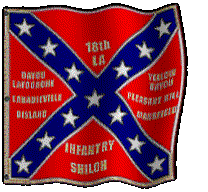
Click👉A History of the 20th Louisiana Infantry Regiment

1864: Atlanta Campaign: Following the Confederate victory at the Battle of Pickett's Mill, Ga. Confederate skirmishers engage with the Federals. Captain Samuel T. Foster of the 24th Texas Cavalry (dismounted) writes, "We were not permitted to sit down and reflect over it, but were ordered forw'd about an hour by sun, just our Reg't. We advanced cautiously for about a mile through the wood when we found them again, and open fire upon them, and soon have them on the retreat -- There is only a skirmish line of them but that is all we have shooting at them, so we drive them about 1/2 mile to their breastworks. . ."

 Confederate General Birthdays, May 28.

General Pierre Gustave Toutant Beauregard was born on this day in 1818 in St. Bernard Parish, Louisiana. He graduated from West Point in 1838, ranking 2nd in his class. During the Mexican-American War, Beauregard served on the staff of Gen. Winfield Scott as an engineer, along with Captain Robert E. Lee. For his performance in the battles of Contreras and Churubusco, he earned brevet promotions to captain and major. He also had important input in the planning for the attack on Chapultepec and was one of the first American officers to enter Mexico City. In 1861, he briefly served as the superintendent of West Point but was dismissed because he was a Southerner. Beauregard resigned from the U.S. Army and joined the Confederate Army. President Jefferson Davis gave him command of the Confederate forces at Charleston, S.C., and he gained early fame with the early victory at Fort Sumter. He was promoted to full general and placed in command of the forces at Manassas, Va., where he and Gen. J.E. Johnston were victorious in the First Battle of Manassas on July 21, 1861. His other battles and campaigns included Shiloh, Corinth, Charleston Harbor, Fort Wagner, Second Fort Sumter, Bermuda Hundred, and Bentonville. Following the war, he rebuilt his life in the civilian sector, in New Orleans, La., as an engineer, in railroad construction, and in the Louisiana lottery. He was a voice of moderation during the tumult of Reconstruction in Louisiana and active in the cultural life of the city. Beauregard died Feb. 20,  1893, in New Orleans and was entombed in the Tomb of the Army of Tennessee in Metairie Cemetery.

Gen. Pierre G.T. Beauregard
👱

Brigadier General Alpheus Baker was born on this day in 1828 in Abbeville District, South Carolina. Before the War for Southern Independence, he was a school teacher and lawyer and South Carolina and Alabama. During the war, he became a colonel and fought in the Battle of New Madrid and was taken prisoner. After being exchanged, he was given command of the 54th Alabama Infantry. Baker was seriously wounded in the Battle of Champion's Hill, Mississippi, in 1863. When he recovered, he was promoted to brigadier general and led an Alabama brigade in the Atlanta Campaign. He was wounded again at the Battle of Ezra Church. Baker led his brigade in defending Mobile, Ala., and finished the war in the Carolinas Campaign. Following the war, Baker resumed the practice of law and moved to Louisville, Ky. He died there on Oct. 21, 1891, and was buried in Cave Hill Cemetery.

Brig. Gen. Alpheus Baker
👱

Brigadier General Basil Wilson Duke was born on this day in 1838 in Georgetown, Kentucky. Before the war, Duke was a lawyer in St. Louis, Missouri, and supported the cause of secession and Southern Independence. He was charged with arson and treason for his secessionist activities but escaped to Lexington, Ky., where he married the sister of John Hunt Morgan and joined Morgan's command as a second lieutenant. Duke was wounded in the Battle of Shiloh. After recovering,  he was promoted to lieutenant colonel and wounded again in Morgan's Christmas Raid of 1862. After that, he participated in Morgan's other raids and, following the death of Morgan, was promoted to brigadier general and assumed command of Morgan's forces. He surrendered to the Federals on May 10, 1865. Following the war, Duke moved to Louisville, Ky., where he practiced law, wrote a history of Morgan's Cavalry, and helped found the Filson Club. In 1904, President Theodore Roosevelt appointed him a commissioner of Shiloh National Military Park. He died Sept. 16, 1916, following several operations in a New York City hospital and was buried in the Hunt Family plot in Lexington Cemetery.

Brig. Gen. Basil Duke
👋

Tuesday, May 27, 2025

Today in History (general history)/ On This Day in Confederate History/ Confederate General Birthdays, May 27.

Click ðŸ‘‰ Today in History (general history) May 27.

On This Day in Confederate History, May 27.

1863: At the Siege of Vicksburg, Miss., Confederate Heavy Artillery at Fort Hill, which anchors the left flank of the Confederate defense line, wins an artillery duel with the ironclad gunboat USS Cincinnati and sends the vessel to the bottom of the river. The 1st Tennessee Heavy Artillery was in command of the heavy guns at Fort Hill. Some 40 bluejackets were either killed or wounded. 


Captain William Parks
1st Tennessee Heavy Artillery
(Library of Congress)

The First Louisiana Heavy Artillery Regiment

At the Siege of Port Hudson, La., Confederates successfully repelled an all-out assault on the Confederate defense line. Maj. Gen. Franklin Gardner did a masterful job in shifting troops around to the most endangered points at any one time. Maj. Gen. N.P. Banks' assault is poorly coordinated and the naval bombardment was not effective. On the north side of the assault, soldiers of the 1st and 3rd Louisiana Native Guard (Union) were in one of the strongest Confederate positions, and they were badly slaughtered. On the south end of the attack in the afternoon, Maj. Gen. Thomas Sherman was severely wounded in the assault there. Brigadier General Neal Dow was severely wounded in the center assault. Banks' frontal assault was a disaster for the Federals. Dow was later captured in the rear by Confederate cavalry.

1864: After being defeated at the Battle of New Hope Church, Maj. Gen. W.T. Sherman tries again at the Battle of Pickett's Mill when he sends in Maj. Gen. Oliver O. Howard's men attacked the Confederate right flank, but it repulsed the attack and inflicted high casualties on the Northerners. The Federals lost 1,600 casualties and the Confederates 500.

In the aftermath of the Battle of North Anna River, Va., Maj. Gen. U.S. Grant moves his army toward Cold Harbor while Gen. Robert E. Lee moves his army to block Grant at the coming battle there.

Confederate General Birthdays, May 27.

Maj. Gen. Robert Frederick Hoke was born this day in 1837 at Lincolnton, North Carolina. He graduated from the Kentucky Military Institute in 1854 and then went into the family business. When North Carolina seceded in 1861, Hoke joined the 1st North Carolina Infantry, was promoted to major in September 1861, to colonel of the 21st North Carolina in 1862, to brigadier general on January 17, 1863, and to major general on April 23, 1864. His battles and campaigns were Big Bethel, New Bern, Peninsula, 2nd Manassas, Sharpsburg, Chancellorsville, Plymouth, Cold Harbor, Petersburg, Carolinas, and Bentonville. Following the war, Hoke resumed his business career in insurance, gold mining, and railroad construction. He died July 3, 1912, and was buried at Oakwood Cemetery.

Maj. Gen. Robert F. Hoke
👱

Brigadier General Edwin Gray Lee was born on this day in 1836 in Loudoun County, Virginia. He received a law degree in 1859 and, after the War for Southern Independence began, joined the staff of Col. Thomas J. Jackson and participated in the First Battle of Manassas, Va., Jackson's Valley Campaign of 1862, the Seven Days Battles, and the Battle of Cedar Mountain. Lee was captured and, after being exchanged, was given command of the 33rd Virginia Infantry Regiment and led it at the Battle of Fredericksburg, Va. He was promoted to brigadier general on Sept. 23, 1864, and served in the cavalry in the Shenandoah Valley. Lee was assigned to a secret mission in December 1864, and he and his wife slipped through the blockade and went to Canada. They were there in Montreal until the end of the war and didn't return to Virginia until 1866. He died Aug. 24, 1870, at Yellow Sulphur Springs, Virginia, and was buried in Lexington, Virginia, at Oak Grove Cemetery.

Brig. Gen. Edwin G. Lee
👋

Monday, May 26, 2025

Today in History (general history)/ On This Day in Confederate History/ Confederate General Birthdays, May 26.

Click ðŸ‘‰Today in History (general history) May 26. 

On This Day in Confederate History, May 26.

1861: The Confederate ports of New Orleans and Mobile, Alabama, are blockaded by Federal warships. These port cities did the best they could to strengthen their defenses against this blatant Northern aggression. The blockade gave foreign nations the right to recognize the Confederates as lawful combatants under international conventions and Admiralty Law.

1863: At the Siege of Port Hudson, La., a 10-inch Columbiad gun on the bluffs is dismounted for several days when it is hit by a shell from the U.S.S. Monongahela. The Confederate batteries shell a Federal work party building a bridge in a willow swamp. That night, Maj. Gen. Franklin Gardner has 24-pounder rifles moved from the bluffs to the landward side in anticipation of a major assault on Confederate lines. He also adjusts his regiments, battalions, and batteries along the lines, under Col. I.G.W. Steedman on the left, Brig. Gen. W.N.R. Beall in the center, and Col. William Miles on the Confederate right. Each soldier in the line also has multiple guns at the ready.

Capt. Robert Leggett Pruyn, 4th La. Inf.
He carried a message from
Port Hudson to Jackson for
Gen. Gardner during the Siege
of Port Hudson.

 1864: The second day of the Battle of New Hope Church, Ga., takes place. There is firing across the lines throughout the day, but no assaults. Maj. Gen. Alexander P. Stewart was commended by both Generals J.E. Johnston and J.B. Hood for the handling of his division in the Confederate victory.

A History of the 13th Louisiana Infantry

On the third and last day of the Battle of North Anna, Va.the two sides continue to skirmish, but at the end of the day, Maj. Gen. U.S. Grant gives up trying to break the Confederate line and withdraws his Federals for another wide flanking maneuver. The total casualties for the Confederates were 124 killed, 704 wounded, and 724 missing or captured. The Federals lost 591 killed, 2,734 wounded, and 661 captured or missing.

Confederate General Birthdays, May 26.

Brigadier General Edward Porter Alexander was born on this day in 1835 in Washington, Georgia. He graduated from West Point in 1857, ranking 3rd in a class of 38 cadets. He resigned his U.S. Army commission on May 1, 1861, joined the Confederate Army, and was assigned to Gen. P.G.T. Beauregard's staff at Manassas, Va. In the First Battle of Manassas, as a signal officer, he played a key role in warning the Confederates were being flanked. He was also notable for having commanded the artillery for Pickett's Charge at Gettysburg. During the war, he was in charge of ordnance and artillery and rose steadily in rank to brigadier general. His battles and campaigns included First Manassas, Williamsburg, Gaines' Mill, Second Manassas, Sharpsburg, Chancellorsville, Gettysburg, Knoxville, Spotsylvania Court House, Cold Harbor, the Crater, and Chaffin's Farm. Alexander was wounded by a sharpshooter on June 30, 1864, and surrendered with Lee at Appomattox. Following the war, he was a college professor and railroad executive and wrote a famous war memoir, Fighting for the Confederacy. Alexander died on April 28, 1910, in Savannah, Georgia, and was buried in Magnolia Cemetery in Augusta, Georgia.

Brig. Gen. Edward Porter Alexander

Monday, May 19, 2025

Today in History (general history)/ On This Day in Confederate History/ Confederate General Birthdays, July 19.

Click ðŸ‘‰Today in History (general history) July 19.

On This Day in Confederate History, July 19.

1861: Gen. Joseph E. Johnston's 18,000-man Army of the Shenandoah begins arriving at Manassas Junction, Va., to bolster Gen. P.G.T. Beauregard's 22,000-man Confederate Army of the Shenandoah, which is threatened by Brig. Gen. Irvin McDowell's 35,000-man Yankee Army of Northeastern Virginia. Johnston approves of Beauregard's plan to strike the Federals on the Federal left flank. Meanwhile, McDowell is planning to attack the Confederate left flank.

The 1st Bn. (Wheat's) La. Vol. gained fame at the 1st Battle of Manassas, VA. This sketch of a drummer of Co. B (Tiger Rifles) was made by William Ludwell Sheppard,  for the Century Magazine's Battle and  Leaders series. The artist was a Confederate veteran (Richmond Howitzers) and spent much of his time during the war sketching other soldiers, possibly even this Zouave member of Co. B. The Tigers were in Evans' Brigade at First Manassas.
 
William Ludwell Sheppard
postwar. (Find A Grave)
 

1863: Brigadier General John Hunt Morgan's Confederate Cavalry meets with disaster at the Battle of Buffington Island, Ohio. Morgan's cavalry, numbering 1,930 men, was trying to cross the river into West Virginia at that point when it was attacked and nearly 3,000 Federals under Brigadier General Edward H. Hobson. Morgan's men first found the fort abandoned at that point, but three Federal gunboats prevented them from crossing. They were then nearly surrounded by the Federals. Morgan and about 700 men escaped, while over 750 under Colonel Basil W. Duke were captured. The Confederates suffered 52 killed, 100 wounded, plus those captured. Federals lost 25 men killed and 30 wounded.

1864: Reaction to the replacement of General Joseph E. Johnston with General John Bell Hood is met with great anger by the soldiers of the Confederate Army of Tennessee in the Atlanta Campaign. But the men were kept busy building breastworks at the fortifications at Atlanta, Georgia. Other than the morale problem over the chance of commanders, the Confederate army is in good shape to meet Maj. Gen. W.T. Sherman's three Federal armies, the Army of the Cumberland, the Army of the Tennessee, and the Army of the Ohio.

2nd Lt. Thomas S. McLane, Co. A, 41st Ga. Inf.
Army of  Tennessee. Lt. McLane retired to
the Invalid Corps on Aug. 29, 1864.
(Liljenquist Collection, Library of Congress)

Confederate General Birthdays, July 19.

Brig. Gen. Roger Atkinson Pryor was born in 1828 in Dinwiddie County, Virginia. He was a pre-war journalist, politician, and member of the U.S. House of Representatives from Virginia. He was also a fiery orator and proponent of secession. After leaving the U.S. House in 1861, he first served in the Confederate Congress before joining the Confederate Army as the colonel of the 3rd Virginia Infantry Regiment. He was then promoted to brigadier general and led his brigade in the Peninsula Campaign, the Seven Days Battles, Second Manassas, and Sharpsburg. He commanded a division at Sharpsburg but performed poorly. Pryor resigned his commission in 1863. Still wanting to serve his nation's cause, he enlisted as a private in August 1863 in the 3rd Virginia Cavalry. He was captured by the Yankees on Nov. 28, 1864, and was suspected of spying, but was released on parole under the authority of Lincoln and remained voluntarily in Petersburg when the city was evacuated in 1865. Following the war, Pryor moved with his family to New York, where he practiced law, advocated against Reconstruction, was active in the Democratic Party, and was appointed to the New York Supreme Court. Pryor was also active in the Sons of the American Revolution and his wife the Daughters of the American Revolution, which she helped found. Pryor died on March 14, 1919, in New York City and was buried in Princeton Cemetery in Princeton, New Jersey.

Brig. Gen. Roger A. Pryor