Monday, July 27, 2026

Today in History (general history)/ On This Day in Confederate History/ Confederate General Birthdays, July 27.

 Click πŸ‘‰Today in History (general history) July 27. 

On This Day in Confederate History, July 27.

1861: Fort Fillmore in New Mexico Territory was set on fire and abandoned by the Federals under Major Isaac Lynde two days after the First Battle of Mesilla, which they lost. The bluecoats retreated to Fort Stanton. But when the 500 retreating Yankees were confronted by 300 Confederates, they surrendered without a field. The Confederates, commanded by Lt. Col. John Baylor, had also won a victory at the First Battle of Mesilla

Unidentified soldier in Confederate pullover
hunting-style shirt with dark military-type
trim with double barrel shotgun, revolver,
and side knife (Liljenquist Collection/Library of Congress)

1864: The First Battle of Deep Bottom in Henrico County, Va. takes place as a diversionary maneuver by the Federals. Lt. Gen. U.S. Grant, planning to make a major attack on the Petersburg, Va. Confederate defenses on July 30, sends Maj. Gen. Winfield S. Hancock's II Corps and two divisions from Maj. Gen.  Philip H. Sheridan's Cavalry Corps threatened Richmond, Va. Grant hopes Gen. Robert E. Lee will weaken his Petersburg defenses by forcing Confederates to send reinforcements to Richmond. Lee does send 16,500 reinforcements but things don't turn out like Grant wants at Petersburg. The battle started July 27 when Hancock advances with three divisions and takes up positions opposite Richmond's defenses. But Lee's reinforcements, commanded by Lt. Gen. Richard Anderson, including Maj. Gen. Henry Heth's Infantry Division, and Maj. Gen. W.H.F. "Rooney" Lee's Cavalry Division, strengthen Richmond's defenses. Local troops from Richmond will also man the trenches at Bailey's Creek from New Market Road to near Fussell's Mill. The battle will continue on July 28.

This is the history of one of the hardest-fighting infantry regiments in the War for Southern Independence, the 23rd Tennessee Infantry. The regiment was raised predominantly from the Middle Tennessee counties, where there was considerable support for secession and Southern Independence. The men were overwhelmingly made up of yeoman farmers of predominantly Anglo-Celtic descent who were to face some of the largest, bloodiest, and most memorable battles of the war, both in the West and the East. They got their baptism of fire in the Battle of Shiloh, followed by the battles of Perryville, Murfreesboro, Hoover's Gap, Chickamauga, and Knoxville in the West with the famed Army of Tennessee. They were then transferred to the East, where they fought in the Bermuda Hundred Campaign in Virginia, under the legendary General P.G.T. Beauregard, and then in the famed Army of Northern Virginia in the Petersburg Campaign, and ended the war with the great General Robert E. Lee at Appomattox Courthouse. The book covers the history of the regiment from letters, diaries, memoirs, and official records to cover both officers and men in a personal way. It also has an annotated roster of some 1,164 men who served in the regiment, as well as maps, photos, illustrations, bibliography, footnotes, and index.

In the Atlanta Campaign, both Gen. John Bell Hood's Confederate Army of Tennessee and Maj. Gen. W.T. Sherman's Federals maneuver to gain an advantage. Hood wants to catch an isolated Federal unit to attack and Sherman wants to cut Atlanta's last railroad link. The result will be the Battle of Ezra Church, Ga. the next day. Hood sends Lt. Gen. Stephen D. Lee's Corps to make the attack. 

Confederate General Birthdays, July 27.

Brigadier Thomas Lanier Clingman was born on this day in 1812 at Huntsville, Surry County, North Carolina. He was a prewar lawyer and politician. Elected to the U.S. House of Representatives in 1843, a U.S. Senator in 1858, and expelled from the Senate in 1861 for supporting the Confederacy. Clingman became commander of the 25th North Carolina Infantry and was elevated to brigadier general. His battles and campaigns included the Peninsula Campaign, Goldsboro Bridge, Battery Wagner, Drewry's Bluff, Cold Harbor, Siege of Petersburg, Globe Tavern, Fort Fisher, and Bentonville near the end of the war. Following the war, he spent time exploring and measuring mountains in North Carolina and Tennessee. Clingman died July 27, 1897, in Morganton, North Carolina, and was buried at Riverside Cemetery there.

Brig. Gen. Thomas L. Clingman

Sunday, July 26, 2026

Today in History (general history)/ On This Day in Confederate History/ Confederate General Birthdays, July 26.

 Click πŸ‘‰Today in History (general history) July 26. 

On This Day in Confederate History, July 26.

1863: Brig. Gen. John Hunt Morgan and 360 of his men were captured this day at Salineville, Ohio, ending his spectacular raid through Indiana and Ohio. He began the raid on July 2, 1863, with 2,400 Confederate cavalrymen as a diversion to Federal Maj. Gen. William Rosecrans' Chattanooga Campaign. His force got whittled down as the weeks passed until he was captured, and only 400 of his men made it back to Confederate territory. He and his men were confined at the Ohio State Penitentiary rather than sent to P.O.W. camps. However, on Nov. 27, 1863, Morgan and his men escaped through a tunnel, one of the most spectacular P.O.W. escapes of the war.

1864: At the Siege of Petersburg, Va., both sides were dug in for a long siege, but Lt. Gen. U.S. Grant was planning a major assault, including digging a tunnel under Confederate lines and blowing a big hole in the line, and then staging an all-out assault to break the siege. He was also planning a diversionary movement toward Richmond, Va., to weaken the Southern line at Petersburg. This movement was assigned to Maj. Gen. Winfield Scott Hancock's II Corps and Maj. Gen. Phillip Sheridan's Cavalry.
When Gen. Robert E. Lee heard about the Federal movements, he reinforced Richmond by sending 16,500 Confederates. The result would be the First Battle of Deep Bottom Sound over the next two days.  

Confederate General Birthdays, July 26.

Brigadier General John Marshall Jones was born in 1820 in Charlottesville, Va. He was a 1841 graduate of West Point, 39th in a class of 52 cadets. Jones served as a second lieutenant in the 7th U.S. Infantry, as an instructor at West Point, helped revise rifle & artillery tactics, had duty at fort garrisons, and served in the Utah War. He resigned from the U.S. Army on May 27, 1861. Jones began the war as a captain of artillery, was promoted to colonel of infantry, and served on Stonewall Jackson's staff. He was promoted to brigadier general in May 1863 and given a Virginia infantry brigade in Maj. Gen. Edward "Allegheny" Johnson's Division. His battles included Front Royal, the Seven Days Battles, Second Bull Run, Fredericksburg, Chancellorsville, Gettysburg, and the Wilderness. At the Battle of Gettysburg, Jones was severely wounded during the assault on Culp's Hill. He was killed in action on May 5, 1864, in the Battle of the Wilderness, Va. Lt. Gen. Richard Ewell said his loss was irreparable. He is buried in Maplewood Cemetery in Charlottesville, Va. In his personal life, he married Margaret Ann Freeman of Culpepper, Va., on Feb. 25, 1852. 

Brig. Gen. John Marshall Jones

Bugler of the 1st Louisiana Zouaves
in formation at Pensacola, FL, in 1861


This is the story of one of the most unique and famed Louisiana units in the War for Southern Independence, the 1st Louisiana Zouaves, commanded by Lt. Col. Gaston Coppens. Made up largely of foreigners from many countries, the men wore the gaudy French Zouave uniform and fought with a fierce determination for the new Southern Republic. The battalion was noted for its rowdiness, and it was put under the command of Maj. J.B. Magrudrer's division on the  Yorktown Peninsula of Virginia and were fierce fighters in combat. They were also consolidated with Major Henry St. Paul's Louisiana Battalion of Chasseur Γ  Pied (Foot Rifles). Their battles included Williamsburg, Gaines' Mill, Seven Pines & Fair Oaks, Cedar Mountain, 2nd Manassas, Sharpsburg, Chantilly, and Fredericksburg. By Jan. 1863, their numbers had been so heavily depleted that they were reorganized as the Confederate States Zouaves and assigned as garrison troops at Richmond, VA. They also participated in many skirmishes and battles in South Virginia and North Carolina. They also did scouting missions behind enemy lines for General Lee and the Confederate Secret Service.


Saturday, July 25, 2026

Today in History (general history)/ On This Day in Confederate History/ Confederate General Birthdays, July 25.

 Click πŸ‘‰Today in History (general history) July 25. 

On This Day in Confederate History, July 25.

1861: The U.S. Congress, on this day in 1861, passed the Crittenden-Johnson Resolution , which specifically stated the Federals were fighting for the Union and the Constitution, and not for freeing the slaves. The vote was unanimous for the passage of the resolution.

1862: The Camden Confederate newspaper in South Carolina reported on this day in 1862 that the numerical strength of Maj. Gen. George B. McClellan's Army of the Potomac was less than previously reported. The paper also reported on a bombardment at Vicksburg, Miss., and exchange of prisoners with "the Yankee Government," and Yankee Maj. Gen. John Pope had taken command of his Army of Virginia, in which he bragged that "I have come to you from the West, where we have always seen the backs of our enemies. . . ." It also had an outrageous story about Brig. Gen. Benjamin "Beast" Butler's infamous "women's order." The article stated, "Transparent hypocrite and unblushing liar, as well as beast."

1st Lt. William R. Macbeth
Co. B, Confederate Guards Response Battalion
KIA April 6, 1862, in the Battle of Shiloh.
He was, about 26-year-old born in Ireland
and in 1860 had a personal estate of $20,000. 
He was married to Martha Selser Bass and had a daughter,
Lydia Bass Macbeth was born in 1861.
His uniform hat is at the Confederate Memorial  Hall in New Orleans.

1864: Lt. Gen. Jubal Early and his Army of the Valley followed up the victory at Kernstown, Va., by pursuing Maj. Gen. George Crook's Federal forces and heavily skirmishing with them at Martinsburg, Va. Gen. Robert E. Lee reported on this pursuit in a report dated July 26, he wrote, "General Early states he attacked Major-General Crook on the 24th instant on the old battle-field of Kernstown, completely routing him, and pursued him five miles beyond Winchester, where he was compelled to halt from the exhaustion of his men, they had marched twenty-five miles that day. The pursuit was continued by the cavalry. Among the prisoners captured was General [James A.] Mulligan, mortally wounded.  Brigadier-General [Robert D.] Lilley and our other officers and men captured on the 20th were recovered. The strength of the enemy is stated to have been 15,000 infantrymen, besides the cavalry under [William] Averell."

Brig. Gen. Robert D. Lilley, who 
had been captured July 20, 1864, at
Stephenson's Depot but was recovered. He was also
wounded three times and his right arm amputated.

Confederate General Birthdays, July 25.

None.

A history of Company B, 1st Special Battalion (Wheat's), Louisiana Volunteers in the War Between the States. The Tiger Rifles, Company B, of Wheat's Battalion became famous because of their flashy Zouave uniforms, their famous battalion commander, Major Roberdeau Wheat, and their heroics at the First Battle of Manassas. Their nickname, Tigers, became attached, first to the battalion, and then to all Louisiana troops serving in the Army of Northern Virginia. The book tries to separate fact from myth about the Tigers. The men became so notorious for their antics in camp that they got blamed for a lot of things they didn't do, although they did plenty on their own to deserve their reputation. Also examined is the possible real identity of their company commander, Captain Alexander White. His name is an alias, but as far as is known, his real identity has been a mystery. The book focuses tightly on the men of the Tiger Rifles and brings them to life as much as the limited resources allow.

Friday, July 24, 2026

Today in History (general history)/ On This Day in Confederate History/ Confederate General Birthdays, July 24.

 Click πŸ‘‰Today in History (general history) July 24. 

On This Day in Confederate History, July 24.

1862: Fitzhugh Lee, son of Confederate Navy Captain Sydney Smith Lee and nephew of General Robert E. Lee, is appointed brigadier general on this day in 1862. By the end of the war, he will be a major general. During the Spanish-American War, Lee served in the U.S. Army as a major general in the U.S. Army in Cuba.

Sgt. William Crawford Smith
Color bearer of the 12th Virginia Infantry Regiment
(Library of Congress)

1863: Brig. Gen. George Armstrong Custer's Yankee cavalry division ambushed Confederate infantry from Lt. Gen. A.P. Hill's Third Corps of the Army of Northern Virginia on this day at Newby's Crossroads on Battle Mountain, Virginia. Hill and the rest of the Confederates of Northern Virginia were headed for Culpeper's Courthouse after the Gettysburg Campaign. Hill sent a message to Lt. Gen. James Longstreet that he was under attack by Yankee cavalry. Longstreet sent Brig. Gen. Henry Benning's Brigade to deal with Custer. The bluecoat cavalry was no match for Benning's Georgians and Hill's Confederates. Custer soon retreated back to his base at Amissville, Va. and the Confederates continued to Culpeper unmolested.

Two Confederates, a major seated
and a young private with a knapsack,
three-band musket and what looks to be
a regulation Confederate uniform,
except the tunic is single-breasted instead
of double-breasted.
(Liljenquist Collection, Library of  Congress)

A regulation Confederate
Uniform. (click on the image
to enlarge)

1864: The Second Battle of Kernstown, Va. takes place on this day in 1864 during the Valley Campaign of 1864. Lt. Gen. Jubal Early commands an army of about 14,000 Confederates versus a Federal Army of about 10,000 under Brig. Gen. George Crook. Confederate and Federal cavalry clash south of  Kernstown and that afternoon both armies arrived in force. The Confederates are concealed in a wooded area and trick the Federals into thinking they are only attacking cavalry. Confederates then attack both Federal flanks and the Federals retreat past Winchester and toward Martinsburg. The Federals suffered about 1,200 casualties and 600 for the Confederates. With the Shenandoah Valley cleared of the bluecoat invaders, Early then launched a raid into northern territory.

Confederate General Birthdays, July 24.

Brigadier General Julius Adolphus De Langel was born on this day in 1827 in Newark, New Jersey, and moved to Virginia at an early age. He served in the U.S. Army from 1847 to 1861. He resigned and joined the Confederate Army as an artillery captain. He was wounded at the Battle of Rich Mountain, Va. in 1861. After recovering with a farm family, he was captured while traveling to Confederate lines. He was exchanged on April 15, 1862.  Although De Langel was appointed and confirmed as a brigadier general on April 12, 1862, he declined the commission on July 31, 1862, for unknown reasons. He served the rest of the war as a major and lieutenant colonel in the 20th Virginia Artillery Battalion, commander of the Fayetteville, North Carolina Arsenal, and inspector of arsenals for the Confederate Army. Following the war, he was in the shipping business in Washington, D.C. He died on June 3, 1912, in Washington, D.C., and was buried in St. Paul's Cemetery in Alexandria, Va.

Brig. Gen. Julius A. De Langel

The 1st Louisiana Infantry Regiment was one of the hardest fighting units of the Confederate Army of Northern Virginia in the War for Southern Independence. This is its story.

Thursday, July 23, 2026

Today in History (general history)/ On This Day in Confederate History/ Confederate General Birthdays, July 23.

Click πŸ‘‰Today in History (general history) July 23.

On This Day in Confederate History, July 23.

1862: The Army of the Mississippi under Confederate Lt. Gen. Braxton Bragg moves to Chattanooga, Tenn., and the army that would later be renamed the Army of Tennessee. Bragg was commencing his Heartland Offensive. This was an offensive by the Confederacy to recover lands lost to the Federals earlier that year. While Bragg was going on the offensive in Tennessee and Kentucky, Gen. Robert E. Lee and the Army of Northern Virginia were going on the offensive in Virginia to drive the Yankees out of Northern Virginia.

Confederate solider in 
 battle shirt, holding a bayonet, posing with
the famous "Jeff Davis and the South" sign.
Many pictures with this sign have shown up
but it is a mystery as to who the photographer was.
It is associated with soldiers in units with the
Army of Tennessee
 (Liljenquist Collection, Library of Congress)

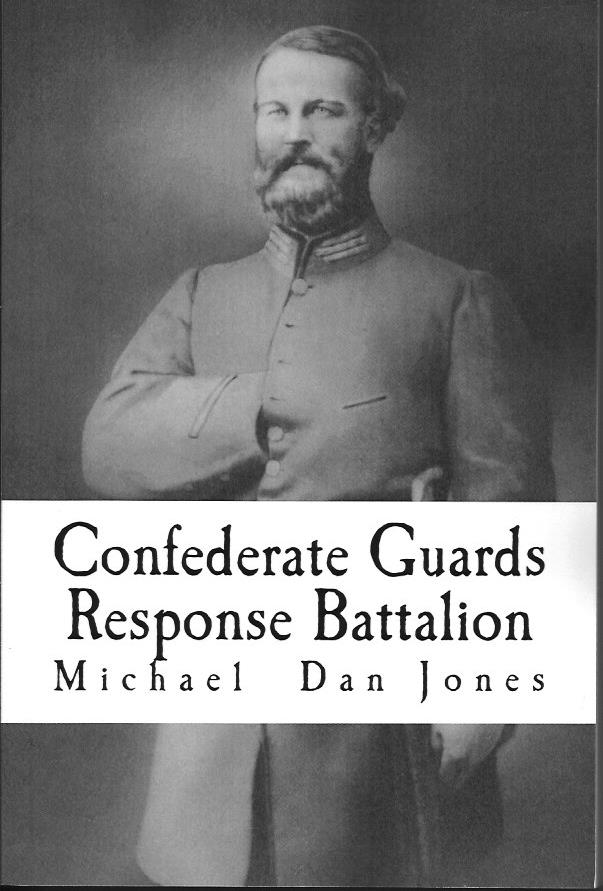
This is the history of one of the hardest-fighting Louisiana units in the War for Southern Independence, the Confederate Guards Response Battalion. It covers the organization of the units in New Orleans, the Battle of Shiloh, and their campaigns in Louisiana. The book includes photographs, maps, illustrations, a bibliography, and an index.

1863: The Battle of Manassas Gap,  Va., ends the Gettysburg Campaign with a Confederate victory. Gen. Robert E. Lee left Maj. Gen. Richard Anderson's Division at Manassas Gap to thwart the Federal Army of the Potomac, under Maj. Gen. George Meade from attacking Lee's army while returning from Pennsylvania. Meade sent in the division of Maj. Gen. William H. French's III Corps was to clear the gap of the Confederates. French sent in Brig. Gen. Francis Spinola's New York Excelsior Brigade initially pushed back Col. Edward J. Walker, commanding Wright's Georgia Brigade. However, Anderson reinforced Walker with the brigade of Col. Edward A. O'Neal, with Col. Thomas H. Carter's artillery, and stopped the Federals' pursuit. Lee then moved into the Luray  Valley and beyond Federal pursuit. Total casualties for both sides in the battle were about 440.

Confederate General Birthdays, July 23

Brig. Gen. Gabriel Colvin Wharton was born in Culpepper, Virginia, in 1824. He graduated from the Virginia Military Institute in 1847 as a "distinguished graduate." In the pre-war period, Wharton worked as a civil engineer and moved to the Arizona Territory. During the War for Southern Independence, he served as a major in the 45th Virginia Infantry and as colonel of the 51st Virginia Infantry. He was promoted to brigadier general on July 8, 1863. Wharton's battles included Fort Donelson, Knoxville, New Market, Cold Harbor, Monocacy, Cedar Creek, and Waynesboro. Following the war, Wharton was elected to the Virginia General Assembly and became a mining engineer. He died May 12, 1906, in Radford, Va., and was buried in the Radford Family Cemetery in Radford.

Brig. Gen. Gabriel C. Wharton

Wednesday, July 22, 2026

Today in History (general history)/ On This Day in Confederate History/ Confederate General Birthdays, July 22.

Click πŸ‘‰ Today in History (general history), July 22.

On This Day in Confederate History, July 22.

1861: Confederate Brigadier General Barnard Bee died on this day after being mortally wounded in the First Battle of Manassas. He gained lasting fame for rallying his brigade behind that of Brigadier General Thomas J. Jackson. He is reported to have said, "There is Jackson standing like a stone wall! ... Rally behind the Virginians!" Bee received his fatal wound shortly thereafter.

Brig. Gen. Barnard Elliott Bee Jr.
1824-1861
He is buried in St.Paul's Episcopal Church Cemetery in Pendleton, S.C.

Lt. Gen. Thomas J. "Stonewall" Jackson
Confederate Hero, Military Genius

Stonewall Jackson Monument
Manassas National Battlefield Park
(National Park Service)

1862: Vicksburg Campaign: The Confederate ironclad CSS Arkansas at Vicksburg, Miss., was attacked by the USS Essex, Queen of the West, and Sumter. The Essex dueled at close range with the Arkansas and inflicted some damage on the Confederate vessel. Then the Queen of the West rammed it but did no serious damage. The Queen then withdrew but Arkansas scored a hit while it was withdrawing. Arkansas survived the attack and work on repairs continued.
CSS Arkansas
(U.S. Naval Historical Center)

1863: A skirmish at the Eagleport crossing of the Muskingum River in Ohio took place between about 600 cavalrymen under Brigadier General John Hunt Morgan and the local militia. The Confederate horse soldiers quickly dispersed the militiamen and crossed the river. 

A typical Confederate cavalryman.
(Painting by W.L. Sheppard)

1864: The Battle of Atlanta, Ga. occurred on this day when Gen. John Bell Hood's Army of Tennessee attacked the Northern army of Maj. Gen. W.T. Sherman's flank, which was being defended by Federal Maj. Gen. Maj. Gen. Grenville Dodge's XVI Corps. Federal Maj. Gen. James McPherson, commander of the Army of the Tennessee, was mortally wounded and captured by Confederates while riding to Dodge's corps. McPherson died soon afterward. Hood had 40,438 men in the assault, while the blue coats had 34,863 in strong defenses. While the Confederates fought valiantly, the attacks all failed with heavy casualties. The Yankees lost about 3,400 casualties and the Confederates lost about 5,500. Among the killed on the Confederate side was Maj. Gen. William H.T. Talker and Brig. Gen. Samuel Benton.

Major Philip Van Hor Weems
Co. H, 11th Tennessee Infantry Regiment
He was mortally wounded in the Battle of Atlanta.
(Liljenquist Collection, Library of Congress)

Confederate General Birthdays, July 22.

Major General John George Walker was born on this day in 1821 in Cole City, Missouri. Although he didn't have a military education, he served as a first lieutenant in the Regiment of Mounted Rifles in the Mexican-American War. He was brevetted a captain for his gallantry at San Juan de Los Llanos and suffered a wound at Molino del Rey. Walker stayed in the army after the war until July 1861, when he resigned and joined the Confederate Army as a cavalry major. He was then promoted to lieutenant colonel of the 8th Texas Cavalry, then to colonel. Walker was promoted to brigadier general in January 1862 and led a brigade of infantry in the Army of Northern Virginia at the Battle of Sharpsburg, Md., where he was wounded. In November 1862, he was promoted to major general and given command of a whole Texas infantry division, which gained fame in the Trans-Mississippi Department as Walker's Greyhounds. His battles and campaigns included the Peninsula, Malvern Hill, South Mountain, Milliken's Bend, Mansfield, Pleasant Hill (wounded), and Jenkins' Ferry. After the Red River Campaign of 1864, he became commander of the Army of Western Louisiana, where he finished the war. Following the war, he lived temporarily in Mexico and then joined his wife in London, England. Later, he returned to the U.S. and was eventually made the U.S. Consul in Bogota, Colombia, and as Special Commissioner to the Pan-American Convention. Walker died July 20, 1893, in Washington, D.C., and was then buried in Stonewall Cemetery in Winchester, Va.

Maj. Gen. John G. Walker
πŸ‘±

Brigadier General Hamilton Prioleau Bee was born on this day in 1822 in Charleston, South Carolina. He was the older brother of Brigadier General Barnard E. Bee, who ironically died on the same day from his mortal wound at First Manassas in 1861. The family moved to Texas in 1835, where his father, Barnard Bee Sr., became a leader in the Texas Revolution and the Texas Republic. During the Mexican-American War, Hamilton Bee served in Benjamin McCulloch's Co. A, of Col. Jack Hays' 1st Regiment of Texas Mounted Volunteers, then as a second lieutenant in Mirabeau B. Lamar's company in Col. Peter Hansborough Bell's Regiment of Texas Volunteers. After the war, he served in the State of Texas House of Representatives and was Speaker of the House. Bee was elected a brigadier general in the Texas militia in 1861 and then appointed a brigadier general in the Confederate Army. He spent much of the war in South Texas commanding there until the Red River Campaign of 1864 in Louisiana, when he led his brigade in the Battle of Mansfield, the Battle of Pleasant Hill (slightly wounded), and in various battles and skirmishes to the end of the campaign. Following the war, Bee lived with his family in Saltillo, Mexico, and didn't move back to Texas until 1876. He then became the superintendent of the farm on what would become Texas A&M University, practiced law in San Antonio, and served as Texas Commissioner of the Office of Insurance, Statistics, and History. Bee died on October 3, 1897, in San Antonio and is buried in the Confederate Cemetery in San Antonio.

Brig. Gen. Hamilton P. Bee

Tuesday, July 21, 2026

Today in History (general history)/ On This Day in Confederate History/ Confederate General Birthdays, July 21.

Click πŸ‘‰Today in History (general history) July 21. 

On This Day in Confederate History, July 21.

1861: The First Battle of Manassas, Va., is fought along Bull Run Creek on this day and was a great Confederate victory. The battle starts on the Confederate left wing at Matthew's and Henry House Hills with the 4th South Carolina Volunteers and the 1st Battalion (Wheat's) Louisiana delaying Federals under Brig. Gen. Irvin McDowell had long enough for Confederates to get to Henry House Hill, where Brig. Gen. Thomas J. Jackson and his First Virginia Brigade stop the Federal advance. Jackson and his brigade get their famous nickname, Stonewall. More Confederate and Federal reinforcements pour in, and the battle sways back and forth much of the day until, in the late afternoon, the Confederates break the Federal line and commence a stampede back to Washington, D.C., Gens. P.G.T. Beauregard and Joseph E. Johnston get the credit for a masterful victory in the first major battle of the war. The Federals lost 481 killed, 1,011 wounded, and 1,216 missing. The Confederates suffered 381 killed, 1,582 wounded, and 13 missing.

A history of Company B, 1st Special Battalion (Wheat's) Louisiana Volunteers in the War Between the States. The Tiger Rifles, Company B, of Wheat's Battalion became famous because of their flashy Zouave uniforms, their famous battalion commander, Major Roberdeau Wheat, and their heroics at the First Battle of Manassas. Their nickname, Tigers, became attached, first to the battalion, and then to all Louisiana troops serving in the Army of Northern Virginia. The book tries to separate fact from myth with regard to the Tigers. The men became so notorious for their antics in camp that they got blamed for a lot of things they didn't do, although they did plenty on their own to deserve their reputation. Also examined is the possible real identity of their company commander, Captain Alexander White. His name is an alias, but as far as is known, his real identity has been a mystery. The book focuses tightly on the men of the Tiger Rifles and brings them to life as much as the limited resources allow.

Pvt. William Baxter Ott, Co. I, 4th Va. Inf.
Stonewall Brigade
Killed in action at First Manassas.
(Liljenquist Collection, Library of Congress)


Gen. P.G.T. Beauregard
He was appointed a full general to date from July 21, 1861
At this point, he was the first national hero of the Confederacy.

1864: Atlanta Campaign: Lt. Gen. John Bell Hood kept up his offensive and sent Lt. Gen. William J. Hardee and Maj. Gen. B.F. Cheatham's Corps and Maj. Gen. Joseph "Fighting Joe" Wheeler's Cavalry toward Decatur, Ga., to attack the flank of the Federal Army of the Tennessee, under Maj. James McPherson, the next day. 

Confederate General Birthdays, July 21.

None.

Monday, July 20, 2026

 ClickπŸ‘‰Today in History (general history) July 20. 

On This Day in Confederate History, July 20.

This is a contemporary sketch of two
Louisiana Tiger Rifle soldiers from life, colorized by
Copilot AI. The Tiger Rifles were Co. B
of the 1st Battalion (Wheat's) Louisiana Volunteers.
Captain Alexander White, a filibuster and steamboat 
officer before the war, was the commander. The
colorful Zouaves gained fame for their bowie knife
charge at the 1st Battle of Manassas, July 21, 1861.

1861: First Manassas Campaign: Both Brig. Gen. Irvin McDowell and Gen. P.G.T. Beauregard were planning to launch attacks on July 21, from opposite ends of the battlefield. Beauregard was receiving reinforcements from Gen. Joseph E. Johnston, who was transferring troops via the railroad connections for the battle, which was a first in U.S. Military History. McDowell had 35,732 men available, and Beauregard between 32,000 and 34,000. Johnston technically outranked Beauregard but Johnston allowed Beauregard to manage the battle since he was more knowledgeable about the terrain and placement of troops

A history of Company B, 1st Special Battalion (Wheat's) Louisiana Volunteers in the War Between the States. The Tiger Rifles, Company B, of Wheat's Battalion became famous because of their flashy Zouave uniforms, their famous battalion commander, Major Roberdeau Wheat, and their heroics at the First Battle of Manassas. Their nickname, Tigers, became attached, first to the battalion, and then to all Louisiana troops serving in the Army of Northern Virginia. The book tries to separate fact from myth with regard to the Tigers. The men became so notorious for their antics in camp that they got blamed for a lot of things they didn't do, although they did plenty on their own to deserve their reputation. Also examined is the possible real identity of their company commander, Captain Alexander White. His name is an alias, but as far as is known, his real identity has been a mystery. The book focuses tightly on the men of the Tiger Rifles and brings them to life as much as the limited resources allow.
1863: Skirmishing breaks out in the various gaps in Northern Virginia as Maj. Gen. George Meade's Army of the Potomac tries to catch up with Gen. Robert E. Lee's Army of Northern Virginia following the Battle of Gettysburg. There are skirmishes at Ashby's Gap and Berry's Ferry, Va.
1864: Atlanta Campaign: Urged by President Davis, Lt. Gen. John Bell Hood launches the Army of Tennessee into a series of costly attacks around Atlanta, Ga. on Maj. Gen. W.T. Sherman's three Federal armies, the first being the Battle of Peachtree Creek. Hood has 20,250 Confederates in the battle and Sherman 21,655. Hood hopes to catch Sherman's arriving army before it can fortify its positions. All of the Southern assaults are repulsed with heavy casualties. Estimated casualties of 1,900 for the Federals and 2,500 for the Confederates. 

Confederate General Birthdays, July 20.

NONE.

Sunday, July 19, 2026

Today in History (general history)/ On This Day in Confederate History/ Confederate General Birthdays, July 19.

Click πŸ‘‰Today in History (general history) July 19.

On This Day in Confederate History, July 19.

1861: Gen. Joseph E. Johnston's 18,000-man Army of the Shenandoah begins arriving at Manassas Junction, Va., to bolster Gen. P.G.T. Beauregard's 22,000-man Confederate Army of the Shenandoah, which is threatened by Brig. Gen. Irvin McDowell's 35,000-man Yankee Army of Northeastern Virginia. Johnston approves of Beauregard's plan to strike the Federals on the Federal left flank. Meanwhile, McDowell is planning to attack the Confederate left flank.

1863: Brigadier General John Hunt Morgan's Confederate Cavalry met with disaster at the Battle of Buffington Island, Ohio. Morgan's cavalry, numbering 1,930 men, was trying to cross the river into West Virginia at that point when attacked and nearly 3,000 Federals under Brigadier General Edward H. Hobson. Morgan's men first found the fort at that point abandoned, but three Federal gunboats prevented them from crossing. They were then nearly surrounded by the Federals. Morgan and about 700 men escaped, while over 750 under Colonel Basil W. Duke were captured. The Confederates suffered 52 killed, 100 wounded, plus those captured. Federals lost 25 men killed and 30 wounded.

1864: Atlanta Campaign: Reaction to the replacement of General Joseph E. Johnston with General John Bell Hood is met with great anger by the soldiers of the Confederate Army of Tennessee in the Atlanta Campaign. But the men were kept busy building breastworks at the fortifications in Atlanta, Georgia. Other than the morale problem over the chance of commanders, the Confederate army is in good shape to meet Maj. Gen. W.T. Sherman's three Federal armies were the Army of the Cumberland, the Army of the Tennessee, and the Army of the Ohio.

2nd Lt. Thomas S. McLane, Co. A, 41st Ga. Inf.
Army of  Tennessee. Lt. McLane retired to
the Invalid Corps on Aug. 29, 1864.
(Liljenquist Collection, Library of Congress)

Confederate General Birthdays, July 19.

Brig. Gen. Roger Atkinson Pryor was born in 1828 in Dinwiddie County, Virginia. He was a pre-war journalist, politician, and member of the U.S. House of Representatives from Virginia. He was also a fiery orator and proponent of secession. After leaving the U.S. House in 1861, he first served in the Confederate Congress before joining the Confederate Army as the colonel of the 3rd Virginia Infantry Regiment. He was then promoted to brigadier general and led his brigade in the Peninsula Campaign, the Seven Days Battles, Second Manassas, and Sharpsburg. He commanded a division at Sharpsburg but performed poorly. Pryor resigned his commission in 1863. Still wanting to serve his nation's cause, he enlisted as a private in August 1863 in the 3rd Virginia Cavalry. He was captured by the Yankees on Nov. 28, 1864, and was suspected of spying, but was released on parole under the authority of Lincoln and remained voluntarily in Petersburg when the city was evacuated in 1865. Following the war, Pryor moved with his family to New York where he practiced law, advocated against Reconstruction, was active in the Democratic Party, and was appointed to the New York Supreme Court. Pryor was also active in the Sons of the American Revolution and his wife the Daughters of the American Revolution, which she helped found. Pryor died on March 14, 1919, in New York City and was buried in Princeton Cemetery in Princeton, New Jersey.

Brig. Gen. Roger A. Pryor

A history of the 11th Battalion (Spaight's) Texas Volunteers in the War for Southern Independence. Spaight's Battalion gained the nickname of "Swamp Angels" because many of the men were from Southeast Texas and Southwest Louisiana. They were also known for their discipline and good conduct with few desertions. The unit fought on the Texas Gulf Coast and in Louisiana to fend off Northern invaders of their homeland. Their battles included the First Battle of Sabine Pass, TX, in 1862, Stirling's Plantation, Bayou Bourbeau, and Calcasieu Pass, all in Texas. Later in 1864 the battalion was consolidated with the 20th Battalion (Griffin's) Texas Infantry to form the 21st Texas Infantry Regiment. The regiment had as full complement of men with over 1,000 on the roles. It served as headquarters guards at Houston, Texas at Camp Lubbock.
Pvt. Solomon Jones, Co. E, 11th Bn. Texas Volunteers
(AI Illustration, created from a photo of his four sons)


Saturday, July 18, 2026

Today in History (general history)/ On This Day in Confederate History/ Confederate General Birthdays, July 18.

Click πŸ‘‰Today in History (general history) July 18. 

On This Day in Confederate History, July 18.

1861: The Battle of Blackburn's Ford, Va., took place in the Manassas Campaign, which was a preliminary engagement to the major battle that occurred three days later. Gen. P.G.T. Beauregard was in command of 22,000 Confederates and Brig. Gen. Irvin McDowell commanded the 35,000 Federals. McDowell sent a division under Brig. Gen. Daniel Tyler to probe Confederate defenses. The probes were repulsed by Brig. Gen. James Longstreet's brigade and backed up by Col. Jubal Early's Brigade. There were 68 Confederate casualties and 83 on the Federal side. The victory bolstered the morale of the raw Confederate recruits. Meanwhile, Gen. Joseph E. Johnston's 18,000-man army is en route to reinforce Beauregard by railroad.

Cpl. John Wesley Edmunds, Co. B,
"Southern Guards," 11th Va. Inf.
In Longstreet's Brigade at the Battle
of Blackburn's Ford, Va.
(Liljenquist Collection, Library of Congress)

1863: The Second Battle of Fort Wagner, S.C. scores another victory by the Confederates guarding Charleston. Gen. Beauregard is in overall command of the Charleston defenses and the fort is guarded by 1,800 Confederates. The fort also had one 10-inch seacoast mortar, two 32-pounder carronades, two 8-inch shell guns, two 32-pounder howitzers a 42-pounder carronade, and an 8-inch seacoast mortar. There were also two heavy artillery pieces outside the fort to provide enfilading fire on attackers. The Federals of Brig. Gen. Quincy Gillmore's command, numbering 5,000 men, is backed up by a massive preliminary bombardment of the fort by six ironclad warships. Three Federal brigades made the frontal attack on the fort. Each charge by the bluecoats was bloodily repulsed. Among the dead was Brig. Gen. George Crockett Strong, mortally wounded, brigade commander Col. Haldimand S. Putnam, Col. John Lyman Chatfield of the 6th Conn. Inf., and Col. Robert Gould  Shaw, 54th Mass. Inf. Federal casualties totaled 1,515, including 246 killed, 880 wounded, and 389 missing or captured. The Confederate casualties totaled 174, including 36 killed, 133 wounded, and 5 missing or captured.

Confederate General Birthdays, July 18.

None.

Friday, July 17, 2026

Today in History (general history)/ On This Day in Confederate History/

Click πŸ‘‰Today in History (general history) July 17.

On This Day in Confederate History, July 17.

1861: Both North and South prepare for the first major battle of the war near Manassas, Virginia. The North's Army of the Potomac continues its march to Manassas under Maj. Gen. Irwin McDowell, 35,000 mostly new soldiers are poorly trained and largely undisciplined, and the march goes slowly. Meanwhile, Gen. Joseph E. Johnston is preparing to move his 18,000 men by rail to reinforce Gen. P.G.T. Beauregard's 22,000 at Manassas.

1862: First Battle of Cynthiana, KY -- During CSA Col. John H. Morgan's 1st KY Raid, on July 17, 1862, 875 CSA hit town via the Georgetown Pike. 350 US troops & Home Guard defended the town from houses. Morgan attacked across the Licking River and outflanked US troops, who gave up after 2 hours. Approx. 40 CSA, 90 US killed & wounded. Morgan was surprised because the US defense was unexpectedly strong.-- Text from Commonwealth of Kentucky Historic Marker.

1863: The Battle of Honey Springs, Indian Territory (Oklahoma), takes place on this day. The Confederates were led by Brig. Gen. Douglas H. Cooper and Brig. Gen. William Lewis Cabell with 6,000 troops. The Federals were commanded by Maj. Gen. James G. Blunt and 3,000 bluecoats. American Indians fought on both sides, and some African Americans on the Federal side. The Federals attacked the Confederates on the morning of July 17. Rain-damaged ammunition, but the Confederates counterattacked and were repulsed. Cabell's 3,000-man brigade did not reach the battlefield in time for the battle. The Federals had 17 killed and 60 wounded. The Confederates lost 134 killed or wounded, and 47 were captured.

Pvt. Burton Marchbanks, Co. E,
30th Texas Cavalry. Wounded in
the neck at the Battle of Honey Springs, IT/OK.
Discharged on Aug. 8, 1863, he died at home near
Cleburne, Texas, on Feb. 12, 1864. His homespun
uniform is on display at the Layland Museum
in Cleburne.
(Layland Museum, Cleburne, Texas)

1864: General Joseph E. Johnston was relieved of his command of the Army of Tennessee on this day by President Jefferson Davis because he failed to stop the Federals from reaching Atlanta, Ga. The president promoted General John Bell Hood to command the army. The rank and file of the Army of Tennessee were highly disgruntled by the change of command.

Confederate General Birthdays, July 17.

NONE.

The story of an important Confederate fortification on the Louisiana-Texas border.