Wednesday, March 4, 2026

Today in History (general history)/ On This Day in Confederate History/ Confederate General Birthdays, March 4.

Click πŸ‘‰TODAY IN HISTORY (general history) March 4. 

ON THIS DAY IN CONFEDERATE HISTORY, March 4.

1861: The Confederate Congressional Flag Committee recommended the adoption of the flag design for the First National Flag, also called the "Stars and Bars." The flag design is a red field with a white bar in the middle and a blue canton with the number of white stars corresponding to the number of states in the Confederacy in the upper quarter on the hoist side. Although the committee didn't give anyone credit for the design of the flag, two men later claimed credit. Nicola Marschall of Alabama and Orren Randolph Smith of North Carolina. Both men served in the Confederate Army. Marschall was an accomplished artist from Prussia who also designed the official Confederate uniform. Smith claimed he had submitted a model of his flag design to the committee and flew a copy at his hometown and made copies for militia companies. The Sons of Confederate Veterans and other organizations investigated the claims and couldn't find conclusive evidence either way.

Nicola Marschall
(Encyclopedia of Alabama)

Major Orren Randolph Smith
(The History of the Stars and Bars, 1913)

From the top, the First National,
the Battle Flag, the Second National,
and the Third National Confederate flags.
Click the image to enlarge it.
(Library of Congress)

1862: General Robert E. Lee is transferred from the Department of South Carolina, Georgia, and East Florida to Richmond, Virginia where he is assigned to be President Davis's military advisor. 

1863: Major General Earl Van Dorn's Confederate Army captures several of Major General William Rosecrans' regiments near Spring Hill, Tennessee.

1864: Confederates fight off another raid by Major General Judson Kilpatrick in the area where Colonel Ulric Dahlgren was killed in King and Queen County, Virginia.

1865: The Confederate Congress adopted the Third National Confederate Flag on this day. The flag was like the Second National Flag, also called the "Stainless Banner," except there is a broad red bar on the fly end of the flag so it can be better distinguished from a white flag of surrender.

Third National Confederate Flag as designed.
(Wikipedia Commons)
\

CONFEDERATE GENERAL BIRTHDAYS, March 4.

Brigadier General Elisha Franklin Paxton was born on this day in 1828 in Rockbridge County, Virginia. He was a prewar lawyer and an advocate of secession. After the War for Southern Independence started, he joined the Rockbridge Artillery as a first lieutenant. While he had no military experience Paxton was a fast learner and was a participant in the First Battle of Manassas, Va. in Stonewall Jackson's brigade. He was elected a major in the 27th Virginia Infantry on Oct. 14, 1861, and when he was not reelected circa May 1862, was appointed to Stonewall Jackson's staff. He was promoted from major to brigadier general on Nov. 1, 1862, and given command of the Stonewall Brigade and led it at the Battle of Fredericksburg, Va. Paxton was killed in action on May 3, 1863, at the Battle of Chancellorsville while in command of the Stonewall Brigade. At first, he was buried at Guinea Station, Va., and then reburied in Lexington, Va. in Oak Grove Cemetery, the same cemetery where Stonewall Jackson is buried.

Brig. Gen. Elisha F. Paxton

Tuesday, March 3, 2026

Today in History (general history)/ On This Day in Confederate History/ Confederate General Birthdays, March 3.

Click πŸ‘‰TODAY IN HISTORY (general history) March 3.

ON THIS DAY IN CONFEDERATE HISTORY, March 3.

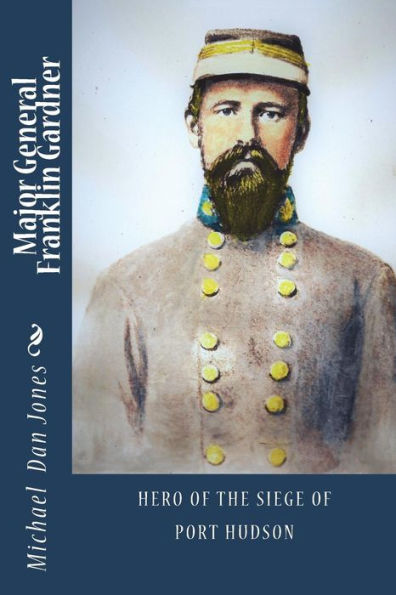
1863: PORT HUDSON CAMPAIGN: Brigadier General Albert Rust's 2,800-man infantry brigade and three batteries of artillery enter Port Hudson to bolster the Confederate fortress there about 16 miles north of Baton Rouge, which is threatened by the Federal army and navy. Major General Franklin Gardner has greatly improved the defenses there since he took command in December. He has also set up a crack intelligence network to keep an eye on the enemy. More reinforcements are on the way.

Maj. Gen. Franklin Gardner

1864: Captain Elijah Petty of the 17th Texas Infantry, Walker's Texas Division, notes in a letter the Confederates are seeing and hearing an increase of Federal gunboat activity on the Red River. He noted the enemy warships were headed in the direction of Fort DeRussy and some had been diverted up the Black River and bombarded Fort Beauregard.

Capt. Elijah Petty

On this same day, Brigadier General Alfred Mouton's Louisiana Infantry Brigade passes in review before Major General Richard Taylor. Captain Felix Poche of the brigade commissary, who was not present, notes in his diary that he was told there were ladies present and everything went well.

Capt. Felix Poche

CONFEDERATE GENERAL BIRTHDAYS, March 3.

NONE.

Monday, March 2, 2026

Today in History (general history)/ On This Day in Confederate History/ Confederate General Birthdays, March 2.

Click πŸ‘‰TODAY IN HISTORY (general history) March 2. 

ON THIS DAY IN CONFEDERATE HISTORY, March 2.

1862: New Mexico Campaign: Confederate Brigadier General Henry H. Sibley's Army of New Mexico captures Albuquerque, New Mexico after driving out the Federals there. Sibley has 2,515 Texas cavalrymen, mounted infantry, and artillery.

1863: Confederates skirmish with Federals near Petersburg, Tennessee which leaves 12 Southerners killed and 20 wounded.

1864: Death of Ulric Dahlgren: Near King and Queen County Court House, Virginia, Confederates set an ambush for Colonel Ulric Dahlgren's detachment of Federal cavalry, which is retreating from its failed attempted raid on Richmond. At 11 o'clock P.M., the Northern horse soldiers enter the trap and the Confederates open fire. Dahlgren is killed in the action and 92 of his men are captured. Plans for the assassination of President Davis and his cabinet are taken from Dahlgren's dead body.

Unidentified Virginia Confederate volunteer in
 uniform with a bayoneted musket. (Library of Congress)

1865: At the Battle of Waynesboro, Virginia, Lieutenant General Jubal Early's Army of 1,600 Confederates is defeated by Brigadier General George A. Custer's 2,500-man cavalry division. Most of the Southerners are captured.

CONFEDERATE GENERAL BIRTHDAYS, March 2.

NONE.

Sunday, March 1, 2026

Today in History (general history)/ On This Day in Confederate History/ Confederate General Birthdays, March 1.

Today in History (general history) ClickπŸ‘‰March 1.

On This Day in Confederate History, March 1.

1861: President Jefferson Davis appointed Pierre Gustave Toutant Beauregard of Louisiana to the rank of brigadier general in the Provisional Army of the Confederate States of America. A graduate of West Point in the class of 1838, he ranked 2nd among the cadets and was assigned to the prestigious Army Corps of Engineers. He had an outstanding record in the Mexican-American War on the staff of General Winfield Scott in the Mexico City Campaign. He also worked closely with fellow staff member Captain Robert E. Lee. Beauregard was breveted a captain for his gallantry at Contreas, Churubusco, and Chapultepec where he was wounded. After the war, he served in many important engineering assignments and in 1861 was the superintendent at West Point. But his orders were revoked three days before Louisiana seceded. 

Gen. P.G.T. Beauregard

Also, in 1861, The Confederate government was given control of the military operations at Charleston Harbor, S.C., which includes Fort Sumter. Gen. Beauregard will be given command.

1862: Shiloh Campaign: Confederates with the 18th Louisiana and Miles Artillery drive 100 men from Company K, 32nd Illinois Infantry who were landed by a Federal gunboat at Pittsburg Landing, Tennessee. First Lieutenant John T. Lavery of the 18th Louisiana was wounded in the thigh but rather than be evacuated, grabbed a Maynard carbine and fired it as rapidly as he could at the enemy. The Northerners suffered two killed and six wounded. Lavery recovered from his wound. Confederate casualties totaled 12 in killed and wounded. Colonel Alfred Mouton and his regiment were commended by generals Ruggles and Beauregard for their handling of the gunboat affair. 

Brig. Gen. Alfred Mouton

1864Red River Campaign: The Federal Army of the Gulf in New Orleans was building a massive army and navy expedition up the Red River in Louisiana to invade Texas via Northwest Louisiana and confiscating as much cotton as they could for New England textile mills. General E. Kirby Smith and Major General Richard Taylor were preparing the Confederate Army of Western Louisiana by concentrating troops from Louisiana, Texas, Arkansas, and Missouri to repel the invasion.
Maj. Gen. Prince Camille Polignac
led a Texas brigade and then a division in
the Red River Campaign.

Confederate General Birthdays, March 1.

Major General James Fleming Fagan was born on this day in 1828 in Clark County, Kentucky. He gained some military experience in the Mexican American War serving with Company C, Arkansas Mounted Infantry Regiment, and fighting in the Battle of Buena Vista, Mexico. He was promoted to the rank of second lieutenant. He started out the War for Southern Independence as a captain in the 1st Arkansas Infantry Regiment and when Arkansas seceded, was elected colonel of the regiment. Fagan was promoted to brigadier general Sept. 12, 1862, and to major general April 24, 1864. His battles included Shiloh, Corinth, Cane Hill, Prairie Grove, Helena, Marks' Mills, Pilot Knob and Mine Creek. He was paroled on June 29, 1865, and returned to farming. He was appointed a United States Marshal by President Grant in 1875. Fagan died Sept. 1, 1893, in Little Rock, Arkansas and was buried in Mount Holly Cemetery. 

Maj. Gen. James F. Fagan
πŸ‘±

Brigadier General Hiram Bronson Granbury was born on this day in 1831 in Copiah County, Mississippi. He moved to Texas in the early 1850s and settled in Waco. After studying law at Baylor University, Granbury was admitted to the bar. He then became chief justice of McLennan County, Texas. When war came in 1861, he was elected a captain and then major of the 7th Texas Infantry Regiment. He was then promoted to colonel and was promoted to brigadier general Feb. 29, 1864. Granbury's battles were Raymond, Jackson, Chickamauga, Missionary Ridge, Ringgold Gap, and Franklin, where he was killed in action on November 30, 1864. Granbury was eventually buried in Granbury, Texas, which is named in his honor. A statue of Gen. Granbury was erected at the Hood County Courthouse in Granbury.

Brig. Gen. Hiram B. Granbury

Today in History (general history)/ On this Day in Confederate History/ Confederate General Birthdays, February 28.

ClickπŸ‘‰ TODAY IN HISTORY (general history) Feb. 28. 

THIS DAY IN CONFEDERATE HISTORY, Feb. 28.

1861: Missouri delegates assembled to meet in a convention in Jefferson City to consider the question of secession from the Union.

North Carolina's election to have a secession convention resulted in a narrow majority for not holding it. The vote was 46,603 against holding the convention to 46,409 for it. 

1862: At President Davis's request, a day of fasting is held throughout the Confederacy. Also on this day, federal forces occupy Charleston, Virginia.

1863: The Confederate privateer Rattlesnake (formerly the cruiser CSS Nashville), runs aground on the Ogeechee River in Georgia and is sunk by the USS Montauk, a single-turret ironclad. 

1864: Kirkpatrick-Dahlgren Raid: Confederate forces at Richmond, Virginia thwart an assassination attempt on President Davis and his cabinet. Federal Major General Judson Kilpatrick leads the ill-fated raid and Colonel Ulric Dahlgren, the son of Admiral Dahlgren, is killed and plans for the assassination are found on his body. Richmond home guardsman William Littlepage found the incriminating documents on Dahlgren's dead body.

An unidentified young Confederate taken
by Richmond, Va. photographer Charles Rees.
He is wearing the plain style uniform
similar to those issued to Richmond Home Guard
units. (Library of Congress)

1865: Carolinas Campaign: Confederate defenders battle with Sherman's unstoppable blue coats at Rocky Mount and Cheraw on their relentless campaign of destruction through South Carolina. 

CONFEDERATE GENERAL BIRTHDAYS, Feb. 28. 

Brigadier General John Creed Moore was born on this day in 1824 at Redbridge, Hawkins County, Tennessee. He graduated from West Point in 1849 and was 17th in his class. While serving as a second lieutenant in the U.S. Army, he participated in the Seminole War, and in various frontier posts until he resigned in 1855. Before the War for Southern Independence, Moore became a professor at Shelby College in Kentucky. After the war started, he joined the Confederate Army as a captain and then helped raise the 2nd Tex. Inf. Regiment and selected as its colonel. Moore led the regiment at the Battle of Shiloh and was promoted to brigadier general on May 26, 1862. He was in the Second Battle of Corinth, Miss., and was captured at the end of the Siege of Vicksburg. After the exchange, he was in the Chattanooga Campaign. He resigned in February after a dispute with Lt. Gen. William Hardee. Moore finished the war as a lieutenant colonel commanding arsenals in Savannah, Ga. and Selma, Ala. He resumed his education career following the war in Texas. Moore died on Dec. 31, 1910, and was buried in Osage Cemetery in Osage, Texas which is now a ghost town.

Brig. Gen. John C. Moore
πŸ‘±

Brigadier General Matthew Duncan Ector was born on this day in 1822 in Putman County, Georgia. He was a lawyer and served one term in the Georgia legislature before moving to Henderson, Texas in 1851 where he also practiced law and served in the Texas legislature. Ector began the War for Southern Independence as a private in the 3rd Texas Cavalry before being elected a second lieutenant and serving on the staff of Brig. Gen. Joseph L. Hogg. When he was promoted to colonel of the 14th Texas Cavalry Regiment, he was then assigned to command a Texas infantry brigade in the Army of Tennessee which fought at the Battle of Murfreesboro, the Battle of Chickamauga, the Atlanta Campaign, and was wounded July 27, 1864, and had a leg amputated. Ector recovered enough to lead a brigade at the Battle of Spanish Fort, Mobile, Ala. at the end of the war. Following the war, he was elected to the Texas Court of Appeals in 1875 and died Oct. 29,1879 in Tyler, Texas, and was buried in Greenwood Cemetery in Marshall, Texas.

Brig. Gen. Matthew D. Ector
πŸ‘‹

Friday, February 27, 2026

Today in History (general history)/ On This Day in Confederate History/ Confederate General Birthdays, February 27.

Click πŸ‘‰TODAY IN HISTORY (general history) Feb. 27.

ON THIS DAY IN CONFEDERATE HISTORY, Feb. 27.

1861: President Davis tries to make peace with the Federal government and avoid war. He appoints three officials, Martin J. Crawford, John Forsyth, and A.B. Roman to go to Washington to open peaceful negotiations. At the same time, Governor Pickens of South Carolina urges the president to seize Fort Sumter in Charleston Harbor for the safety of Charleston and honor. There was also a peace conference at the Willard Hotel in Washington and Virginia also proposed a peace conference. All of them failed.

1862: The Confederate Congress authorizes President Davis to suspend habeas corpus as a wartime measure. A writ of habeas corpus is part of the Constitution which protects an individual from illegal arrest by allowing the accused to force the government to show proof before a court. The Constitution also empowers Congress to suspend the writ during times of rebellion or invasion. Lincoln had suspended habeas corpus in the U.S. in April 1861.

1864: Confederate Camp Sumter at Andersonville, Georgia begins taking U.S. prisoners of war at the compound. The P.O.W. camp becomes necessary because the Yankee government cuts off prisoner exchanges. Captain Henry Wirz, a native of Switzerland and a Louisiana physician before the war, was put in command. He would become a scapegoat and the victim of an unjust military court at the end of the war.

Capt. Henry Wirz
πŸ‘±

1865: Carolinas Campaign: Confederate forces contest Sherman's route of march at Mount Elon and at Cloud's House, South Carolina. There is also skirmishing between Confederates and Yankees at Spring Place, Georgia.

Burning of Columbia, S.C.  Feb. 17, 1865
by Sherman's bummers.

CONFEDERATE GENERAL BIRTHDAYS, Feb. 27.

NONE.

Thursday, February 26, 2026

Today in History (general history)/ On This Day in Confederate History/ Confederate General Birthdays, February 26.

Click πŸ‘‰TODAY IN HISTORY (general history) Feb. 26.


ON THIS DAY IN CONFEDERATE HISTORY, Feb. 26.

1861Federal troops evacuate in Texas: Future Confederate General E. Kirby Smith, but still a major in the U.S. Army with the 2nd U.S. Cavalry and in command of Camp Colorado, Texas, abandoned the camp on this day. He had previously refused to surrender it to Texas State Troops under Colonel Benjamin McCulloch. Another future Confederate general, but then as a U.S. Army general, Gen. David E. Twiggs had agreed to the evacuation of all troops, and the surrender of all installations and property, to the Texas States Troops.

Unidentified Pvt. in the 1st Tex. Inf.

(Library of Congress)

1862: New Orleans Campaign: The "Committee of Safety" in New Orleans reports to President Davis that the Navy Department's finances are deplorable and inhibiting enlistments and the payment of debts that are owed by the government.

1863: Confederate partisans near Woodburn, Tennessee capture a federal supply train and confiscate 200 mules as well as commercial and military stores. They then burn the train.

1864: Private John S. Jackman of the 9th Kentucky Infantry in the famed "Orphan Brigade," writes in his diary that at Rocky Face Ridge, Georgia there is sharpshooting and skirmishing during the day, but otherwise it has been relatively quiet.
An unidentified Kentucky Confederate
with 2 revolvers. (Library of Congress)

CONFEDERATE GENERAL BIRTHDAYS, Feb. 26.

NONE.

Wednesday, February 25, 2026

Today in History (general history)/ On This Day in Confederate History/ Confederate General Birthdays, February 25.

Click πŸ‘‰TODAY IN HISTORY (general history) Feb. 25. 

ON THIS DAY IN CONFEDERATE HISTORY, Feb. 25.

1863: There is minor skirmishing going on in Virginia at Winchester, Hartwood Church, Chantilly, and Strasburg. At Charleston, South Carolina, inflation is making life hard for civilians, including a loaf of bread costing $25 and a barrel of flour $65.

1864: First Battle of Dalton, Ga.: Fighting on this day is reported near Dalton, Georgia, and the Federals had to retreat. Gen. Joseph E. Johnston commanded about 40,000 soldiers in the Army of Tennessee. Maj. Gen. George H. Thomas commanded about 25,000 bluecoats in the Army of the Cumberland. Confederate casualties amounted to 140 and Federals lost about 300.

1865Last Charge of the Army of Tennessee: Gen. Joseph E. Johnston was appointed to command the Army of Tennessee to rebuild it to give Sherman serious opposition in the Carolina Campaign. He assembles enough troops to at least be able to make a serious stand against the rampaging bluecoats.

CONFEDERATE GENERAL BIRTHDAYS, Feb. 25.

Brigadier General Clement Anselm Evans was born on this day in 1833 in Stewart County, Georgia. Before the war, Evans was a lawyer and George State Senator, but when Lincoln was elected in 1860, raised a state militia company. After the War for Southern Independence came in 1861, Evans was commissioned a major in the 31st Georgia Infantry and promoted to colonel on May 13, 1862. He was promoted to brigadier general in 1864. Evans' battles included the Seven Days Battle, Second Manassas, Sharpsburg, Fredericksburg, Gettysburg, the Wilderness, Monocacy (where he was wounded), Hatchers Run, and Appomattox at the war's end. Following the war, he became a Methodist minister and was active in Confederate veteran organizations and causes, such as the Confederate Survivors Association. He was one of the founders of the United Confederate Veterans and was the Georgia UCV commander for 12 years. Evans also authored his own memoirs and the Military History of Georgia. He was also the editor and co-authored the 12-volume Confederate Military History. Evans died July 2, 1911, and paid the honor of having his body lay in the state capitol's central rotunda. He was buried in Oakland Cemetery in Atlanta. 

Brig. Gen. Clement A. Evans
πŸ‘±

Brigadier General Robert Hall Chilton was born on this day in 1815 in Loudoun County, Virginia. He graduated from West Point in 1837 ranking 48th out of 57 cadets. His U.S. Army career includes service in the 1st Regiment of Dragoons with duty on the frontier and then in Mexican American War and was brevetted a major for gallantry at the Battle of Buena Vista. He rescued wounded Col. Jefferson Davis in that battle. Following that war was a paymaster in various posts. Chilton resigned from the U.S. Army on April 29, 1861, and joined the Confederate Army as a lieutenant colonel on the staff of General Robert E. Lee. He was promoted to brigadier general on Feb. 16, 1864. In May 1864 he led a small force against an enemy force raiding the Richmond & Petersburg Railroad. Following the war he lived in Columbus, Georgia where he served as the president of a manufacturing company. Chilton died Feb. 18, 1879, in Columbus and was buried in Hollywood Cemetery in Richmond, Va. 

Brig. Gen. Robert H. Chilton
πŸ‘‹

Tuesday, February 24, 2026

Today in History (general history)/ On This Day in Confederate History/ Confederate General Birthdays, February 24.

ClickπŸ‘‰Today in History, General History Feb. 24. 

On This Day in Confederate History

1862SHILOH CAMPAIGN: Confederates under Maj. Gen. Nathan Bedford Forrest's cavalry evacuates Nashville, Tenn. under pressure from General Buel's Army of the Ohio. The Confederate forces were in shambles after the fall of Forts Henry and Donelson. General Albert Sidney Johnston appeared to be a failure and he had only 17,000 men to stop the Federal onslaught on the Mississippi Valley. Out of desperation, President Davis sent General P.G.T. Beauregard to the West to rescue the situation. Johnston welcomed Beauregard, who was sick, who set up his command in Jackson, Tennessee, and began calling on the region's Southern governors to immediately send reinforcements to Corinth, Miss. to throw back the Northern invaders.

Two Tennessee Confederates
(Library of Congress)

This is the history of one of the hardest-fighting infantry regiments in the War for Southern Independence, the 23rd Tennessee Infantry. The regiment was raised predominantly from the Middle Tennessee counties, where there was considerable support for secession and Southern Independence. The men were overwhelmingly made up of yeoman farmers of predominantly Anglo-Celtic descent who were to face some of the largest, bloodiest, and most memorable battles of the war, both in the West and the East. They got their baptism of fire in the Battle of Shiloh, followed by the battles of Perryville, Murfreesboro, Hoover's Gap, Chickamauga, and Knoxville in the West with the famed Army of Tennessee. They were then transferred to the East, where they fought in the Bermuda Hundred Campaign in Virginia, under the legendary General P.G.T. Beauregard, and then in the famed Army of Northern Virginia in the Petersburg Campaign and ended the war with the great General Robert E. Lee at Appomattox Courthouse. The book covers the history of the regiment from letters, diaries, memoirs, and official records to cover both officers and men in a personal way. It also has an annotated roster of some 1,164 men who served in the regiment, as well as maps, photos, illustrations, bibliography, footnotes, and index.

1863: The Confederate Ram C.S.S. Webb and C.S.S. Queen of the West attack the ironclad U.S.S. Indianola in the Red River in Louisiana, ramming it seven times until it is a wreck and surrenders. The Southern victory impairs Federal operations in the Red River and Mississippi River.

CSS QUEEN OF THE WEST AND THE CSS Web 
FORCED THE SURRENDER OF THE USS INDIANOLA

1864: President Davis appoints to the post of chief of staff General Braxton Bragg, who had been such a failure as the commander of the Army of Tennessee.

1865Civilians in South Carolina suffer mightily under the onslaught of Sherman's vengeful bummers who feel they have a license to wreak havoc on the people of the first state to secede. Sherman complains to General Wade Hampton about the "murder" of some of the bluecoat foragers. Hampton replies he is unaware of the specific complaint but reiterates his standing order to shoot on sight any Federal caught burning people's homes. "This order shall remain in force so long as you disgrace the profession of arms by allowing your men to destroy private dwellings," Hampton writes.

Lt. Gen. Wade Hampton

CONFEDERATE GENERAL HISTORY, Feb. 24.

Brigadier General Thomas Benton Smith was born on this day in 1838 in Mechanicsville, Tennessee. He received a military education at the Nashville Military Academy and was appointed to West Point but resigned. Smith worked for the Nashville & Decatur Railroad. With the coming of war in 1861, he was elected a second lieutenant in the 20th Tennessee Infantry Regiment. After the battles of Mill Springs and Shiloh in 1862, he was promoted to colonel of his regiment and to brigadier general on July 29, 1864, and commanded an infantry brigade. His other battles included Baton Rouge, Murfreesboro, Chickamauga, the Atlanta Campaign, and Nashville where he was captured. After his surrender, a Federal colonel, William L. McMillen, beat unarmed Smith over the head with Smith's own sword, inflicting serious brain damage. Incarcerated at Johnson's Island, Ohio, and Fort Warren, Mass., Smith was not released until July 24, 1865. Following the war, Smith worked for the railroad, unsuccessfully ran for Congress, and with lingering brain damage from the assault, spent many of his post-war years in an insane asylum in Nashville. Occasionally he was able to attend veteran reunions or social events. He died May 21, 1923, and was buried in Mount Olivet Cemetery in Nashville.

Brig. Gen. Thomas B. Smith
πŸ‘±

Brigadier General John Crawford Vaughn was born on this day in 1824 in Roane County, Tennessee. He gained military experience in the Mexican American War serving as a captain in the Mexico City campaign. However, his regiment saw no combat action. In between wars he searched for gold in California, ran a hotel in Sweetwater, Tenn., and served as a sheriff in Monroe Co., Tenn. In the War for Southern Independence, Vaughn was elected colonel of the 3rd Tenn. Inf. Regiment and participated in the First Battle of Manassas, Va. Returning to Tennessee, he was promoted to brigadier general, led a brigade in the Vicksburg Campaign, and surrendered with the garrison at the end of the siege. Paroled in Oct. 1863, and then returned to active duty, took part in the Siege of Knoxville in 1863 under Lt. Gen. James Longstreet. After that, he mounted his brigade and served at the Battle of Piedmont, Bull's Gap, Morristown. On April 19, 1865, he joined President Jefferson Davis to escort his party. Vaughn surrendered on May 10, 1865, and was indicted by Tennessee for treason, but moved his family to Georgia. He returned to Tennessee in 1870 and entered politics and was elected to the Tennessee General Assembly. In 1874 he plead guilty in a fraud case involving a widow's pension and was fined $1,000, after which he moved back to Georgia. Vaughn died Sept. 10, 1875, and was buried with military honors at Laurel Hill Cemetery in Thomasville, Ga.

Brig. Gen. John C. Vaughn
πŸ‘‹

Monday, February 23, 2026

Today in History (general history)/ On This Day In Confederate History/ Confederate General Birthdays, February 23.

Click πŸ‘‰TODAY IN HISTORY (general history) Feb. 23.

ON THIS DAY IN CONFEDERATE HISTORY, Feb. 23.

1861: Texas voters validated Texas' secession by a pro-secession vote of 46,129 to 14,697. Governor Sam Houston campaigned against secession, but voters decided otherwise. The vote became official on March 2, 1861, and the Secession Convention authorized the state to apply for admission to the Confederacy. Texas supplies some 70,000 men to the Confederate armies during the war including some of its most famous units. The Federals never conquered Texas but there were small incursions along the coast. Although the battles were small, Galveston, and Sabine Pass in 1863 were important and Palmito Ranch was the very last battle of the war.

1863: Confederate forces skirmish with Federals in Athens, Kentucky, and Fort Caswell, North Carolina. 

1865: Carolinas Campaign: Confederates forces skirmished with Sherman's bummers near Camden, South Carolina. Sherman had about 60,000 men in two armies to carry out the Federal scorched earth policy against the people of the South while the Confederate forces were scattered, and the Confederate government was debating about reappointing Gen. Joseph E. Johnston to rebuild the army to give serious resistance to Sherman. Vice President Alexander Stephens was urging Gen. Robert E. Lee to appoint Johnston, but Lee would only go so far as to recommend him to President Davis, but Davis still had misgivings about Johnston.

CONFEDERATE GENERAL BIRTHDAYS, Feb. 23.

Brig. Gen. Gilbert M. Sorrell

Brigadier-General Gilbert Moxley Sorrell was born on this day in 1838 in Savannah, Georgia. At the beginning of the war, he was a bank clerk in Savannah and enlisted as a private in the Georgia Hussars of the State Militia. Sorrell participated in the capture of Fort Pulaski, Georgia. He secured a position on Brig. Gen. James Longstreet's staff July 21, 1861, at the First Battle of Manassas, Va. He has commissioned a captain on Sept. 11, 1861, was promoted to lieutenant colonel on June 24, 1862, and lieutenant colonel on June 18, 1863. He served on Longstreet's staff until October 1864 when he was appointed a brigadier general and commanded an infantry brigade in Mahone's Division. Sorrell's battles were First Manassas, Second Manassas, Sharpsburg, Fredericksburg, Gettysburg, Chickamauga, Wilderness, Spotsylvania, Cold Harbor, and Hatcher's Run.  Following the war, he became an executive with the Ocean Steamship Company and served on the board of directors for the Georgia Historical Society. Sorrell died Aug. 10, 1901, in Roanoke, Va., and was buried in Laurel Grove Cemetery in Savannah, Georgia.                                                     

Maj. Gen. Jeremy F. Gilmer

Major General Jeremy Francis Gilmer was born on this day in 1818 in Guilford County, North Carolina. He graduated in 1839 fourth in his class at West Point and was assigned to the Army Corps of Engineers as a second lieutenant. He was then an assistant professor of engineering at West Point. Gilmer was next assigned to Fort Schuyler, N.Y. Harbor in 1840. In the Mexican-American War, Gilmer was the Chief Engineer of the Army of the West in the New Mexico Territory and surveyed battlefields near Mexico City. After that war, Gilmer had engineering assignments in Georgia and California. During the War for Southern Independence, he left the U.S. Army and joined the Confederate Army. He served as the chief engineer on Gen. Albert Sydney Johnston's staff as a lieutenant colonel. Gilmer was severely wounded at the Battle of Shiloh, Tenn. When he recovered from his wound, he was promoted to brigadier general and made chief engineer for the Army of Northern Virginia in August 1862 stationed in Richmond, Va. A year later he was promoted to major general and made the Chief of the Engineer Bureau of the Confederacy. He also worked on the defenses of Atlanta, Ga., and Mobile, Ala. Following the war, Gilmer became president and engineer of the Savannah, Ga. Gas Company and director of the Georgia Central Railroad. Gilmer died Dec. 31, 1883, in Savannah and was buried in Laurel Grove Cemetery there.

Sunday, February 22, 2026

Today in Historoy (general history)/ On This Day in Confederate History/ Confederate General Birthdays, February 22.

Click πŸ‘‰ TODAY IN HISTORY (general history) Feb. 22. 

ON THIS DAY IN CONFEDERATE HISTORY, Feb. 22.

1862: President Davis has his second inauguration in Richmond, Virginia, this time as the full president of the Confederacy after having been popularly elected in November 1861 to a six-year term. His first inauguration on Feb. 18, 1861, was as the Provisional President as the government was organizing. In his second inauguration address, the president said, "We are in arms to renew such sacrifices as our fathers made to the holy cause of constitutional liberty." This day is also the 294th anniversary of Washington's Birthday and the birthday of the Confederacy as a fully and constitutionally created republic.

President Jefferson Davis was inaugurated.
on Washington's Birthday in 1862, a nationwide holiday.
President George Washington was considered
the "Father of the Confederacy" with his image
on the Great Seal of the Confederacy. Washington
referred to the U.S. as a "confederacy."
Great Seal of the Confederacy 
The Great Seal refers to the birth of the Confederacy
as the same day as the birth of George Washington.
(Library of Congress)

1864: Confederate Maj. Gen. Nathan Bedford Forrest's cavalry scored another victory for Southern arms at the Battle of Okolona, Mississippi. The Federal Cavalry Brig. Gen. William Sooy Smith had 7,000 bluecoat troopers. Forrest's cavalry numbered just 2,500 hardened Southern horse soldiers. Forrest thwarted the Federal plan of Smith's cavalry to join up with Sherman's forces at Meridian, Mississippi. The Yankee cavalry had to limp to safety in Tennessee instead. The total casualties for the Federals were 388, to the Confederate total of 144.

1865: Carolinas Campaign: Sherman's bummers enter Wilmington, North Carolina, which had been abandoned by the Confederates the day before. Fighting occurs elsewhere in Camden, South Carolina, and at the Watertree River.

CONFEDERATE GENERAL BIRTHDAYS, Feb. 22.

Brig. Gen. Hylan B. Lyon

Brig. Gen. Hylan Benton Lyon was born on this day in 1836 in Caldwell, Kentucky. He graduated from West Point in 1856 ranking 19th in a class of 48 cadets. Lyon was assigned as a second lieutenant in the 2nd U.S. Artillery at Fort Myers during the Third Seminole War. Transferred to the Washington Territory, he was in two battles with Indiana tribes. Resigning in 1861 to join the Confederate Army, he raised Co. F of the 3rd Ky. Inf., became part of the 1st Ky. Artillery and was promoted to lieutenant colonel. Lyon was captured at Fort Donelson, Tenn., and was exchanged in September 1862. His regiment reenlisted for three years as the 8th Ky., and he was appointed colonel of the regiment. He served in the Siege of Vicksburg but managed to avoid the surrender with 250 of his men. They joined the Confederates in Jackson, Miss. and served in the Army of Tennessee commanding regiments of cavalry. He was briefly captured in January 1865 but managed to escape. After the war, he went to Mexico where he worked as a civil engineer for about a year and then returned to Kentucky. Lyon was a commissioner of prisons in Kentucky after the war and died April 25, 1907, and was buried in the Old City Cemetery in Eddyville, Ky.

Saturday, February 21, 2026

Today in History (general history)/ On This Day in Confederate History/ Confederate General Birthdays.

Click πŸ‘‰TODAY IN HISTORY (general history) Feb. 21. 

ON THIS DAY IN CONFEDERATE HISTORY, Feb. 21.

1862: The Battle of Valverde in the New Mexico Territory is a Confederate victory. Brigadier General Henry Hopkins Sibley's Confederate Army of New Mexico (aka Sibley's Texas Cavalry Brigade) comprises the 2nd, 4th, 5th, and 7th Texas cavalry regiments with a total of 2,590 men. Federal forces under Colonel Edward Canby are made up of the 1st and 3rd U.S. Cavalry; 5th, 7th, and 10th U.S. Infantry regiments; McRae's Battery, and various Colorado Territory and New Mexico units for a total of 3,000 men. In the battle, the Confederates captured six field artillery pieces converted into the outstanding Texas Valverde Battery of the Confederate Army, which did crack service for the South in the Trans-Mississippi Department. Federal casualties are 68 killed, 160 wounded, and 204 captured or missing. The Confederates lost 36 killed, 150 wounded, and one missing.

Major Joseph D. Sayers
Texas Valverde Battery and
future governor of Texas
(University of Texas)

1865Battle of Wilmington: Confederate General Braxton Bragg orders the evacuation of Wilmington, North Carolina, the last Confederate port on the East Coast. Confederates hold Galveston, Texas on the Gulf of Mexico to the very end of the war.

CONFEDERATE GENERAL BIRTHDAYS, Feb. 21.

Brigadier General Johnson Hagood was born on this day in 1829 in Barnwell County, South Carolina. He graduated at the top of his class from the South Carolina Military Academy in 1847, studied law, and was admitted to the bar, but never practiced. Hagood spent the rest of the prewar years running his plantation and when war came in 1861, enlisted as a private in the 1st S.C. Infantry. His leadership abilities and military education marked him as the ideal citizen soldier, and he was made a brigadier general effective July 21, 1862. His battles and campaigns included Fort Sumter, Second Manassas, Second Fort Wagner, Drewry's Bluff, Cold Harbor, Petersburg, and Wilmington near the end of the war. Hagood's postwar career included resuming his planter's life, working in politics against Reconstruction in South Carolina, and serving one term as governor, 1880-1882. He died on Jan. 2, 1898, and was buried in Holy Apostles Episcopal Church Cemetery.

Brig. Gen. Johnson Hagood

πŸ‘±

Brigadier General John Henry Winder was born in 1800 in Somerset County, Maryland. He graduated from West Point in 1820 ranking 11th in a class of 30 cadets. Winder resigned from the U.S. Army in 1823 to take care of family matters and business but rejoined in 1827 as a second lieutenant in the 1st U.S. Artillery, taught tactics at West Point, and was promoted to 1st lieutenant in 1833 and then to captain in 1840. During the Mexican-American War, he was promoted to major and then lieutenant colonel. Winder distinguished himself, particularly at the Battle of Chapultepec. He resigned from the U.S. Army on April 20, 1861, and was appointed a colonel in the Confederate Army and then to brigadier general on June 21, 1861, and appointed Assistant Inspector General of the Camps of Instruction. After President Davis proclaimed martial law in Richmond, Winder was appointed provost marshal general. Late in the war, he was given command of all Confederate prisoner-of-war camps. He died of a heart attack during the war, on Feb. 7, 1865, and was buried at Green Mount Cemetery in Baltimore, Md.

Brig. Gen. John Henry Winder
πŸ‘‹

Friday, February 20, 2026

Today in history (general history)/ On This Day in Confederate History/ Confederate General Birthdays, February 20.

 Click πŸ‘‰TODAY IN HISTORY (general history) Feb. 19. 

ON THIS DAY IN CONFEDERATE HISTORY, Feb. 19.

1861: President Davis begins assembling his first cabinet in Montgomery, Ala. which would include Vice President Alexander Stephens, Robert Toombs of Georgia, Secretary of State; Christopher Memminger of South Carolina; Leroy Pope Walker of Alabama, Secretary of War; John Reagan of Texas, Postmaster General; Judah P. Benjamin of Louisiana, Attorney General; and Stephen Mallory of Florida, Secretary of the Navy. In New Orleans, the State of Louisiana gains control of the federal paymaster's office.

The first Confederate cabinet

1863: Brig. Gen. Nathan Bedford Forrest skirmishes this day with the Federal Maj. Gen. John A. McClernand's cavalry near Yazoo Pass, Mississippi. One of the regiments in the fight was the 27th Texas Cavalry, also known as Whitfield's Legion.

Maj. John T. Whitfield and his
brother John W. Whitfield posing
in front of the 27th Tex. Cav. flag.
(Houston Public Library)

1865: Captain Felix PochΓ© writes in his diary, "Today I met Capt. [J.N.] Babin [of Co. B, 9th (Ogden's) La. Cav.] who comes from below with a squad of men and some deserting prisoners. Capt. Babin had a newspaper from N.O. in which was published correspondence between Col. [Charles] Pyron of our army [2nd Tex. Cav.], and a Mexican general, who speaks very amicably and assures us of the friendship and sympathy of his government. He gives us hope that France will intervene soon in our affairs. Pray to God that he is not deceiving us."

CONFEDERATE GENERAL BIRTHDAYS, Feb. 19.

None.

Thursday, February 19, 2026

Today in History (general history)/ On This Day in Confederate History/ Confederate General Birthdays, February 19.

Click πŸ‘‰TODAY IN HISTORY (general history) April 17.

ON THIS DAY IN CONFEDERATE HISTORY, April 17.

1861: Virginia's Secession Convention voted 88 to 55 to secede from the Union. The measure would have to be ratified by a vote of the people. It was Lincoln's call for 75,000 volunteers to attack the South that was the final straw for many Virginians.

An unidentified Virginia militiaman
(Liljenquist Collection, Library of Congress)

Pvt. Samuel Read Anderson, 11th Va. Inf.
(Library of Congress)

1862: Peninsular Campaign: Trench warfare continues on the Warwick Line in the Peninsular Campaign as both sides build up their forces. General McClellan ordered approach parallels dug toward the Confederate lines. His powerful siege guns included two 200-pounder Parrotts, 12 100-pounder Parrotts, rifled 20-pounder, and 30-pounder Parrotts, and 41 mortars, for a total of 70 heavy guns that could deliver 7,000 pounds of ordnance every time they were fired in unison.

1863: Marmaduke's Raid: Confederate Brig. Gen. John Marmaduke leads a 16-day cavalry raid into Missouri, while Federal Col. Benjamin Grierson leads his brigade on the 16-day raid through Mississippi to Baton Rouge, La. 

1864: Red River Campaign: Brig. Gen. Polignac's Louisiana and Texas infantry division marches 25 miles in pursuit of the retreating Federals to near the Calcasieu River in the Red River Campaign in Louisiana. Confederate engineers begin building a pontoon bridge across the river.

1865: In the aftermath of the Battle of Columbus, Georgia, Wilson's Raiders ravage the city, a major Confederate manufacturing center. The bluecoats take many prisoners. The battle and destruction of the city was practically meaningless in ending the war since the major Confederate Army in the east had already surrendered and Johnston was in negotiations with Sherman to surrender the remnants of the Army of Tennessee.

CONFEDERATE GENERAL BIRTHDAYS, April 17.

Brig. Gen. Phillip St. George Cocke was born on this day in 1808 in Fluvanna County, Virginia. He graduated from West Point in 1832 and resigned from the Army in 1834. St. George Cocke became a plantation owner. He wrote a manual on running a plantation in 1852 and was president of the Virginia State Agricultural Society in 1856. He raised a militia company in 1859 after the Harper's Ferry Raid in 1859. During the War for Southern Independence, he was commissioned a brigadier general on April 21, 1861, and reported to General Robert E. Lee on April 24, 1861. However, he was demoted to colonel when the Confederate Army was organized. After the First Battle of Manassas, he was promoted to brigadier general on Oct. 21, 1861. He died by his own hand on December 26, 1861, after reportedly having a physical and mental breakdown after eight months of hard service. 

Brig. Gen. Phillip St. George Cocke