

Tuesday, March 31, 2026

Today in History (general history)/ On This Day in Confederate History/ Confederate General Birthdays, March 31.

Click ðŸ‘‰TODAY IN HISTORY (general history) March 31.

ON THIS DAY IN CONFEDERATE HISTORY, March 31.

1862: In the Siege of Island No. 10 in the Mississippi River, near Tipptonville, TN, which began March 15, the Confederates and Federals skirmished. Here's background excerpted from the Naval History and Heritage Command article: "Island No. 10 derived its name from the fact that it was the tenth island south of the convergence of the Ohio and Mississippi Rivers at Cairo, Illinois. Located on an S-bend in the Mississippi River, the island was in the first bend, and the town of New Madrid rested in the second bend. The swampy lowlands on either shore of the river at this point prevented any attempt to flank the batteries on the river. The only approach to the peninsula across from the island was from the south."

Pvt. Reuben Harrison Nations, Co. I, 12th La. Inf.
The regiment was originally part of the Island No. 10
Garrison was transferred to Fort Pillow. He was 
severely wounded on Oct. 20, 1864, at Decatur, AL,
and both of his legs were amputated between the hip and knee. After the war,
he moved to Whitfield County, Ga., and married in 1869 to
Lula Duncan. They had four children as of 1880 and later many grandchildren. 
He worked as a shoemaker and farmer. In 1879, he applied to the
state of Ga. for a maimed soldier's pension and for two artificial legs.
Nations died on April 16, 1903, and is buried
 at Swamp Creek Cemetery, Carbondale, Whitfield Co., Ga.
Whitfield County, Georgia  (Find-A-Grave)

1864: Red River CampaignAs the Federal cavalry brigade under Brig. Gen. Albert Lee approaches Natchitoches, La., at 1 o'clock in the afternoon. They hit a roadblock six miles from the town set up by the 5th and 7th Texas cavalry regiments and the Valverde Battery of the Texas artillery. The Federals break through after a sharp skirmish and enter Natchitoches at 5 o'clock.

1865Petersburg Campaign: Despite being outnumbered 5 to 1, Confederates pushed back Federals at the Battle of Hatcher's Run on the Siege of Petersburg, Va. Confederates suffered 800 casualties, and the Federals lost 1,870.

On the same day, at the Battle of Dinwiddie Court House on the Petersburg siege line, Confederates pushed back another Federal force trying to reach Five Forks. The Confederates lost 760 men and the Federals 354. The two battles are considered the last offensive actions by General Robert E. Lee's Army of Northern Virginia.

CONFEDERATE GENERAL BIRTHDAYS, March 31.

Brigadier General John Herbert Kelly was born on this day in 1840 in Pickens County, Alabama. Kelly resigned from West Point a few months ahead of his graduation to his graduation when his home state seceded in 1861. He then joined the Confederate Army with the rank of second lieutenant. Kelly served on the staff of Lt. Gen. William Hardee. He was made a major in the 9th Arkansas Infantry Battalion and participated in the Battle of Shiloh. Kelly was then promoted to colonel and given command of the 8th Arkansas Infantry regiment. Kelly was promoted to brigadier general on Nov. 23, 1863. His other battles included Murfreesboro, Perryville, Chickamauga, Pickett's Mill, and Franklin and Nashville during Wheeler's Raid of Aug. & Sept. 1864. Kelly was mortally wounded Sept. 3, 1864, by a sharpshooter near Franklin, Tennessee, and captured, and died Sept. 4, 1864. He is buried in Magnolia Cemetery in Mobile, Ala. He was the youngest Confederate general.
                                                              Brig. Gen. John H. Kelly

Sunday, March 29, 2026

Today in History (general history)/ On This Day in Confederate History/ Confederate General Birthdays, March 30.

Click ðŸ‘‰TODAY IN HISTORY (general history) March 30.

ON THIS DAY IN CONFEDERATE HISTORY, March 30.

1864Red River Campaign: As the Federal cavalry advances toward Natchitoches, La., cotton is burned to keep it from falling into Federal hands. "In fact, the road all the way to Natchitoches, a distance of 18 miles, one could say was a solid flame of, and the air was permeated with the smell of burning cotton," wrote Capt. Felix Poché of Mouton's brigade.

1865Siege of Petersburg: Confederate and Federal forces pile up on the Confederate right in anticipation of a massive Federal attack at the Siege of Petersburg, Va.

Croxton's Raid: In Alabama, Federal Brig. Gen. John T. Croxton's brigade, detached from the main Federal force under Maj. Gen. James H. Wilson destroyed all public property at Tuscaloosa.

CONFEDERATE GENERAL BIRTHDAYS, March 30.

Brig. Gen. Samuel Bell Maxey was born on this day in 1825 in Tompkinsville, Ky. He graduated from West Point in 1846 and was assigned as a brevet second lieutenant in the 7th U.S. Infantry Regiment. He joined his regiment in Monterrey, Mexico, and took part in the battles of Cerro Gordo, Contreras, Churubusco, and Molino del Rey. Maxey was promoted to brevet first lieutenant for gallantry at Cerro Gordo and Contreras. He resigned from the U.S. Army in 1849 and became a lawyer and farmer in Paris, Texas, and the district attorney there for Lamar County. During the War for Southern Independence, Maxey became colonel of the 9th Texas Infantry Regiment. He was promoted to brigadier general on March 7, 1862. He was absent during the Battle of Shiloh but took part in the Siege of Port Hudson, La., in 1863. Late that year, he was assigned to command the Indian Territory. Gen. E. Kirby Smith, commander of the Trans-Mississippi Dept., appointed him a major general in the Trans-Mississippi only. He had some success in interdicting Federal Army supplies. He resigned on May 22, 1865, and resumed his civilian life in Paris, Texas. After receiving a pardon in 1867, he resumed practicing law. Beginning in 1875, he served two terms in the U.S. Senate. He died Aug. 16, 1894, in Eureka Springs, Ark., and was buried in Evergreen Springs Cemetery in Paris, Texas.

2nd Lt. Samuel B. Maxey
Mexican American War uniform

Brig. Gen. Samuel Bell Maxey
as a U.S. Senator from Texas

Today in History (general history)/ March 29/ On This Day in Confederate History/ Confederate General Birthdays.

 Click ðŸ‘‰TODAY IN HISTORY (general history) March 29. 

ON THIS DAY IN CONFEDERATE HISTORY, 29.

1862: Shiloh CampaignConfederate General Albert Sidney Johnston assembles reinforcements at Corinth, Mississippi to attack the Federal Army under Maj. Gen. U.S. Grant at Pittsburg Landing, Tennessee, about 20 miles north, before he could join forces with another Federal Army under Maj. Gen. Don Carlos Buell. General P.G.T. Beauregard, second in command to Johnston, called upon governors in the Southern states in the Mississippi River Valley to send reinforcements.

1864: Red River Campaign: Confederate Maj. Gen. Richard Taylor orders the burning of cotton ten miles above the approaching Federal Army along the Red River. A major goal of the Red River Campaign by the Federals is to steal as much cotton as possible. The cotton stealing turns out to be a major distraction for the Federals.

1865: Siege of Petersburg: Confederate General Robert E. Lee prepares to counter the new Federal offensive to turn the Confederate right flank in the Siege of Petersburg, Va. Sherman's forces have united with Grant's before Petersburg, giving them an overwhelming advantage. This is considered the beginning of the Appomattox Campaign. 

Confederate General Birthdays, March 29.

Major General Robert Emmett Rodes was born on this day in 1829 in Lynchburg, Virginia. He was an 1848 graduate of the Virginia Military Institute and taught there until 1851.  He then became a railroad engineer. In the War for Southern Independence, Rodes was the colonel of the 5th Alabama Infantry, then became a brigadier general in October 1861, and a major general effective May 2, 1863. His battles were First Manassas, Seven Pines, South Mountain, Sharpsburg, Chancellorsville, Gettysburg, and Third Winchester. Rodes was killed in action on September 19, 1864, at the Third Battle of Winchester, Va. (aka Opequon) when he was struck in the back of the head by a shell fragment. He was buried in the Presbyterian Cemetery in Lynchburg, Va.

Brig. Gen. Robert E. Rodes

Friday, March 27, 2026

Today in History (general history)/ On This Day in Confederate History/ Confederate General Birthdays, March 28.

Click ðŸ‘‰ TODAY IN HISTORY (general history) March 28.

ON THIS DAY IN CONFEDERATE HISTORY, March 28.

1862: The major fighting in the Battle of Glorieta Pass, N.M., occurs on the third day of the battle. In the morning, the Confederates and the Federals both decide to launch attacks. Federal Lt. Col. J.P. Slough splits his forces and detaches Maj. Chivington's command is to make a flank attack while he is attacking the rebels from the front. Lt. Col. W.R. Scurry decides to attack the Federals in a frontal assault, but a small part of his command is detached to guard the supply place at Johnson's Ranch with one artillery piece. He is expecting reinforcements under Col. Tom Green. The two armies clash along the Glorietta River near Pigeon's Ranch, and the Federals attack first. Scurry counterattacked and outflanked the Federals, but Texan Maj. John Shropshire is killed in the action, and Texan Maj. Henry Raguet is mortally wounded. By the end of the day, Slough retreats to Kozloski's Ranch, with the Confederates winning that phase of the battle. However, Maj. Chivington doesn't flank the Confederates as ordered but attacks the small detachment at Johnson's Ranch and quickly overwhelms it, looting and destroying or capturing the vital Confederate supplies and livestock, including the artillery piece and some of the men. That phase is won by the Federals. The Confederates lost 222 men killed, wounded, and captured or missing. The Federal casualty total is 147.

Lt. Col. (later BG) William R. Scurry

1864: Confederate Maj. Gen. Richard Taylor on this day in the Red River Campaign gets positive word that Banks' Federal juggernaut has reached Cotile Landing just south of Natchitoches. Hoping to defend Natchitoches, but still waiting for Brig. Gen. Tom Green's Texas Cavalry Division, Taylor reluctantly orders his command to retreat to Pleasant Hill in Northwest Louisiana. The men, especially the Louisianians, are anxious to stop the looting and burning of their state. Federal Brig. Gen. Albert Lee's cavalry is in the lead, followed by Maj. Gen. A.J. Smith's detachment from Vicksburg, and the elements of the 19th Army Corps and other units. The Federal flotilla brings added punch to the Northern offensive.

1865: Lt. Gen. Nathan Bedford Forrest in Alabama scrambles to set up an effective defense against Wilson's Raiders, which are headed for the major Confederate base at Selma. But the Federal cavalry is moving fast, and Forrest has few men with little hope of stopping them. 

CONFEDERATE GENERAL BIRTHDAYS, March 28.

Lieutenant General Wade Hampton III was born this day in 1818 in Charleston, South Carolina. A wealthy prewar planter and politician in South Carolina, Hampton was a citizen soldier who rose to the second-highest rank of generals in the War for Southern Independence. He organized Hampton's Legion early in the war, took part in the First Battle of Manassas, was wounded, and fought in most of the major campaigns and battles of the Army of Northern Virginia, rising to the level of lieutenant general and commanding the cavalry of the army. He finished the war with Gen. Joseph E. Johnston's Army of Tennessee in North Carolina in 1865. In the post-war years, he was a major political figure in South Carolina, fighting Reconstruction and serving as governor of the state. He died April 11, 1902, and is buried in Trinity Cathedral Churchyard, Charleston, in S.C.

Lt. Gen. Wade Hampton III
👱

Brigadier General Thomas Taylor Munford was born on this day in 1831 in Richmond, Virginia. He was a 1852 graduate of the Virginia Military Institute and in the War for Southern Independence, rose to the rank of brigadier general. His battles were First Manassas, Cross  Keys, White Oak Swamp, Second Manassas, Mile Hill, South Mountain, Gettysburg, Bristoe, Wapping Heights, Five Forks, High Bridge, and Sayler's Creek. Following the war, he worked as a cotton planter in Alabama and served as president of the Virginia Military Institute Board of  Visitors. He died Feb. 27, 1918, in Uniontown, Alabama, and was buried in Spring Hill Cemetery in Lynchburg, Va.

Brig. Gen. Thomas T. Munford
👋

Thursday, March 26, 2026

Today in History (general history)/ On This Day in Confederate History/ Confederate General Birthdays, March 26.

Click ðŸ‘‰TODAY IN HISTORY (general history) March 26.


ON THIS DAY IN CONFEDERATE HISTORY, March 26.

1862: The first day of the Battle of Glorieta Pass begins in New Mexico when Brig. Gen. Henry Hopkins Sibley's Texas Cavalry Brigade with 1,100 gray-clad troopers clashes with Federal forces numbering 1,300 bluecoats under Col. John Potts Slough. The day sees a skirmish at Apache Canyon between the Northern and Southern forces as the Confederates push the Federals back to Glorieta Pass.
The Battle of Glorieta Pass, Roy Andersen
(National Park Service)

1864: Red River Campaign: Brig. Gen. A.L. Lee's Federal cavalry arrived at Henderson Hill as it hunts for the main Confederate Army under Maj. Gen. Richard Taylor in western Louisiana. Brigadier General Tom Green's crack Texas cavalry is still pushing across the Sabine River to join forces with Taylor for the coming clash between the Blue and the Gray.
Maj. Gen. Richard Taylor

1865: Spanish Fort defense complex at Mobile, Alabama, under Brig. Gen. Randall L. Gibson of Louisiana, with just 2,500 men in Fort Huger, Fort Tracey, Fort McDermott, Fort Alexis, Red Fort, and Old Spanish Forts, gets ready for the arrival of Maj. Gen. E.R.S. Canby's massive army of 30,000 men. Though vastly outnumbered, the Confederates are determined to hold out as long as they can.
Brig. Gen. Randall L. Gibson

CONFEDERATE GENERAL BIRTHDAYS, March 26.

None.

Wednesday, March 25, 2026

Today in History (general history)/ On This Day in Confederate History/ Confederate General Birthdays, March 25.

 Click ðŸ‘‰TODAY IN HISTORY (general history) March 25.

ON THIS DAY IN CONFEDERATE HISTORY, March 25.

1863: Confederates make it difficult for Federals to extricate their remaining boats and troops after the Steele's Bayou Expedition near Vicksburg, Miss. Confederates had slipped around Porter's flotilla and felled some trees in the rear, possibly cutting the flotilla off from the troops. Porter sent Sherman an appeal for help, and he received it. Reinforcements rush to the scene so Porter's flotilla can safely retreat.

1864: The Battle of Paducah, Kentucky, takes place between Maj. Gen. Nathan Bedford Forrest with 3,000 troopers, and the Federal garrison there under the command of Col. Stephen G. Hicks, 650 men in Fort Anderson. The fort was also supported by two Federal gunboats on the Ohio River. Forrest occupied the town and demanded Hicks surrender his command, but the Federal commander refused. Forrest decided it would be too costly to assault the fort so he decided instead to take all the supplies and livestock he could and leave. But some of the Kentuckians in his command assaulted the fort on their own unsuccessfully. The Confederates suffered 90 casualties and the Federals 50.

1865: Confederates launch an attack on Fort Stedman at Petersburg. Maj. Gen. John Brown Gordon leads 10,000 Southern troops in a desperate attempt to break the siege. Defending the fort are some 14,898 Federals under Maj. Gen. John G. Parke. The Confederates attacked early, achieved surprise, and occupied part of the fort. But when Federal reinforcements arrive, Gordon, with permission from General Robert E. Lee, who was on the scene watching, withdraws the Southerners. Confederate casualties were 72 killed, 450 wounded, and 522 captured or missing. The Federals lost 600 killed, 2,400 wounded, and 1,000 captured or missing.
Col. Eugene Waggaman led the 
Consolidated Louisiana Brigade as
the tip of the spear, spearheading the
Confederate attack for Gen. Clement A. Evans' 
Click👉Division  in the Battle of Fort Stedman

This is the history of Company K, Confederate States Rangers, and the regiment to which it belonged, the 10th Louisiana Infantry. It fought in nearly every major engagement of General Robert E. Lee's Army of Northern Virginia, including the Yorktown Peninsula of 1862, the Seven Days, Cedar Run, Second Manassas, Sharpsburg (Antietam), Fredericksburg, Chancellorsville, Gettysburg, Mine Run, The Wilderness, Spotsylvania Court House, the Shenandoah Valley Campaign of 1864, Petersburg, and Appomattox. The book features photographs, illustrations, maps, a bibliography, and an Index.

CONFEDERATE GENERAL BIRTHDAYS, March 25.

Major General William Thompson Martin was born on this day in 1823 in Glasgow, Kentucky. Prior to the war, he was a district attorney who opposed secession in Mississippi. During the war, he raised cavalry troops and served as a colonel under Maj. Gen. J.E.B. Stuart. He was promoted to brigadier general in January 1863. His battles included Williamsburg, Seven Pines, Stuart's Ride Around McClellan's Army, the Seven Days Battles, Second Manassas, Sharpsburg, Dumfries, and Occoquan. He was promoted to major general and transferred to the Army of Tennessee in 1863 and commanded a division under Maj. Gen. Fighting Joe Wheeler. He took part in the Tullahoma Campaign, Chickamauga, Knoxville, and Atlanta, and then commanded the Northwest District of Mississippi. Following the war, he practiced in Mississippi and died March 16, 1910, in Natchez, Miss., and was buried in Natchez City Cemetery.

Maj. Gen. William T. Martin
👱
Brigadier General Martin Witherspoon Gary was born on this day in 1831 in Cokesbury, South Carolina. Prior to the war, he practiced law at Edgefield, S.C., was elected to the state legislature in 1860, and supported secession. During the war, he started in 1861 as a captain in Hampton's Legion infantry and fought in the First Battle of Manassas. He rose to the command of a regiment and fought in various battles in Virginia before being transferred in 1863 to the Army of Tennessee. He was promoted to brigadier general and was transferred back to the Army of Northern Virginia and commanded a cavalry brigade. Gary refused to surrender at Appomattox and escorted President Davis with 200 cavalrymen to Greensboro, N.C., and left the army at that time. After the war, he practiced law in Edgefield, S.C. again and fought against Radical Republicans in his state. After Reconstruction, he was elected to the state senate until 1881 and moved to Cokesbury, S.C., and died there on April 9, 1881.


Brig. Gen. Martin W. Gary

👋 

Tuesday, March 24, 2026

Today in History (general history)/ On This Day in Confederate History/ Confederate General Birthdays, March 24.

 Click ðŸ‘‰TODAY IN HISTORY (general history) March 24. 

ON THIS DAY IN CONFEDERATE HISTORY, March 24.

1863: Confederate forces foil General Grant's efforts to bypass Vicksburg, Mississippi. Grant ordered Sherman to cease Steele's Bayou Expedition on this day. This was a Confederate victory in the Vicksburg Campaign.

1864: Red River Campaign: In Louisiana, while Maj. Gen. Richard Taylor is still waiting for reinforcements from Texas and Arkansas, Maj. Gen. Nathaniel Banks arrives in Alexandria and orders his still-gathering forces to begin their advance on Shreveport, the Confederate headquarters for the Trans-Mississippi Dept. Banks, however, is faced with the low water level of the Red River and orders to return Major Gen. A.J. Smith's 10,000 troops borrowed from Vicksburg by April 15.

Col. Henry Gray
He commanded Mouton's Brigade in
the Red River Campaign. He was promoted to
brigadier general before the end of the war.
(Library of Congress)

Click👉Mouton's Brigade 
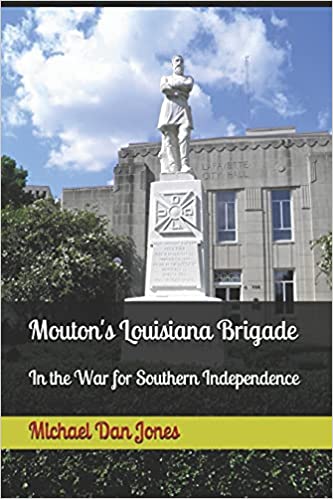
This is the story of one of the most unique Louisiana infantry brigades in the War for Southern Independence. It was made up of an ethnically diverse hodgepodge of Louisiana's very diverse population, including South Louisiana Cajuns, North Louisiana Rednecks, and New Orleans Irish, Germans, and other ethnic groups then populating the Crescent City. The regiments of the brigade included the 18th Louisiana Infantry Regiment, the 24th Louisiana Infantry (Crescent) Regiment, the 10th (Yellow Jackets), and the 12th/16th Louisiana Infantry battalions. Early in the war, some of the units fought in other brigades at the Battle of Shiloh, Tennessee. When the brigade was formed in Louisiana in the fall of 1862, they fought in the Lafourche Campaign of 1862, the Bayou Teche Campaign of the spring of 1863, the Great Texas Overland Expedition of 1863, and the Red River Campaign of 1864. The brigade was led by one of the most colorful, chivalrous, and competent Confederate commanders of the war, Brigadier General Alfred Mouton of Lafayette, Louisiana. The fighting men of the brigade, time and again, fought with great valor and left a legacy of gallantry that makes their descendants proud to this day.

1865: General Robert E. Lee plans to cut the Federal supply line and force Grant to constrict the Yankee siege line by launching an offensive at Fort Stedman, Petersburg, Va. The desperate assault will be launched by Maj. Gen. John Brown Gordon the next day.

CONFEDERATE GENERAL BIRTHDAYS, March 24.

Brig. Gen. William Henry Wallace was born on this day in 1827 in Laurens District, South Carolina. He was a pre-war planter, newspaperman, and politician who supported secession. During the war, he rose from private in the 18th South Carolina Infantry, to lieutenant, captain, lieutenant colonel, and then to brigadier general in 1864. His battles included the Second Battle of Manassas, Sharpsburg, the defense of Charleston, S.C., and the Siege of Petersburg, Va. He was disabled by the mine explosion there on July 30, 1864, called the Battle of the Crater. He finished the war with General Lee at Appomattox on April 9, 1865. Following the war, Wallace practiced law in South Carolina and returned to farming, and again served in the state legislature and as a circuit judge. He died March 21, 1901, at Union, S.C., and was buried in the Presbyterian Cemetery there.

Brig. Gen. William H. Wallace

Sunday, March 22, 2026

Today in History (general history)/ On This Day in Confederate History/ Confederate General Birthdays, March 22.

Click ðŸ‘‰TODAY IN HISTORY (general history) March 22. 

ON THIS DAY IN CONFEDERATE HISTORY, March 22.

1862: Gen. Stonewall Jackson, in the Shenandoah Valley Campaignreceived orders from Gen. Joseph E. Johnston that he was not to let Gen. Nathaniel Banks' Federals leave the valley. Jackson's army marched 22 miles on this day to catch the retreating Yankees. Jackson's cavalry, under Col. Turner Ashby, fights a skirmish with the Federals under Maj. Gen. James Shields, who was wounded in the engagement. Jackson's three main opponents in the campaign were Banks, John C. Frémont, and Irvin McDowell. Jackson's Army of the Valley had a total of 17,000 men, while his three opponents had a combined total of 52,000 men. The Shenandoah Valley Campaign was one of the most amazing in military history.

Lt. Gen. T.J. "Stonewall Jackson

1863: More fighting continues in the vicinity of Murfreesboro, Tenn., between the blue and the gray. In Kentucky, Brig. Gen. John Hunt Morgan and Brig. Gen. John Pegram both continue their raids in Kentucky. 

1865: Lt. Gen. Nathan Bedford Forrest has been dispatched to stop the Federal cavalry raid of Brig. Gen. James H. Wilson, which began on this day with 13,480 troopers. But the Confederates only had some 5,000 men, poorly equipped and widely scattered, to stop them.

CONFEDERATE GENERAL BIRTHDAYS, March 22.

General Braxton Bragg was born on this day in 1817 in Warrenton, North Carolina. He graduated from West Point in 1837, ranking fifth out of 50 graduates in the class. In his U.S. Army career, he served in the Seminole War and the Mexican War, where he performed brilliantly, commanding an artillery battery. Bragg resigned from the army effective Jan. 3, 1855, and became a sugar cane planter in southeast Louisiana. He was also active politically and a major general in the Louisiana militia. On orders from the governor, he led 500 state militia in a non-violent takeover of the U.S. Arsenal in Baton Rouge on Jan. 11, 1861. With the formation of the Confederacy, he became a brigadier general in the Confederate and was quickly promoted to major general, leading a corps in the Battle of Shiloh. He took command of what would be renamed the Army of Tennessee. His abrasive personality and martinet treatment of the men alienated many of his subordinate generals and enlisted men. He led the army in the battles of Perryville, Murfreesboro, Tullahoma, Chickamauga, and Missionary Ridge, after which he resigned his command. At the end of the war, he again led troops in defeats at Second Fort Fisher, Wyse Fork, and Bentonville. He had a wide range of jobs after the war and finally moved to Texas and died there in Galveston on Sept. 27, 1876, and was buried in Magnolia Cemetery in Mobile, Alabama.

Gen. Braxton Bragg
👱

Major General William Henry Chase Whiting was born on this day in Biloxi, Mississippi. He graduated first in his class at West Point in 1845. He had a variety of assignments as an engineer in the army, but missed service in the Mexican-American War. Whiting resigned from the U.S. Army on Feb. 20, 1861, joined the Confederate Army as an engineer serving under General Beauregard at Charleston, S.C., improving defenses there, and was promoted to brigadier general. He also served as the chief engineer on the staffs of other generals and was assigned to command a division in the Peninsula Campaign and was made a wing commander at Seven Pines on May 31, June 1, 1862. Whiting led his division at Gaines' Mill, Malvern Hill, and was given command of the District of Wilmington, North Carolina. Whiting was wounded in the thigh and captured at the Second Battle of Fort Fisher, N.C. He died a prisoner of war on March 10, 1865, of dysentery at Fort Columbus on Governors Island, New York. 

Maj. Gen. William H.C. Whiting
👱

Brigadier General William Wirt Adams was born on this day in 1819 in Frankfort, Kentucky. Prior to the war, he gained a little military experience when he joined the army in 1839 in the Republic of Texas as a private. He was promoted to captain and adjutant of a regiment and took part in a campaign against Indians in northeast Texas. Adams moved back to Mississippi, became a banker, and was elected to two terms in the Mississippi legislature. In the War for Southern Independence, he became a brigadier general and led a cavalry brigade. His battles included Shiloh, Corinth, Iuka, Hatchie's Bridge, Raymond, Champion Hill, Vicksburg, Port Hudson, and Meridian. He was paroled at Gainesville, Alabama, on May 12, 1865. Following the war, he had a variety of jobs in Mississippi, including as a revenue agent and postmaster. He was killed May 1, 1888, in Jackson, Miss. in a gun battle with a newspaper editor who had criticized him, and he also killed the editor. Adams was buried in Greenwood Cemetery in Jackson.

Brig. Gen. William W. Adams
👱

Brigadier General Francis Asbury Shoup was born on this day in 1834 in Laurel, Indiana. He graduated from West Point in 1855, fifteenth in his class of 34 cadets. He served in the Seminole War and resigned from the army on Jan. 10, 1860, and settled in Indianapolis, Ind. where he was a lawyer and commanded the Indianapolis Zouave militia. He moved to St. Augustine, Florida in 1860 to continue his legal career. With the coming of the war, his Southern sympathies led him into the Confederate Army and he served as chief of artillery under Maj. Gen. William J. Hardee at the Battle of Shiloh. Shoup was promoted to brigadier general on Sept. 12, 1862, and he commanded a division at the Battle of Prairie Grove. Shoup commanded a Louisiana brigade at the Siege of Vicksburg, being captured along with the garrison at the end. After being exchanged, he served in the Battle of Atlanta and became the chief of staff for General John Bell Hood in the Army of Tennessee. Following the war, Shoup was a professor at the University of Mississippi and the University of the South. Shoup also became an Episcopal rector. He died Sept. 4, 1896, in Columbia, Tenn., and was buried at the University of the South.

Brig. Gen. Francis A. Shoup
👋

Friday, March 20, 2026

Today in History (general history)/ On This Day in Confederate History/ Confederate General Birthdays, March 20.

Click ðŸ‘‰TODAY IN HISTORY (general history) March 21. 

ON THIS DAY IN CONFEDERATE HISTORY, March 21.

1863: The Battle of Vaught's Hill, TN, took place on this day when a Federal brigade of 1300 infantry and artillery commanded by Col. Albert S. Hall was on a reconaissance mission to find Brig. Gen. John Hunt Morgan's 3500 man Confederate Cavalry Division in Rutherford County, TN. The two clashed at Vaught's Hill when Morgan's men, who outnumbered the bluecoats, began deploying and shelling the Federals. However, the Northerners were deployed in a strong rocky position. After several assaults over a several hour period, Morgan decided to withdraw to continue a planned raid on the North. The Federals had between 48 and 62 casualties. The Confederates suffered between 180 and 373 casualties.

1864:   The Battle of Henderson Hill, Louisiana, occurred on this day during the Red River Campaign when part of the 2nd Louisiana Cavalry and Edgar's Battery, 1st Texas Light Artillery, were surprised and captured by the 35th Iowa Infantry and 33rd Missouri Infantry upriver from Alexandria, Louisiana. The Federals made their approach during wretched weather with rain and hail helping mask their approach, after dark, guided by deserters and jayhawkers. The two Federal regiments pushed forward toward the camp of the 2nd Louisiana Cavalry, commanded by Colonel William Vincent. At about 10:30 p.m., the guards at eight Confederate picket posts were surprised and captured without a shot being fired. Then at about midnight, the bluecoats found the main Confederate camp, and the 35th Iowa surrounded and captured some of the Southerners in a house and a section of Edgar's Battery before their presence had been discovered. The Confederate guns were ready with horses hitched and two of the pieces loaded with canisters, but obviously, the men were not ready. The two Federal regiments then fixed bayonets and moved in on the rest of the camp, captured another section of the artillery, and then the cavalrymen, some of whom were mounting their horses. Only a few shots were fired in resistance. While Colonel Vincent escaped, 16 officers and 206 men were captured, along with horses, cavalry equipment, and artillery pieces, and the encampment was completely destroyed. Confederate General Richard Taylor lost most of the available cavalry he had at that time.

1st Lt. William B. Champlin, Co.D & F, 2nd La. Cav. 
He was captured on Nov. 30, 1863, near the Salt
Works near New Iberia, La., and exchanged Dec.
31, 1863. (Printerest, quarter plate ambrotype)

A Confederate cavalryman,
as indicated by the "C" for
 cavalry buttons on his shell jacket.
(Possibly one of Morgan's men?)
(CDV, M.D. Jones Collection)

1865: On the last day of the Battle of Bentonville, N.C., there is heavy fighting on the Confederate left at the Mill Creek bridge, which was on the Confederate line of retreat. General Joseph Johnston's forces can halt the Federal advance. On the first day of the battle, March 19, 1865, the Confederates made several unsuccessful attacks on the Federals, and they dug in and went on the defensive. On the second day of fighting, both combatants engaged in skirmishing. Johnston successfully withdrew his army on the night of March 21. The battle cost the Confederates 239 killed, 1,694 wounded, and 673 missing. Federal losses were 194 killed, 1,112 wounded, and 221 missing. Sherman continued toward Petersburg, Va.

Gen. Joseph E. Johnston

CONFEDERATE GENERAL BIRTHDAYS, March 21.

NONE.

Thursday, March 19, 2026

Today in History (general History)/ On This Day in Confederate History/ Confederate General Birthdays, March 19.

CLICK👉Today in History (general history) March 19.

ON THIS DAY IN CONFEDERATE HISTORY

1861-Northern President Lincoln sent Gustavus Vasa Fox to Charleston, SC, to evaluate the situation with Forts Sumter, which had become the focus of the tension between the two nations. It was under the command of Major Robert Anderson. Fox reached Charleston, SC, and met with Gov. Francis Pickens and Gen. PGT Beauregard and was given permission to meet with Anderson at Fort Sumter. While meeting with Anderson, he hinted that Lincoln would send reinforcements. 

1862-At New Orleans, the Confederacy's largest and most industrialized city, while the Confederate Army and Navy and Louisiana's State Militia are busy building up their forts and river fleet, Cmdr. D.D. Porter arrived with his mortar ships to reinforce Rear Admiral David Farragut's West Gulf Blockade Squadron in preparation for their attack of Forts St.Philip and Jackson. The forts had protected New Orleans from the British fleet in 1815, and the Confederates were gambling they could do the same in  1863. However, Gen. Beauregard had warned authorities they probably could not do it this time. The Confederates were also gambling on two powerful ironclads they were building to back up the forts, but would they be ready in time?

1863-The CSS Georgiana, built in Scotland to be a power cruiser with an iron hull steam propeller, was on its maiden voyage when it was approached by a Federal Navy blockader. It was supposed to be fitted out with its guns and receive its full crew in Charleston. Rather than be captured, the captain of the ship scuttled her. The wreck was found in 1965 in shallow water just outside the harbor.

1864-The Battle of Laredo, Texas, took place on this day on the Texas-Mexico border when a contingent of Federal infantry, cavalry, and artillery, totaling 200 men, tried to capture a Confederate stockpile of cotton guarded by Colonel Santos Benavidas's command of cavalry and local militia, totaling 72 men. Although outnumbered, the Confederates put up a determined defense, and the Federals withdrew. The victory secured 5,000 bales of cotton, which were shipped through Mexico. The only casualties were 2 Federals killed.


Col. Santos Benavidas
33rd Texas Cavalry
Cofederate officers of the 33rd Texas Cavalry,
Refugio Benavides, left, Atanacio Vidaurri, Cristobal 
Benavides and John Z. Leyendecker. 
(University of Texas at San Antonio Library)

CONFEDERATE GENERAL BIRTHDAYS

Brigadier General Johnson Duncan was born on this day in Chanceford, York County, PA, in 1827. He was appointed to West Point on July 1, 1845, and graduated in June 1849 was ranking 5th in a class of 43 cadets. Duncan was brevetted a second lieutenant in the 2nd U.S. Artillery and promoted to second lieutenant on Oct. 31, 1849. He saw action in the Seminole War in Florida. He was assigned to Fort Sullivan, Maine and received a promotion to first lieutenant in 1853. He resigned from the U.S. Army in 1855. He moved to New Orleans, where he was employed as an engineer on the staff of Major P.G. Beauregard, who was then the head of the Army Corps of Engineers, as well as being appointed the Chief Engineer for Louisiana. He married a local girl and started a family. Duncan also became involved in local politics. He was also active with the State Militia and was appointed by the governor to be a captain in the 1st Louisiana Heavy Artillery, which manned the various forts around the city. Promoted to colonel in the Confederate Army, he was put in command of all the forts with headquarters at Fort Jackson. He was promoted to brigadier general on January 7, 1862. While he commanded with distinction, during the Battle of New Orleans, in April, 1862, he had to surrender when the Federal Navy got past the forts and many of the men at Fort Jackson mutinied. After being exchanged, he was assigned to be chief of staff for General Braxton Bragg. But on Dec. 18, 1862, he died of malaria and was buried at McGavock Cemetery on Carnton Plantation, in Franklin, Tennessee. His son, who was named in his honor, later wrote a history of the New Orleans Campaign of 1862 that was published in the Battles and Leaders series for Century Magazine,
Brig. Gen. Johnson Kelly Duncan


Wednesday, March 18, 2026

Today in History (general history)/ On This Day in Confederate History/ Confederate General Birthdays, March 18.

Click ðŸ‘‰TODAY IN HISTORY (general history) March 18.

ON THIS DAY IN CONFEDERATE HISTORY, March 18.

1861: The Arkansas secession convention voted 39-35 against seceding from the Union. The Arkansas convention was led by unionists and held a unionist majority from the beginning. It does provide for a vote of the people on the issue later in the summer.

1862: President Jefferson Davis moved Judah Benjamin from his Secretary of War position to Secretary of State. Benjamin was much more able in his new cabinet post.

1863: Major General Franklin Gardner at Port Hudson, La. has his Confederates gather an enormous number of supplies and equipment from the retreating Northern Army of the Gulf. The riches are reportedly 15 wagon loads of supplies and livestock as well. The below picture of Pvt. Louis Cormier depicts the typical Confederate uniform issued to troops at Port Hudson and Vicksburg in 1863. A group picture of the Port Hudson shows most of those soldiers in the picture are wearing this type of uniform.

Pvt. Louis Cormier, Boone's La. Battery Light Artillery
Port Hudson Confederate garrison.
(Port Hudson State Historic Site)

1864: Major General Richard Taylor on this day in the Red River Campaign keeps his Army of Western Louisiana stationary at a position 50 miles from Natchitoches while waiting for reinforcements. He especially needs cavalry to keep an eye on Federal forces which were gathering forces and supplies at Alexandria, Louisiana in the central part of the state.

1865: The Confederate Army of Tennessee under General Joseph E. Johnston at Bentonville, North Carolina gets ready to try to block Maj. Gen. W.T. Sherman's Federal juggernaut of 60,000 bummers who have been burning and looting their way across the Carolinas. Johnston has only about 21,000 Southern soldiers.

At Mobile, Alabama: Confederate forces under Maj. Gen. Dabney Maury with just 6,000 men, prepares for an attack by a Federal Army under Maj. Gen. E.R.S. Canby with 45,000 men. Major fortifications around the city include Fort Blakely under Brig. Gen. St. John Liddell and Spanish Fort under Brig. Gen. Randall L. Gibson. 

CONFEDERATE GENERAL BIRTHDAYS, March 18.

Brigadier General William Robertson Boggs was born on this day in 1829 in Augusta, Georgia. He graduated from West Point in 1853 and ranked fourth in his class of 47 cadets. He got a choice assignment as a brevet second lieutenant in the Topographical Bureau. Despite his promising career, he only reached the rank of first lieutenant by 1861. He resigned from the U.S. Army when Georgia seceded and became a staff officer for General Braxton Bragg. Boggs was appointed Chief Engineer for Georgia in 1862, and in 1863 was promoted to brigadier general and became chief of staff for General E. Kirby Smith in the Trans-Mississippi Department. He resigned as chief of staff after quarreling with Smith and was temporarily commander of the District of Louisiana. He was awaiting orders in Houston when the war ended and he was paroled on June 9, 1865. Following the war, he was a railroad construction engineer, and a professor at the Virginia Polytechnic Institute, and died in Winston-Salem, N.C. Sept. 11, 1911, and was buried in Salem Cemetery.

Brig. Gen. William R. Boggs

Tuesday, March 17, 2026

Today in History (general history)/ On This Day in Confederate History/ Confederate General Birthdays, March 17.

HAPPY ST. PATRICK'S DAY!

Click ðŸ‘‰TODAY IN HISTORY (general history) March 17. 

Among the most famous Irish-Texas heroes of the 19th Century was Lt./Maj. Richard W. Dowling and the Jefferson Davis Guard, officially known as Company F, 1st Texas Heavy Artillery, Confederate States of America. They fought in the Battle of Galveston, Texas against the blockaders of the Texas coast and at the Second Battle of Sabine Pass. Being a native of Ireland, Dowling was also an active Fenian who believed in independence for Ireland and was the Fenian commander in Texas after the war and raised money for the Fenian cause. This is the story of Dick Dowling and the Jefferson Davis Guard. Click below for more information. 

         CLICK👉Dick Dowling and the Jefferson Davis Guard

ON THIS DAY IN CONFEDERATE HISTORY, March 17.

1863: At the Battle of Kelly's Ford, Virginia, 800 Confederate cavalrymen under Brig. Gen. Fitzhugh Lee engaged with 2,1000 Federal cavalrymen under Brig. Gen. William W. Averell. When the Federals try to cross Kelly's Ford on the Rappahannock River but 60 Confederate sharpshooters drive them back. The 1st R.I. Cavalry eventually force the crossing Gen. Fitzhugh Lee then leads his 800 gray cavalrymen against the Federals. But, outnumbered more than two to one, the Confederates had to withdraw to a Woodline. Averell then decides to withdraw his force back across the river. The Federals lost 6 killed, 50 wounded, and 22 missing. The Confederates suffered 11 dead, 88 wounded and 34 captured. 

1864: Red River Campaign: Brig. Gen. Alfred Mouton's brigade marched 20 miles on this day in Northwest Louisiana. The Confederates settle in 50 miles from Natchitoches and wait for the arrival of Vincent's Louisiana Cavalry, and Walker's Texas Infantry Division. Many of Vincent's men are recent conscripts. Also coming is Brig. General Camille Polignac's Texas Infantry Brigade to form a powerful new infantry division with Mouton's brigade, which Mouton will command. Brig. Gen. Thomas Green's Texas Cavalry is coming from Texas to help defeat the Federal advance up the Red River.

CONFEDERATE GENERAL BIRTHDAYS, March 17.

Brig. Gen. Sterling Alexander Martin Wood is born on this day in 1823 in Florence, Alabama. He was a pre-war lawyer, state legislator, and newspaper editor. He was elected on May 18, 1861, colonel of the 7th Alabama Infantry Regiment. Wood was promoted to brigadier general on Jan. 7, 1862, and commanded a brigade at the battles of Shiloh (wounded), Perryville, Murfreesboro, Tullahoma, and Chickamauga. Wood resigned from his commission on October 17, 1863, and resumed his law practice. Following the war, he received a pardon on November 1865. He was elected to the Alabama legislature. He died on Jan. 26, 1891, in Tuscaloosa, Alabama, and was buried in Evergreen Cemetery there.

Brig. Gen. S.A.M. Wood

Brig. Gen. S.A.M Wood and staff, from l-r,
seated, Lt. Henry Class Wood, aide-de-camp, and Gen.
Wood; standing, Surgeon Major William Cordwell Cross, Rev. Alexander Lockett
Hamilton, and possibly asst. Q.M. Martin Walt. 
                                       (Ala. Photographs & Pictures Collection, Ala. Dept. of Archives and History.)   

Monday, March 16, 2026

Today in History (general history)/ On This Day in Confederate History/ Confederate General Birthdays, March 16.

 Click ðŸ‘‰TODAY IN HISTORY (general history) March 16.

ON THIS DAY IN CONFEDERATE HISTORY, March 16.

1861: Confederate Arizona holds a secession convention at Mesilla and delegates vote to secede from the U.S. Arizona will eventually become a Confederate territory.

1863: In the Port Hudson, La. vicinity, the 9th Battalion Louisiana Partisan Rangers skirmished with the retreating Federal Army of the Gulf and gathered discarded enemy equipment. The members of the unit were largely from the Baton Rouge area and were literally defending their homes and families.

1864: Red River Campaign: Nine Federal gunboats arrived in Alexandria, La. on this day. Also, Federal troops occupy this strategically important river port on the Red River. Maj. Gen. Richard Taylor's Army of Western Louisiana is making its way deeper into the northwest part of the state.

1865: Confederate and Federal forces clash in the Battle of Averasborough, North Carolina. Lt. Gen. William J. Hardee is in command of 7,000 Confederates trying to block Maj. Gen. Henry W. Slocum's  12,000 Federals. The Confederates repulse two Federal assaults but reinforcements arrive and the Confederates are overwhelmed and withdraw. The Confederates suffered 500 casualties and the Federals 700.

CONFEDERATE GENERAL BIRTHDAYS, March 16.

Major General Patrick Ronayne Cleburne was born on this day in Ovens, County Cork, Ireland.  He got some early military experience serving in the 41st Regiment of Foot in the British Army in Ireland. Cleburne immigrated to the U.S. with his two brothers and sister. He settled in about 1850 in Helena, Arkansas, and worked as a pharmacist, businessman, lawyer, and newspaper publisher. He became captain of the Yell Rifles which became a company in the 1st Arkansas Infantry in the state militia. He soon became colonel of the regiment, which became the 15th Arkansas Infantry. Cleburne's military bearing and leadership qualities impressed his superiors, and he was promoted to brigadier general on March 4, 1862. He led a brigade at the Battle of Shiloh, Tenn., then a division at Corinth, Miss., the Battle of Richmond, Ky., where he was wounded, and at the Battle of Perryville, Ky. He was then promoted to major general on Dec. 13, 1862, and led his division at the Battle of Murfreesboro, Tenn. In 1863, his battles included Murfreesboro, on Jan. 2, Chickamauga, Missionary Ridge, and Ringgold Gap. In 1864, he fought in the Atlanta Campaign. Cleburne was killed in action at the Battle of Franklin, Tenn. on November 30, 1864. He is now buried in Maple Hill Cemetery in Helena, Arkansas.
Maj. Gen. Patrick R. Cleburne