











Click 👉 TODAY IN HISTORY (general history) Jan. 4.
ON THIS DAY IN CONFEDERATE HISTORY, Jan. 4.
1861: Alabama State Troops, under orders from Alabama Governor Andrew B. Moore, seized the U.S. Arsenal at Mount Vernon, Ala., which was under the command of Capt. Jesse L. Reno would become a major general in the Federal Army. The transfer was peaceful, and the arsenal was held by the Confederacy until near the end of the war.
1863: Skirmishing continues with a clash on the Manchester Pike during General Braxton Bragg's Army of Tennessee's withdrawal from Murfreesboro, Tennessee. They then moved on to the town of Manchester. Also, Confederate Brig. Gen. Roger W. Hanson died from the wounds he received on January 2, 1863, in the Battle of Murfreesboro.
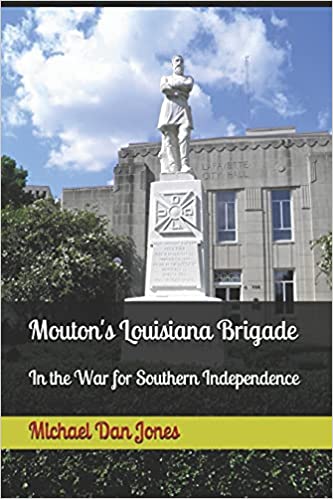
1864: Captain Felix Pierre Poché, with Mouton's Louisiana Brigade in winter camp near Monroe, Louisiana, writes in his diary: "We are having a terrible winter again today, to the point that I doubt if we can move on the road when we have to leave this awful hole where we are camping."
CONFEDERATE GENERAL BIRTHDAYS, Jan. 4.
Brigadier General Horace Randal was born in 1833 in McNairy County, Tennessee. He was appointed brigadier general effective April 8, 1864, by General E. Kirby Smith, Trans-Mississippi Department commander. Randal moved to Texas with his family in 1839, when he was a child. He attended West Point, graduated in 1854, and was the second Texan to do so. His U.S. Army career included service in the First Dragoons and frontier duty in the Indian Territory, as well as Arizona, New Mexico, and Texas. Randal resigned from the U.S. Army on Feb. 27, 1861. He accepted a commission in the Confederate Army on March 16, 1861. After serving on the staff of Gen. Braxton Bragg, and Maj. Gen. Gustavus Smith, he was commissioned a colonel and raised the 28th Texas Cavalry (Dismounted). Randal and his regiment served with distinction in the famous Walker's Texas Infantry Division. He was appointed to the command of a brigade on Sept. 3, 1862, which he led at the Battle of Milliken's Bend, La. in 1863, and the Red River Campaign in 1864. Randal's Brigade joined Polignac's Brigade and Mouton's Brigade in Mouton's Charge at the Battle of Mansfield on April 8, 1864. He was mortally wounded at the Battle of Jenkins' Ferry, Ark., April 30, 1864, and died on May 2, 1864. His remains were returned to Texas after the war and reburied in the Old Marshall Cemetery, Marshall, Texas. His appointment to brigadier general was never confirmed by the Confederate Congress.


No comments:
Post a Comment