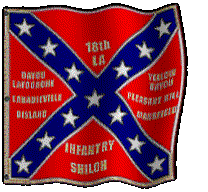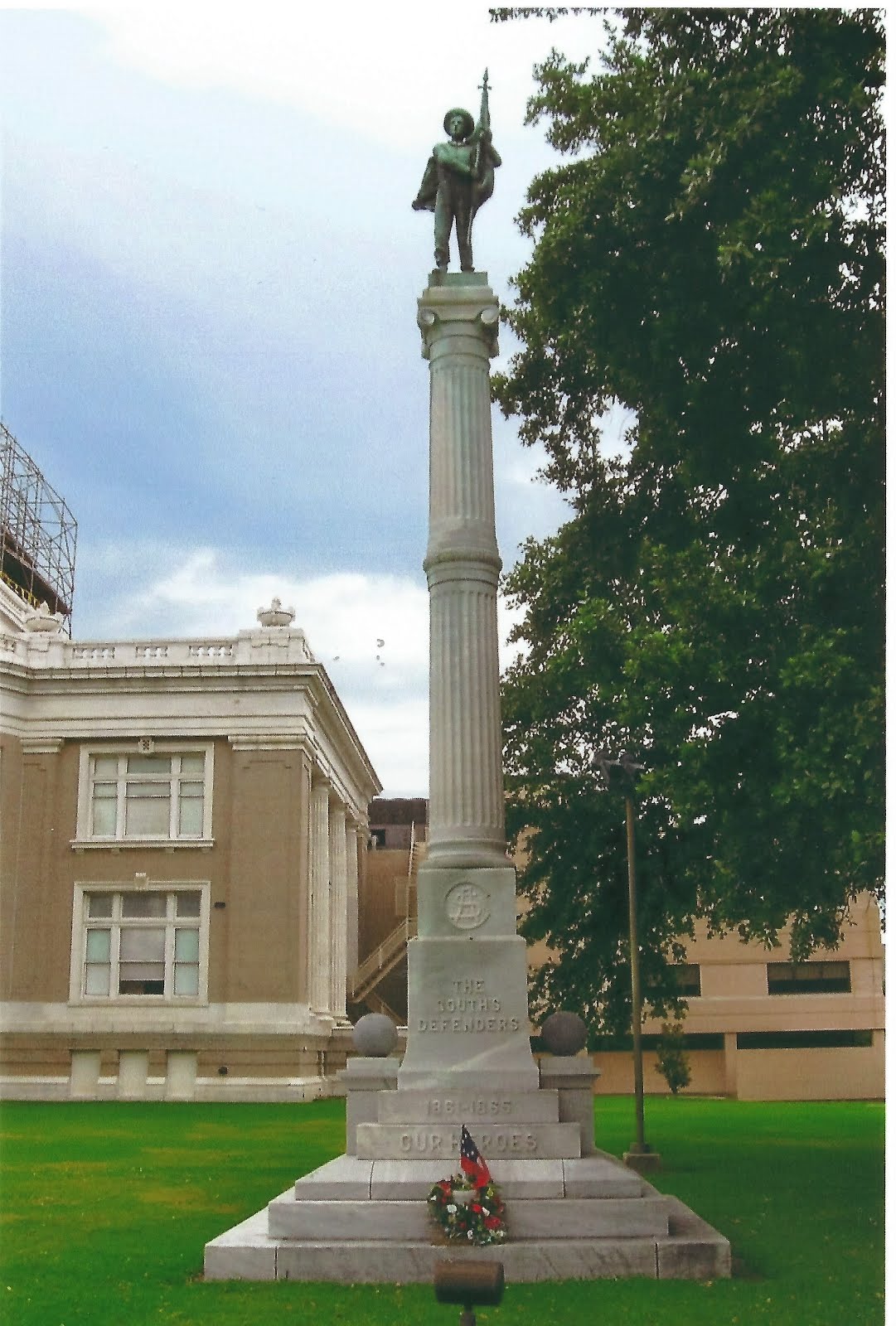
By Michael Jones
The Battle of Calcasieu Pass, May 6, 1864, was the only War For Southern Independence battle to be fought in extreme Southwest Louisiana. It brought together two determined foes - Union gunboats bent on “purchasing” stolen livestock and recruiting men - and a scrappy band of Confederates determined to expel the invaders.
One Confederate survivor of the battle, Captain Joseph A. Brickhouse, said years later, “While I would not pluck one feather from the plume of fame worn by Dick Dowling, yet I must say that the Battle of Calcasieu Pass and the victory achieved was in every way equal to that achieved by Dick Dowling and his immortal heroes of Sabine Pass.”
The Wave and Granite City received orders on April 15 to proceed to Calcasieu Pass to buy 250 head of cattle and 200 horses from Jayhawkers. The brigands had stolen the livestock from area farms. The Wave arrived on April 24 with gold for the purchase. It bombed an abandoned Confederate fort at the mouth of the river and was led to anchorage two miles upstream, opposite the home of Duncan Smith, a Union sympathizer. Smith was on board the vessel and acted as guide.
The Granite City arrived two days later and anchored around a bend, about 300 yards from its companion ship. Many of its crew were experienced gunners and survivors of the Hatteras, which had been sunk the previous year by the C.S.S. Alabama. Granite City disembarked 27 Union infantrymen brought along to round up the livestock. To secure the area, the sailors and soldiers destroyed the bridges over Mud and Oyster bayous and posted pickets around the perimeter.
All of this activity was communicated to the Confederate garrison about 40 miles west at Sabine Pass, Texas, by some unknown Southern “Paul Revere.” The local Confederate commanders quickly assembled a force to expel the invaders. The commander of the district, Brigadier General Paul Hebert, in Houston, was alarmed the Yankee gunboats might be the advance scouts of an invasion force and he ordered an attack.
The Confederate strategy was simple. Advance at night under the cover of darkness and launch a surprise attack. The artillery was to open fire at 1,000 yards, while the infantry and dismounted cavalry advanced to the shore line and open fire on the sailors as they try to man their guns on the ships. The cannons would then move in closer and finish off the vessels.
On the afternoon of May 4, the foot soldiers crossed the Sabine and commenced their 38-mile march to Calcasieu Pass. The artillery departed Fort Manhassett at Sabine Pass and was ferried across Sabine Lake and into Johnson Bayou on the Louisiana side. Traveling at night on May 5 to conceal their movements, the soldiers rebuilt the bridge over Mud Bayou and by 4:30 a.m. May 6 had reached their destination.
Aurelia LeBoeuf Daigle was a 15-year-old girl at the time of the battle. Her family’s farmhouse was right in the middle of the carnage. For the rest of her days she recalled how the Confederate soldiers had taken over her house and used it as a hospital.
Her parents, Louis and Pauline LeBoeuf, were scratching out an existence on the rough terrain when events they had no control over overwhelmed them and drove them from their home.
The Union ships had made the mistake of letting the Jayhawkers man the picket posts. When the Confederates approached in the darkness, the Union pickets faded away into the marsh, intent on saving themselves and not giving any warning to the waiting prey.
As the sun peaked above the misty horizon that morning the serene dawn was shattered with the roar of Confederate artillery. On the vessels, the blue-jackets came tumbling out of the hammocks. As they rushed on deck to man their heavy naval artillery, they were met by blistering musketry from the gray-clad sharpshooters. Nevertheless the courageous sailors manned their guns and returned fire with deadly accuracy. The Confederate artillery was caught in a deadly cross-fire between the two ships. One of the Southern artillery pieces was quickly hit. Three artillerymen lay severely wounded. Their cannon was demolished.
Lt. Charles Welhausen of Creuzbaur's battery commanded two 12-pounders and saved his cannons by ordering them moved in closer, thus avoiding the cross-fire from the ships. The Confederate sharpshooters were completely exposed on the open marsh. They began falling when the veteran Union gunners zeroed in on them. But despite their exposed position, the infantrymen bravely kept peppering the gunboat decks.
While the Southerners were taking their licks, the Northerners were also receiving punishment. The Granite City’s wheel house was demolished and a cannonball tore into the ship’s hull. Sixteen shells penetrated the vessel’s hull near the water line. No glutton for punishment, Lt. Lamson was to call it quits after he had fired 30 rounds. A white flag was hoisted and a boat lowered to take on the victors. Col. Griffin and his men boarded the ship and took charge. The blue-jackets were seen throwing pistols, swords and guns overboard. Griffin later learned that they had also thrown overboard dead bodies with weights attached to them.
Lt. Loring on the Wave, a tenacious fighter, was far from ready to throw in the sponge. Confederate artillerymen tried to shift one of their remaining pieces after Lamson’s surrender but it became stuck in the mud. The remaining two, however, turned their full fury onto the Wave. Although unable to bring all guns to bear due to being anchored, Loring’s gunners continued to wreak havoc among the Confederates with their 32-pound bow gun. Five of Griffin’s men were cut down and victory was tilting to the Union sailors.
It looked as though the gunboat was going to be able to get up enough steam to escape. But Maj. Felix McReynolds of Griffin’s battalion and Lt. Welhausen were credited with saving the day for the South by bravely rallying their men when things looked darkest. However, throughout the affair, one Confederate stood full length above the prairie, calmly loading and firing. His total disregard for the enemy fire completely unnerved the Yankee gunners and they later were eager to know who the intrepid marksman was that their bullets could not touch.
The Confederate gunners sent shells through the Wave’s pilot house, engine room and boilers. Then Brickhouse’s gun scored a direct hit on the gunboat’s 32-pounder, splitting the full length of the barrel. A white flag was soon seen flying from the mast. The warship had taken 65 direct hits. Perhaps stalling for time, Loring hesitated in putting over a boat for the victorious boarding party. To show he meant business, McReynolds told his men to fire a warning shot and to prepare to reopen fire. With this, the gunboat’s skipper lowered the boat and surrendered. The crew jettisoned valuables, including the ship’s safe which contained gold to pay for the livestock. The Army detachment, which was camped on shore, surrendered without firing a shot.
On May 8, ignorant of the battle, Union transport Ella Morse came up the river to meet with the other ships. But when it got close, the Granite City, now manned by Confederate gunners, opened fire. Southern sharpshooters on both banks shot up its decks. The transport carrying a detachment of the 2nd New Orleans Infantry (Union) reversed course and headed back into the Gulf. The ship’s pilot was wounded.
Two days later, not knowing about the capture, the Union blockader New London sent Ensign Henry Jackson and six men up the pass in a launch to deliver a message to the Granite City. Ensign Jackson saw the Confederate flag flying over the Granite City. Thinking it was some kind of sick joke; he borrowed a musket and fired at the flag. But Confederate sharpshooters returned fire and instantly killed Jackson. The six crewmen were added to the prisoners.
Lt. Col. Griffin reported that eight of his men were killed in action and 13 wounded. Later, two of Creuzbaur's artillerymen, one of Daly’s cavalrymen and one of Spaight’s infantrymen died of wounds. The Union casualties never have been fully accounted. Lamson admitted to 10 wounded on the Granite City, and two later died. Loring said he had 24 wounded on the Wave, four of whom later died. The Confederates also took a total of 174 prisoners, 16 cannons, the stolen livestock and a large quantity of food on which the weary gray-clad infantrymen delightedly feasted. To their disgust, Creuzbaur's artillerymen were sent back to Sabine Pass before they could join in the feast. Wounded from both sides were taken to Lake Charles and from there to Goosport where they received the best of care in Capt. Daniel Goos’ home.
Sunday, February 14, 2010
Wednesday, February 10, 2010
SIGN OF THE TIMES -- 150-YEARS-AGO
From http://www.uttyler.edu/vbetts/newspaper_titles.htm
DAILY GAZETTE & COMET [BATON ROUGE, LA], January 20, 1860, p. 2, c. 1
A Bad Omen.—Yesterday morning when the "Star Spangled Banner" was hoisted to the mast head on the round tower at the Capitol it did not fling itself out the breeze, as it has so often done before on less momentous occasions. It did not stand out stiff, but crouched about the pole in a very cowardly and unstar-spangled-banner-like manner. Others noticed it—we noticed it and heard our friend Jones offer as an apology the fact that the wind was not blowing; but this is not satisfactory. What has the wind to do with the stars and stripes of the country?
It is a small matter, this, but big with some unborn event, that is even now getting ready to turn up. It is a small matter this—as before said—a mere circumstance; but let us not despise small matters. Have we forgotten the story founded on facts, of the sentinels falling asleep on the tower of liberty and being aroused and advised of the approach of the enemy by the cackling of geese? If not, let us not despise small things, but take warning by the ominous signs of the times.
A Bad Omen.—Yesterday morning when the "Star Spangled Banner" was hoisted to the mast head on the round tower at the Capitol it did not fling itself out the breeze, as it has so often done before on less momentous occasions. It did not stand out stiff, but crouched about the pole in a very cowardly and unstar-spangled-banner-like manner. Others noticed it—we noticed it and heard our friend Jones offer as an apology the fact that the wind was not blowing; but this is not satisfactory. What has the wind to do with the stars and stripes of the country?
It is a small matter, this, but big with some unborn event, that is even now getting ready to turn up. It is a small matter this—as before said—a mere circumstance; but let us not despise small matters. Have we forgotten the story founded on facts, of the sentinels falling asleep on the tower of liberty and being aroused and advised of the approach of the enemy by the cackling of geese? If not, let us not despise small things, but take warning by the ominous signs of the times.
DAILY GAZETTE & COMET [BATON ROUGE, LA], February 15, 1860, p. 2, c. 4
Shall We Make Our Own Paper?—That it can be done is a settled question. Mr. Thos. J. Spear, of New Orleans, who is now here, bears with him samples of paper made from bagasse, or the refuse of the sugar crop; cotton stalks, the wild indigo, and other indiginous [sic] plants heretofore supposed to be worthless. The samples are good and will do; besides this he has samples of hemp from the banana and other plants and a good article of rope from the same. Gentlemen who make a considerable fuss in favor of resolutions to put the South on an equality with the North in manufacturing at home, could very well find room in this direction to test their sincerity. Let them turn their attention to home industry and home interests, and instead of appropriating to arm military companies and equip the State for mere buncomb [sic]; let them offer a bonus on paper or hemp, or any thing else calculated to develope [sic] our latent resources.
Tuesday, February 9, 2010
VICKSBURG -- A GREAT VACATION DESTINATION
Louisiana Monument, Vicksburg National Military Park
By Michael Jones
VICKSBURG, Miss. For a weekend outing or a major vacation destination, Vicksburg has every ingredient for a memory making experience.
Charming Old South mansions and museums, restaurants with the finest in Southern cuisine and the Vicksburg National Military Park are just a few of those memory-making ingredients.
And Lake Charles has an enduring historical link with Vicksburg. A company of Confederate volunteers from Calcasieu Parish was among the South's defenders who shed their blood in defense of the Mississippi city during the crucial 47-day 1863 siege that Abraham Lincoln called the ''key'' to victory for the North.
That group of volunteers, Company I (Calcasieu Tigers), 28th Louisiana Infantry Regiment was led by Captain James W. Bryan, who after the war became the first mayor of Lake Charles and was a leading citizen of the area until his death in 1897.
During the siege 16 of the regiment's men were killed and 57 wounded. At the Battle of Chickasaw Bayou on Dec. 28 and 29, 1862, the 28th Louisiana had 9 men killed, 25 wounded and 9 missing.
The Vicksburg National Military Park commemorates that historic event and has the exact location marked where the Calcasieu Parish men fought.
The park gives visitors a complete appreciation for what happened there 129 years ago with audio-visual programs and life-size dioramas at the visitor center, as well as with a very active living history program and an excellently marked 16-mile self-guided driving tour of the battlefield.
The park's hundreds of magnificent monuments and cannons, spaced out along the 16-mile driving tour, make it one of the crown jewels of the National Park Service system. Louisiana had the distinction of becoming the first state to erect a monument at Vicksburg in June 1887.
Living historians, authentically uniformed, give demonstrations of rifle firing, cannon firing, talks on fortifications and on the life of the soldiers during the siege.
But making Vicksburg National Military Park truly unique is the U.S.S. Cairo Museum. On display is the ironclad ship itself, which was salvaged from the Yazoo River in the 1960s, and an adjacent Naval museum housing many of the artifacts of the crew, naval stores and armaments.
The Cairo was sent to the bottom of the river on Dec. 12, 1862 by an electrically detonated mine, the first such sinking in Naval history. The ironclad's firepower included 32-pounder smoothbores, 8-inch smoothbores, a 30-pounder Parrott rifle and 42-pounder rifles.
In the city of Vicksburg are numerous historic buildings and homes, many open for tours, and which have their own individual stories to tell about the siege.
The Old Court House Museum was used as a Confederate signal station and housed Union prisoners. Now the building features one of the finest historical museums in the nation. Among the displays are original Confederate battleflags, uniforms, weapons and artifacts from the siege.
The McRaven House, open for tours, tells the tragic effects of the war and siege on the city's civilian population. Taken over as a Confederate headquarters and hospital, it was caught in the crossfire between Union gunboats and Confederate batteries. It suffered heavy damage.
About a year after the siege the owner of McRaven House was murdered by drunken Union occupation troops. Now fully restored, the tour guides give visitors a walk through the history of Vicksburg from Colonial times to the 20th Century.
To really get the ''feel'' of the city's history, visitors have a good selection of bed-and-breakfast inns. Such magnificent homes as the Duff Green Mansion, Anchuca, Cedar Grove, Grey Oaks, Balfour House and Bell of the Bends offer unique atmosphere and each has a fascinating story.
The Duff Green Mansion was built in 1856 by Duff Green, a prosperous Vicksburg merchant, and is conered one of the finest examples of Paladian architecture in Mississippi. In antebellum days the home was the center of social activity and parties.
During the siege, the Greens turned the mansion over to the army for use as a Confederate hospital. Mr. and Mrs. Green sought refuge from the deadly Union bombardment in nearby caves.
While the fighting was going on, Mrs. Green gave birth to a son in the cave and named the boy Siege.
Vicksburg is also a city known for its excellent Southern cuisine and a wide variety of ethnic cooking.
Mississippi is world renowned for its catfish and such restaurants as Top O' The River and Walnut Hills Round Tables Restaurant serve it in true gourmet fashion.
The Old Southern Tea Room specializes in plantation cooking, prime steaks and fine seafood. Eddie Monsour's Restaurant has fresh seafood and Lebanese cuisine.
Historic downtown Vicksburg, along Washington Street, has been renovated and contains an array of shops, stores and attractions.
Driving straight through to Vicksburg is about a five hour drive from Lake Charles. But if you have the time for a liesurely journey, there are numerous sites to see and things to do along the way.
From Lake Charles, take Interstate 10 to Baton Rouge and from there go north on U. S. 61, which goes all the way to Vicksburg.
Among the things to do along the way, on U.S. 61, are Port Hudson State Commemorative Area 14 miles north of Baton Rouge; numerous plantation home to tour in the St. Francisville area; Rosemont Plantation, Jefferson Davis' home in Woodville, Miss.; in Natchez numerous antebellum homes; Grand Gulf State Park, which has a fine War Between the States museum and between Port Gibson and Vicksburg is a stretch of the historic and scenic Natchez Trace Parkway.
By Michael Jones
VICKSBURG, Miss. For a weekend outing or a major vacation destination, Vicksburg has every ingredient for a memory making experience.
Charming Old South mansions and museums, restaurants with the finest in Southern cuisine and the Vicksburg National Military Park are just a few of those memory-making ingredients.
And Lake Charles has an enduring historical link with Vicksburg. A company of Confederate volunteers from Calcasieu Parish was among the South's defenders who shed their blood in defense of the Mississippi city during the crucial 47-day 1863 siege that Abraham Lincoln called the ''key'' to victory for the North.
That group of volunteers, Company I (Calcasieu Tigers), 28th Louisiana Infantry Regiment was led by Captain James W. Bryan, who after the war became the first mayor of Lake Charles and was a leading citizen of the area until his death in 1897.
During the siege 16 of the regiment's men were killed and 57 wounded. At the Battle of Chickasaw Bayou on Dec. 28 and 29, 1862, the 28th Louisiana had 9 men killed, 25 wounded and 9 missing.
The Vicksburg National Military Park commemorates that historic event and has the exact location marked where the Calcasieu Parish men fought.
The park gives visitors a complete appreciation for what happened there 129 years ago with audio-visual programs and life-size dioramas at the visitor center, as well as with a very active living history program and an excellently marked 16-mile self-guided driving tour of the battlefield.
The park's hundreds of magnificent monuments and cannons, spaced out along the 16-mile driving tour, make it one of the crown jewels of the National Park Service system. Louisiana had the distinction of becoming the first state to erect a monument at Vicksburg in June 1887.
Living historians, authentically uniformed, give demonstrations of rifle firing, cannon firing, talks on fortifications and on the life of the soldiers during the siege.
But making Vicksburg National Military Park truly unique is the U.S.S. Cairo Museum. On display is the ironclad ship itself, which was salvaged from the Yazoo River in the 1960s, and an adjacent Naval museum housing many of the artifacts of the crew, naval stores and armaments.
The Cairo was sent to the bottom of the river on Dec. 12, 1862 by an electrically detonated mine, the first such sinking in Naval history. The ironclad's firepower included 32-pounder smoothbores, 8-inch smoothbores, a 30-pounder Parrott rifle and 42-pounder rifles.
In the city of Vicksburg are numerous historic buildings and homes, many open for tours, and which have their own individual stories to tell about the siege.
The Old Court House Museum was used as a Confederate signal station and housed Union prisoners. Now the building features one of the finest historical museums in the nation. Among the displays are original Confederate battleflags, uniforms, weapons and artifacts from the siege.
The McRaven House, open for tours, tells the tragic effects of the war and siege on the city's civilian population. Taken over as a Confederate headquarters and hospital, it was caught in the crossfire between Union gunboats and Confederate batteries. It suffered heavy damage.
About a year after the siege the owner of McRaven House was murdered by drunken Union occupation troops. Now fully restored, the tour guides give visitors a walk through the history of Vicksburg from Colonial times to the 20th Century.
To really get the ''feel'' of the city's history, visitors have a good selection of bed-and-breakfast inns. Such magnificent homes as the Duff Green Mansion, Anchuca, Cedar Grove, Grey Oaks, Balfour House and Bell of the Bends offer unique atmosphere and each has a fascinating story.
The Duff Green Mansion was built in 1856 by Duff Green, a prosperous Vicksburg merchant, and is conered one of the finest examples of Paladian architecture in Mississippi. In antebellum days the home was the center of social activity and parties.
During the siege, the Greens turned the mansion over to the army for use as a Confederate hospital. Mr. and Mrs. Green sought refuge from the deadly Union bombardment in nearby caves.
While the fighting was going on, Mrs. Green gave birth to a son in the cave and named the boy Siege.
Vicksburg is also a city known for its excellent Southern cuisine and a wide variety of ethnic cooking.
Mississippi is world renowned for its catfish and such restaurants as Top O' The River and Walnut Hills Round Tables Restaurant serve it in true gourmet fashion.
The Old Southern Tea Room specializes in plantation cooking, prime steaks and fine seafood. Eddie Monsour's Restaurant has fresh seafood and Lebanese cuisine.
Historic downtown Vicksburg, along Washington Street, has been renovated and contains an array of shops, stores and attractions.
Driving straight through to Vicksburg is about a five hour drive from Lake Charles. But if you have the time for a liesurely journey, there are numerous sites to see and things to do along the way.
From Lake Charles, take Interstate 10 to Baton Rouge and from there go north on U. S. 61, which goes all the way to Vicksburg.
Among the things to do along the way, on U.S. 61, are Port Hudson State Commemorative Area 14 miles north of Baton Rouge; numerous plantation home to tour in the St. Francisville area; Rosemont Plantation, Jefferson Davis' home in Woodville, Miss.; in Natchez numerous antebellum homes; Grand Gulf State Park, which has a fine War Between the States museum and between Port Gibson and Vicksburg is a stretch of the historic and scenic Natchez Trace Parkway.
Monday, February 8, 2010
BATTLE OF NEW ORLEANS ANNIVERSARY -- A GLORIOUS DAY -- 150--YEARS--AGO
From http://www.uttyler.edu/vbetts/newspaper_titles.htm
DAILY GAZETTE & COMET [BATON ROUGE, LA], January 10, 1860, p. 2, c. 1
The Eighth.—As the "Glorious Eighth" did not come until the 9th, the demonstration was given us yesterday, in a very neat and creditable manner. The Pelican Rifles made their first regular turn out—armed and equipped. How the times have changed! Twenty years ago, Sunday would have been the day of all others for the Anniversary. Indeed, when such events came by appointment of the Almanac, in the early time, then the gallant Chasseurs, and the Guards, would fix Sunday for the parade, and come down early in the morning with an assault on Old Michael's; firing, but not falling back, until the going down of the sun. We have improved in more than one respect since the early time; though on the backward track in many things. Music came up from below by appointment, and at 12 o'clock every thing was in readiness to move from the head quarters of the company in Third street. So dense was the throng of men, woman [sic] and children who took possession of the capitol to witness the ceremony of presenting the banner, that the idea was abandoned of getting into the Senate chamber, which had been prepared for the purpose. The presentation took place on the steps of the east gate of the building.—Miss Phillie Nolan, presented it, in the name of the donor (our fellow-citizen Wm. S. Pike, Esq., and the citizens of Baton Rouge.) The speech was an elegant and appropriate one, and responded to by Capt. W. F. Tunnard, Commander of the company. After the presentation—and after parading through town, the company marched to the Harney House, where a sumptuous repast was spread for them, under the direction of the host of that establishment, Col. Rhodus. A long life to the Pelicans say we; may they prosper and grow strong with age, and turn out, long after many of us have turned under and gone to the great rest, that knows no waking. Where pray, was Col. Peirce and the Dragoons, on this occasion? Certainly they are not already hors du combat. Will the Col. drop us a line on this subject from Fort Hamilton?
DAILY GAZETTE & COMET [BATON ROUGE, LA], January 10, 1860, p. 2, c. 1
The Eighth.—As the "Glorious Eighth" did not come until the 9th, the demonstration was given us yesterday, in a very neat and creditable manner. The Pelican Rifles made their first regular turn out—armed and equipped. How the times have changed! Twenty years ago, Sunday would have been the day of all others for the Anniversary. Indeed, when such events came by appointment of the Almanac, in the early time, then the gallant Chasseurs, and the Guards, would fix Sunday for the parade, and come down early in the morning with an assault on Old Michael's; firing, but not falling back, until the going down of the sun. We have improved in more than one respect since the early time; though on the backward track in many things. Music came up from below by appointment, and at 12 o'clock every thing was in readiness to move from the head quarters of the company in Third street. So dense was the throng of men, woman [sic] and children who took possession of the capitol to witness the ceremony of presenting the banner, that the idea was abandoned of getting into the Senate chamber, which had been prepared for the purpose. The presentation took place on the steps of the east gate of the building.—Miss Phillie Nolan, presented it, in the name of the donor (our fellow-citizen Wm. S. Pike, Esq., and the citizens of Baton Rouge.) The speech was an elegant and appropriate one, and responded to by Capt. W. F. Tunnard, Commander of the company. After the presentation—and after parading through town, the company marched to the Harney House, where a sumptuous repast was spread for them, under the direction of the host of that establishment, Col. Rhodus. A long life to the Pelicans say we; may they prosper and grow strong with age, and turn out, long after many of us have turned under and gone to the great rest, that knows no waking. Where pray, was Col. Peirce and the Dragoons, on this occasion? Certainly they are not already hors du combat. Will the Col. drop us a line on this subject from Fort Hamilton?
Sunday, February 7, 2010
SEVENTH STAR OF THE CONFEDERACY -- Book Review
This book is a group of essays that cover all aspects of the War For Southern Independence in Texas. Chapters cover the secession of Texas, the role played by the Knights of the Golden Circle (KGC) in the pre-war secession movement and the seizure of U.S. Army property in San Antonio early in the war, the various military operations and the social and cultural aspects of the war in Texas.
On February 1, 1861, delegates at the Texas Secession Convention elected to leave the Union. The people of Texas supported the actions of the convention in a statewide referendum, paving the way for the state to secede and to officially become the seventh state in the Confederacy. Soon the Texans found themselves engaged in a bloody and prolonged civil war against their northern brethren. During the course of this war, the lives of thousands of Texans, both young and old, were changed forever.
The book is edited by Kenneth W. Howell, assistant professor at Prairie View A&M University.
The chapters are written by some of the best historians on the Trans-Mississippi, including Alwyn Barr, Archie P. McDonald, James M. Smallwood, Linda S. Hudson, John W. Gorman, Mary Jo O'Rear, Donald Willett, Edward T. Cotham Jr., Charles D. Spurlin, Charles D. Grear, Gary D. Joiner, Kenneth E. Hendrickson Jr., Vicki Betts, Ronald E. Goodwin and Bruce A. Glasrud, Carol Taylor, and Bill Stein.
The chapter by Linda Hudson on the KGC's role in secession and early war military actions was fascinating and very illuminating. I also particularly enjoyed the chapters by Edward Cotham on the battles of Galveston and Sabine Pass, and Gary Joiner's on the Texas Cavalry in the Red River Campaign.
The Seventh Star of the Confederacy: Texas During the Civil War; University of North Texas Press, Denton, Texas, www.unt.edu/untpress, $34.95.
On February 1, 1861, delegates at the Texas Secession Convention elected to leave the Union. The people of Texas supported the actions of the convention in a statewide referendum, paving the way for the state to secede and to officially become the seventh state in the Confederacy. Soon the Texans found themselves engaged in a bloody and prolonged civil war against their northern brethren. During the course of this war, the lives of thousands of Texans, both young and old, were changed forever.
The book is edited by Kenneth W. Howell, assistant professor at Prairie View A&M University.
The chapters are written by some of the best historians on the Trans-Mississippi, including Alwyn Barr, Archie P. McDonald, James M. Smallwood, Linda S. Hudson, John W. Gorman, Mary Jo O'Rear, Donald Willett, Edward T. Cotham Jr., Charles D. Spurlin, Charles D. Grear, Gary D. Joiner, Kenneth E. Hendrickson Jr., Vicki Betts, Ronald E. Goodwin and Bruce A. Glasrud, Carol Taylor, and Bill Stein.
The chapter by Linda Hudson on the KGC's role in secession and early war military actions was fascinating and very illuminating. I also particularly enjoyed the chapters by Edward Cotham on the battles of Galveston and Sabine Pass, and Gary Joiner's on the Texas Cavalry in the Red River Campaign.
The Seventh Star of the Confederacy: Texas During the Civil War; University of North Texas Press, Denton, Texas, www.unt.edu/untpress, $34.95.
Friday, February 5, 2010
HUNLEY UPDATE
CSS Alabama Cannon Shipped to Namesake State
Hunley Conservators preserve artifact recovered of the coast of France
CHARLESTON, S.C. -- The CSS Alabama sailed the globe but never once docked on the shores of its namesake state. Though that historic fact can never be changed, today a significant piece of history from the famed confederate raider will finally make its way to Alabama.
For the past six years, Hunley conservators have been working to preserve two cannons recovered from the Alabama’s wreck site off the coast of France. With the work finally complete, one of the cannons was shipped Feb. 4 and arrived today at the Museum of Mobile, where it will serve as the centerpiece of a CSS Alabama display. Mobile is also the birthplace of the H. L. Hunley.
Head Hunley Conservator Paul Mardikian has worked on Alabama artifacts both on American and French shores. Though the cannons were preserved using effective methods, Mardikian is quick to point out that the “subcritical” conservation technique currently being developed, researched and tested at the Warren Lasch Conservation Center could have saved a substantial amount of time and dollars. “Perhaps in the near future, the subcritical testing we have been doing on a small scale will provide us the opportunity to treat similar cannons in a fraction of the time required for these. Soon, what took us 6 years may take us six months,” Mardikian said.
European waters may seem a strange place to find a confederate ship. A brief look at history, however, shows it not surprising. Having patrolled waters around the world, the CSS Alabama truly is the stuff of legends.
The ship was built in England in 1862 by British sympathizers to support the Confederacy’s strategy to block Union supplies from abroad reaching American shores. During the raider’s two years at sea, over 60 Union and merchant ships were intercepted by the Alabama and 600 million in prizes taken. Through all its adventure, not one of the Alabama’s crew – nor any of the ships it captured – were ever mortally wounded.
After such a successful run, the Alabama had suffered substantial damage. In June 1864, the ship’s captain, Raphael Semmes, requested to port in Cherbourg, France to make desperately needed repairs. Once there, Semmes quickly learned he was cornered by USS Kearsarge, a Union sloop-of-war that had been in pursuit of the infamous raider.
Though the odds were against the Alabama, Semmes refused to let his ship’s reputation be tarnished with surrender. On June 19th, the battered Alabama gave the Kearsarge a gallant fight, but already at a disadvantage, the Confederate’s most successful raider ultimately lost and succumbed to French waters. The courage of the against-all-odds battle earned Semmes and his ship an important place in Alabama history.
The wreck site would remain untouched for over 120 years, until exploratory and recovery efforts were conducted by a Franco- American expedition. The cannons were among many artifacts picked up from the site. Human remains were found fused to the cannon and were buried over a century later during a ceremony at Magnolia Cemetery in Alabama. “This is a beautiful gun with an incredible history. We are lucky it survived,” Mardikian said.
The completion of the preservation work on the cannons marks the first major artifacts finished by Warren Lasch Conservation Center. Clemson Professor Michael Drews, Director of the facility, says they are the first of many non-Hunley artifacts that will ultimately be conserved at the Center. “The lab has become internationally recognized in the fields of corrosion science and conservation. We intend to ensure the facility will continue to use its specialized skills to save other important aspects of our world’s history long after the Hunley has left and moved to a museum,” Dr. Drews said.
The Hunley Project
On the evening of February 17th, 1864, the H. L. Hunley became the world’s first successful combat submarine by sinking the USS Housatonic. After signaling to shore that the mission had been accomplished, the submarine and her crew of eight mysteriously vanished. Lost at sea for over a century, the Hunley was located in 1995 by Clive Cussler’s National Underwater and Marine Agency (NUMA). The innovative hand-cranked vessel was raised in 2000 and delivered to the Warren Lasch Conservation Center, where an international team of scientists are at work to conserve the submarine for future generations and piece together clues to solve the mystery of her disappearance. The Hunley Project is conducted through a partnership with the Clemson University Restoration Institute, South Carolina Hunley Commission, Naval Historical Center, and Friends of the Hunley.
Hunley Conservators preserve artifact recovered of the coast of France
CHARLESTON, S.C. -- The CSS Alabama sailed the globe but never once docked on the shores of its namesake state. Though that historic fact can never be changed, today a significant piece of history from the famed confederate raider will finally make its way to Alabama.
For the past six years, Hunley conservators have been working to preserve two cannons recovered from the Alabama’s wreck site off the coast of France. With the work finally complete, one of the cannons was shipped Feb. 4 and arrived today at the Museum of Mobile, where it will serve as the centerpiece of a CSS Alabama display. Mobile is also the birthplace of the H. L. Hunley.
Head Hunley Conservator Paul Mardikian has worked on Alabama artifacts both on American and French shores. Though the cannons were preserved using effective methods, Mardikian is quick to point out that the “subcritical” conservation technique currently being developed, researched and tested at the Warren Lasch Conservation Center could have saved a substantial amount of time and dollars. “Perhaps in the near future, the subcritical testing we have been doing on a small scale will provide us the opportunity to treat similar cannons in a fraction of the time required for these. Soon, what took us 6 years may take us six months,” Mardikian said.
European waters may seem a strange place to find a confederate ship. A brief look at history, however, shows it not surprising. Having patrolled waters around the world, the CSS Alabama truly is the stuff of legends.
The ship was built in England in 1862 by British sympathizers to support the Confederacy’s strategy to block Union supplies from abroad reaching American shores. During the raider’s two years at sea, over 60 Union and merchant ships were intercepted by the Alabama and 600 million in prizes taken. Through all its adventure, not one of the Alabama’s crew – nor any of the ships it captured – were ever mortally wounded.
After such a successful run, the Alabama had suffered substantial damage. In June 1864, the ship’s captain, Raphael Semmes, requested to port in Cherbourg, France to make desperately needed repairs. Once there, Semmes quickly learned he was cornered by USS Kearsarge, a Union sloop-of-war that had been in pursuit of the infamous raider.
Though the odds were against the Alabama, Semmes refused to let his ship’s reputation be tarnished with surrender. On June 19th, the battered Alabama gave the Kearsarge a gallant fight, but already at a disadvantage, the Confederate’s most successful raider ultimately lost and succumbed to French waters. The courage of the against-all-odds battle earned Semmes and his ship an important place in Alabama history.
The wreck site would remain untouched for over 120 years, until exploratory and recovery efforts were conducted by a Franco- American expedition. The cannons were among many artifacts picked up from the site. Human remains were found fused to the cannon and were buried over a century later during a ceremony at Magnolia Cemetery in Alabama. “This is a beautiful gun with an incredible history. We are lucky it survived,” Mardikian said.
The completion of the preservation work on the cannons marks the first major artifacts finished by Warren Lasch Conservation Center. Clemson Professor Michael Drews, Director of the facility, says they are the first of many non-Hunley artifacts that will ultimately be conserved at the Center. “The lab has become internationally recognized in the fields of corrosion science and conservation. We intend to ensure the facility will continue to use its specialized skills to save other important aspects of our world’s history long after the Hunley has left and moved to a museum,” Dr. Drews said.
The Hunley Project
On the evening of February 17th, 1864, the H. L. Hunley became the world’s first successful combat submarine by sinking the USS Housatonic. After signaling to shore that the mission had been accomplished, the submarine and her crew of eight mysteriously vanished. Lost at sea for over a century, the Hunley was located in 1995 by Clive Cussler’s National Underwater and Marine Agency (NUMA). The innovative hand-cranked vessel was raised in 2000 and delivered to the Warren Lasch Conservation Center, where an international team of scientists are at work to conserve the submarine for future generations and piece together clues to solve the mystery of her disappearance. The Hunley Project is conducted through a partnership with the Clemson University Restoration Institute, South Carolina Hunley Commission, Naval Historical Center, and Friends of the Hunley.
Capt. Raphael Semmes, foreground, and Lt. John M. Kell
on board C.S.S. Alabama.
Thursday, February 4, 2010
K.G.C. Meeting -- 150 YEARS AGO
From http://www.uttyler.edu/vbetts/newspaper_titles.htm
LOUISIANA DEMOCRAT [ALEXANDRIA, LA], March 21, 1860, p. 4, c. 2
Here is something new under the sun, taken from the N. O. Courier, of a recent date.
Secret organizations seem to be the order of the times:
The K. G. C.
We observe a call for the K. G. C.'s to meet at the hall over the Carrollton R. R. Depot, on this evening, at 7 o'clock. In conjunction with this call we observe that many of the leading members of this organization are now in our city. Gen. Bickley, the Commander-in-Chief, Col. Temple and Surgeon Semple, are at the St. Louis Hotel; Gen. Greer, who is well-known as one of our bravest Volunteer Colonels from Mississippi during the recent war, and who now commands a division of the K. G. C., together with Major Richardson, one of his staff-officers, and Col. H. C. Young, of Memphis, who commands the First Tennessee Regiment are at the City Hotel; while others, as Captain Scott and Lieutenant Breese, are at the Merchants'; Captain Gay, the wagon-master, is at the "Texas Home;" and still many others of note and character are at the St. Charles, or quartered with private friends in the city. Besides, there are hundreds of our own citizens in hourly contact with these gentlemen, so that one cannot but inquire, "What's in the wind?"
As our readers must feel some interest in whatever is likely to create excitement we feel ourselves justified in making the following statement respecting this powerful organization, from sources of information, which, from the character of the parties from whom we have derived it, we deem worthy of respectful consideration. The K. G. C., or "Knights of the Golden Circle," was organized in 1854, more to cultivate the martial spirit of our people, than anything else; since then it has steadily grown, until now it numbers over 30,000 members, who are scattered over the Southern States, and holding within its charmed circle many of our most influential men and best soldiers. No organization of the kind has in this country ever combined so much talent with such immense financial resources, and under the present aspect of political affairs, we do not deem it too much to say that the whole nation may soon become deeply interested in the ultimate labors of the K. G. C.
It is generally understood that the K. G. C. are preparing to operate in the broad field which civil war has opened in Mexico to American enterprise and industry, and the first thought of the great public is that it is to be a grand "filibuster" operation, destined to meet the same reverses which have befallen all similar expeditions. But, for our part, if our information in the main be correct, the gentlemen who stand at the head of the movement are of an entirely different intellectual calibre from those whom we have heretofore seen directing these military operations. If we were allowed to guess, we should say that these gentlemen are about embarking in a scheme not unlike that in which Lafayette, Kosciusco, DeKalb, and their compatriots so generously engaged in when we were striving to shake off the shackles of British despotism; and we are assured that it is their steady determination to place the "Liberal" or Juarez party in the full and peaceful occupation of the City of Mexico, and thus prove to the world that Americans will never refuse to other struggling peoples the aid so opportunely rendered us by the French in 1777. This noble work is one that we have frequently advocated, and the necessity of which is truly felt by the masses in this country, as well as of the Republic of Mexico. We say God speed to the K. G. C.! Should they fail, they will have fallen in a noble cause.
LOUISIANA DEMOCRAT [ALEXANDRIA, LA], March 21, 1860, p. 4, c. 2
Here is something new under the sun, taken from the N. O. Courier, of a recent date.
Secret organizations seem to be the order of the times:
The K. G. C.
We observe a call for the K. G. C.'s to meet at the hall over the Carrollton R. R. Depot, on this evening, at 7 o'clock. In conjunction with this call we observe that many of the leading members of this organization are now in our city. Gen. Bickley, the Commander-in-Chief, Col. Temple and Surgeon Semple, are at the St. Louis Hotel; Gen. Greer, who is well-known as one of our bravest Volunteer Colonels from Mississippi during the recent war, and who now commands a division of the K. G. C., together with Major Richardson, one of his staff-officers, and Col. H. C. Young, of Memphis, who commands the First Tennessee Regiment are at the City Hotel; while others, as Captain Scott and Lieutenant Breese, are at the Merchants'; Captain Gay, the wagon-master, is at the "Texas Home;" and still many others of note and character are at the St. Charles, or quartered with private friends in the city. Besides, there are hundreds of our own citizens in hourly contact with these gentlemen, so that one cannot but inquire, "What's in the wind?"
As our readers must feel some interest in whatever is likely to create excitement we feel ourselves justified in making the following statement respecting this powerful organization, from sources of information, which, from the character of the parties from whom we have derived it, we deem worthy of respectful consideration. The K. G. C., or "Knights of the Golden Circle," was organized in 1854, more to cultivate the martial spirit of our people, than anything else; since then it has steadily grown, until now it numbers over 30,000 members, who are scattered over the Southern States, and holding within its charmed circle many of our most influential men and best soldiers. No organization of the kind has in this country ever combined so much talent with such immense financial resources, and under the present aspect of political affairs, we do not deem it too much to say that the whole nation may soon become deeply interested in the ultimate labors of the K. G. C.
It is generally understood that the K. G. C. are preparing to operate in the broad field which civil war has opened in Mexico to American enterprise and industry, and the first thought of the great public is that it is to be a grand "filibuster" operation, destined to meet the same reverses which have befallen all similar expeditions. But, for our part, if our information in the main be correct, the gentlemen who stand at the head of the movement are of an entirely different intellectual calibre from those whom we have heretofore seen directing these military operations. If we were allowed to guess, we should say that these gentlemen are about embarking in a scheme not unlike that in which Lafayette, Kosciusco, DeKalb, and their compatriots so generously engaged in when we were striving to shake off the shackles of British despotism; and we are assured that it is their steady determination to place the "Liberal" or Juarez party in the full and peaceful occupation of the City of Mexico, and thus prove to the world that Americans will never refuse to other struggling peoples the aid so opportunely rendered us by the French in 1777. This noble work is one that we have frequently advocated, and the necessity of which is truly felt by the masses in this country, as well as of the Republic of Mexico. We say God speed to the K. G. C.! Should they fail, they will have fallen in a noble cause.
Subscribe to:
Posts (Atom)
.jpg)