Tuesday, February 19, 2013

New Book On Dick Dowling and Davis Guard Published

Dowling and His Men Fought For Freedom in Galveston and Sabine Pass

      There was intense warfare on the Louisiana and Texas Gulf Coasts during the War For Southern Independence that has generally been overshadowed by the much larger battles of the east.
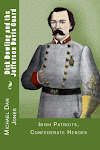
      A new book addresses the war on the upper Louisiana and Texas coasts of the Gulf of Mexico in the new book, Dick Dowling and the Jefferson Davis Guard by Michael Dan Jones.
      Dowling and his men were part of Company F of the 1st Texas Heavy Artillery which spent the entire war in the Houston, Galveston and Sabine Pass areas, which was their home area also.
      Richard William "Dick" Dowling was a native of County Galway, Ireland, and survivors of the Great Famine that ravaged the Emerald Isle in the 1840s. Immigrating first to New Orleans, then to Houston, Texas, he became a successful businessman in the saloon business before the war.
      The Jefferson Davis Guard, more familiarly called the Davis Guard or the Davis Guards, was made up mostly of Irish immigrants from the Houston-Galveston area. Many were working on  the railroad complex being built in Texas, as well as working as laborers on the bustling docks of Houston and Galveston.
      The company was commanded by Captain Frederick Odlum, who had extensive military experience in the 8th U.S. Infantry and the 2nd U.S. Artillery before the war. He was Dowling's wife's uncle.
      The men were mostly Roman Catholics who had suffered religious persecution in their native land, and were very protective of their rights in Texas. This led to some trouble early in their military career, but was soon alleviated by their fighting qualities.
      The book details the life of Dowling and some of the enlisted men and has a roster of the men who served in the unit during the war. The Davis Guard gained fame in the Battle of Galveston, the capture of two Union blockade ships off Sabine Pass, and the Second Battle of Sabine Pass.
      They were greatly celebrated in Houston, Galveston, Beaumont, Port Arthur and Sabine Pass, where there are streets, schools and/or monuments named in their honor.
      The book is available on CreateSpace.com, Amazon.com and other online booksellers. It has photographs, maps and illustrations, footnotes, bibliography, and index; 192 pages, trade paperback.

Friday, February 15, 2013

150-years-ago -- HONOR TO GEN. MAGRUDER

GALVESTON WEEKLY NEWS
January 28, 1863 
 
Maj. Gen. John Bankhead Magruder, perhaps
with the sword presented to him by the laides
of Houston.
(Cdv, blog author's collection)
                Our last issue having been issued while the ceremonies for the reception of Gen. Magruder were in progress, we could only give a brief notice of them.  We now copy from the [Houston]Telegraph the several addresses delivered, and regret, at the same time that Gen. Magruder's speech is not within our reach.
               
The introductory address was that by Dr. Wm. McCravan welcoming the General to our State.  He said: . . .
               
The people responded with three tremendous shouts for Magruder, and three more for his noble army.
               
The General replied in a few brief but telling sentences. . .
               
Miss Sydnor was led forward by Mr. Sorley, holding a beautiful sword in her hand crowned with a laurel wreath.  In the name of the ladies of Texas, Mr. Sorley addressed the General as follows:
               
General.—I have the honor to address you on behalf [of] the ladies of Texas, represented on this occasion by the committee of ladies now assembled to grace by their presence, and cheer by their smiles, this spontaneous offering of a grateful and gallant people, to a gallant and honored chief.
                . . .
The ladies of Texas, emulating their sisters in the other States of our loved Confederacy, have watched with eagerness and pride the march of our victorious hosts; and when, in the progress of the war, an unhappy reverse to our army has been announced, they have but nerved themselves the more heroically to make any and every sacrifice to retrieve the lost ground.  They heard long since, sir, of your chivalry and valor in the "Old Dominion;" and when cast down by the uncontested surrender of their beautiful Island City, they heard that Magruder, the dashing hero of the Peninsula was coming to take command in Texas, their hopes revived, their courage was reinspired.  Nobly, sir, have you fulfilled alike your duty to your country and their high hopes; and in the retaking of Galveston and the destruction of the Federal fleet, with means so apparently inadequate, save the indomitable courage of your gallant Texas troops, you have secured to yourself that reward so dear to the brave—the unbounded confidence and admiration of all Texas, in testimony of which, and as a souvenir, which they hope you will ever prize, alike for its sake as for the occasion which has induced it, they now present you, by the hands of one of the fairest and most accomplished of the daughters of Texas, this sword, the emblem of your office and your profession, relying with confidence that never will it be drawn save in the cause of freedom and humanity.—They feel assured, sir, in the language of another, that in your hands it will be endowed with three most excellent qualities—its hilt with Faith, its blade with Hope, and its point with Charity, teaching this important lesson, that having Faith in God and the justice of your cause, you may reasonably Hope for victory, and be always ready to extend the point of Charity to a conquered and fallen foe."
               
The General received the sword from the beautiful representative of the women of Texas, with a graceful bow, and acknowledged, with emotions of pride the compliment of the gift, declaring that the sword never should be drawn without cause, or sheathed without honor.
               
He then turned to the audience and gave them a glowing, thrilling speech. . .  

Tuesday, February 12, 2013

150-YEARS-AGO -- THE SACK OF FREDERICKSBURG, VA


GALVESTON WEEKLY NEWS, 
February 11, 1863

Sacking of Fredericksburg Va.

                                                                                          Camp Near Fredericksburg, Va.        
                                                                                         Jan. 1st, 1863.                                   
Hood's Texas Brigade took up a collect-
for the ravaged people of Fredricksburg
as seen in this letter from a soldier in the
Co. A, Bayou City Guards, 5th Texas Inf.
Above is General John Bell Hood.
(Library of Congress)

Editor of the Galveston News
                Sir: We have read of sacked towns, and have witnessed such scenes in Europe, but none have seen such destruction, vandalism, ruin and vindictiveness as that which was displayed in the sacking of Fredericksburg, Va.
                This old venerated town, bearing a world wide reputation for good order, good morals, and the high tone of its citizens was doomed to suffer the horrors of a devastation which I will endeavor to describe though satisfied that I shall be only capable of giving but an outline of all that happened at that eventful period.
                The enemy shelled the town all day Thursday, December 11th, and at night crossed his forces on pontoon bridges, and from that moment until Monday night 110,000 men had control of that defenceless town, without restraint or hindrance.
                Having a great curiosity to see what could be the damage done to Fredericksburg, I obtained permission to visit the town.  Leaving our camp to the right we reached the railroad and followed it to within one mile of Fredericksburg, turning to the left, we came upon the battle field on the left of our line where Jackson (or Stonewall) met the enemy with terrible slaughter, a description which you have ere this received.  Continuing down the main road we pass by houses whose chimneys had been knocked down by shells, walls by balls and ruins of burned houses which had set on fire by combustible fluids.
                We now come to the more thickly populated portion of the city, elegant mansions and those less pretending were entered by the ruffianly troops under Burnside—furniture is broken or thrown out of the windows—feather beds cut open and the feathers blown throughout the house, books, papers and records defaced, medicine chests, libraries and private writing desks rifled or broken, ladies clothing cut to pieces, mirrors smashed and in most instances the house entirely emptied of its former contents.
                We reach the business streets we find the store doors open and nothing on the shelves, the street's gutters being filled with the debris of a cities contents.  The fine building of the Bank of Va., was burnt to the ground, $30,000 stolen, and all its papers and correspondence laying scattered in the streets.  In conversation with one of the citizens I learned that at one time the Yankees were so huddled together after the first repulse that they could not find room to lie down.
                That there were not less than one hundred hospitals in the city, including the churches—which to the disgrace of the 19th century had been riddled the day previous with shells, even to destroying the steeples.
                I enclose an extract from the New York Tribune upon the subject, which places the wicked scenes upon history, so that Europe may read from the abolition oracle itself how totally bereft of principle and honor is that army which has so often shouted the strain "On to Richmond."
                Gen. Lee's army fully commiserating the sufferings of the people has raised a subscription list for their benefit, and I have the pleasure to announce that the Texas Brigade comprising the 1st, 4th, 5th, and 3d Arkansas have contributed the munificent amount of $5,930.  I see by the papers that amounts are being contributed throughout the Confederacy for this devoted city.  May we not hope that the Lone Star State which so far has been but little disturbed by the calamities of war, will of her plenty, give much to her impoverished sisters, the ladies of Fredericksburg.
                                                                                               
 Yours respectfully,
 Arthur H. Edey,
Co. A, 5th Texas Volunteers. 

Sunday, February 3, 2013

150-years-ago -- FORT HENRY CAPTURED

Capture of Fort Henry by Union  gunboats.
(Library of Congress)
Brig. Gen. Lloyd Tilghman
(Library of Congress)
By February 1862, Fort Henry, a Confederate earthen fort on the Tennessee River with outdated guns, was partially inundated and the river threatened to flood the rest. On February 4-5, Brig. Gen. U.S. Grant landed his divisions in two different locations, one on the east bank of the Tennessee River to prevent the garrison’s escape and the other to occupy the high ground on the Kentucky side which would insure the fort’s fall; Flag-Officer Andrew H. Foote’s seven gunboats began bombarding the fort.  Brig. Gen. Lloyd Tilghman, commander of the fort’s garrison, realized that it was only a matter of time before Fort Henry fell. While leaving artillery in the fort to hold off the Union fleet, he escorted the rest of his force out of the area and sent them safely off on the route to Fort Donelson, 10 miles away. Tilghman then returned to the fort and, soon afterwards, surrendered to the fleet, which had engaged the fort and closed within 400 yards. Fort Henry’s fall opened the Tennessee River to Union gunboats and shipping as far as Muscle Shoals, Alabama. After the fall of Fort Donelson, ten days later, the two major water transportation routes in the Confederate west, bounded by the Appalachians and the Mississippi River, became Union highways for movement of troops and material.

(National Park Service article)

Statue at Vicksburg National Military Park  of
 Brig. Gen. Lloyd Tighlman's fatal wounding 16 May 1863
at the Battle of Champion Hill, Mississippi.
(NPS image)

Friday, February 1, 2013

150-years-ago -- CONDITIONS IN OCCUPIED NEW ORLEANS

Maj. Gen. Benjamin "Beast" Butler
as depicted by his Confederate foes.
(Library of Congress)

Richmond Daily Dispatch
Feb. 2, 1863 

          Under this head the Crisis gives the substance of recent information derived from a lady who lately left New Orleans, after having vainly sought, for three months, to obtain a passport. We subjoin extracts:
           The administration of Banks differs but little from that of Butler, both of them being tyrants, fanatics, robbers, and Massachusetts Yankees.
          Although no information of a reliable character of Southern affairs is allowed to see the light through the papers of that city, yet our people there are kept fully advised of the success of our arms. Southern papers find their way in from time to time, and the information is circulated from hand to hand.
          The Federal troops are, to a considerable extent, seriously dissatisfied with the service and with the war, especially the Irish portion of them. The better class of Federal officers do not hesitate to declare themselves disgusted with such a service. They do not expect to hold New Orleans permanently, nor to conquer the South, and they regard the temporary occupation of the city as important only to those cormorants who are sucking blood from a subjected people.
           A few weeks before the departure of Butler a spirited engraving representing Butler's face very accurately, with the head and body of a hyena in the act of tearing open the graves of Gen. A. S. Johnston and others, which graves had been violated and robbed, was sent to Gen. Butler with the compliments of the people of New Orleans.
          Spies upon the Confederate war movements are constantly traveling between Mississippi and New Orleans. They often pass our lines and stations for hundreds of miles, without a single inquiry or examination of any kind by our officials. The people of that city were much surprised a few days ago by the presence of a Confederate officer, engaged a few months since in the conscripting service in Mississippi, who seemed to be on intimate terms with the Federal officers. The community there could not learn whether he came down under a flag of truce, or on what conditions he was permitted to enter the city and depart at his leisure. He left the city last week and said he was going to Texas. The Federal commanders at New Orleans seemed to be kept fully advised of all our movements, the strength of our forces, and the character of our defences.
              Butler said there were but two brave men in New Orleans, and they were Father Mullen, of the Jesuit Church, and Doctor Stone, the celebrated Surgeon. Father Mullen refused to take the oath, and denounced the tyranny that required it of him, and set them at defiance. Father Monaghan, of the Catholic Church, denounces Federal tyranny from his pulpit, and declares if they arrest him it must be at the altar, and before they drag him to the door they must wade knee-deep in blood, Dr. Nesux also refuses to attend the Yankee sick or wounded upon any condition.
            There are now very few Federal troops in New Orleans. Those who guard the approaches to the city have frequent battles with our patriotic partisans, who are sometimes badly worsted.

Tuesday, January 29, 2013

C.S.S. HUNLEY UPDATE -- Scientists Uncover Evidence of Explosion

[Press Release, Courtesy Friends of the Hunley]
C.S.S. Hunley (U.S. Navy Historical Institute)

           The Hunley was less than twenty feet away from her torpedo when it exploded, according to new evidence uncovered by experts working to preserve the world’s first successful combat submarine. This is one of the most important clues found to date for archaeologists trying to discover why the Hunley vanished.
          Remnants of the torpedo that sank the USS Housatonic in 1864 were found securely bolted to the tip of the spar, a large pole that served as the Hunley’s weapon delivery system. The metal is jagged and peeled away from the aftermath of the explosion. It would have clearly created a risky situation for the Hunley’s crew if the torpedo stayed attached to the spar when it exploded.
           “There is overwhelming evidence to indicate this was not a suicide mission. The crew no doubt knew the dangers facing them, but still, they hoped to make it back home. They must have believed this was a safe enough distance to escape any harm,” said Hunley Commissioner Lieutenant Governor Glenn McConnell. “If so, they were at least partially right. Thus far, no damage has been found on the actual submarine caused by the explosion.”
          Plan of Attack: The new find is turning upside down the traditional understanding of how the Hunley’s weapon system functioned. Travelling to the target in a 19th century, hand cranked submarine was challenging enough. But how do you actually get the torpedo in the right spot and then trigger it once you are there? The answer has been sitting quietly in the Hunley lab underneath a brittle layer of concretion coating the spar.
          Until now, the conventional wisdom has been the Hunley would ram the spar torpedo into her target and then back away, causing the torpedo to slip off the spar. A rope from the torpedo to the submarine would spool out and detonate once the submarine was at a safe distance. This theory has always had difficulty under scrutiny since it would be very hard to actually lodge the torpedo into the hull of the enemy ship.
           Finding a portion of the original torpedo casing has enabled the team to confirm a long held suspicion that it was built and designed by a group associated with Edgar Singer (cousin of the famous sewing machine entrepreneur Isaac Singer). A period diagram housed at the National Archives indicates that this Singer torpedo held 135 pounds of gunpowder and was detonated by a trigger mechanism.
           This means the Captain had to position the torpedo while still attached to the spar and trigger it when the time was right. The Hunley’s crew was very strategic in their placement of the torpedo. It was detonated right under the stern to maximize the impact of the explosion and ensure destruction of the large Union ship. The explosion was not an accident. It was the result of careful planning.
Reconstructing the Past: There are dozens of possible theories to explain why the Hunley disappeared after sinking one of the mightiest ships in the Union’s fleet. Scientists have long wanted to digitally test the different scenarios using computer modeling. Until now, they have been missing key pieces of information such as the torpedo strength and the approximate location of the Hunley during the deadly explosion.
          With the torpedo charge and size now known from the diagram, understanding where the Hunley was in relation to the Housatonic and the blast that dragged her down to the bottom of the sea becomes a matter of arithmetic. The spar measures approximately 16 feet in length and the torpedo 2 feet, meaning the Hunley was at least 18 feet away from the bomb when it went off.
Now, scientists have the information they need to move forward with computer simulations of the attack, which could prove vital in solving the lingering mystery of why the Hunley did not come home on the fateful night of February, 17th, 1864.
          What’s Next: The submarine is covered with a layer of rock, sand and silt – often referred to as concretion – that built up over time while she rested on the ocean floor. The concretion serves as protective coating, but also inhibits the effectiveness of the conservation treatment needed to ensure the Hunley’s survival. Scientists will soon begin peeling away the concretion. “What has been concealed under this layer is anyone’s guess. As we remove it, we’ll be seeing the actual skin of the submarine for the first time. Hopefully, we’ll find many new clues to help us have a deeper understanding of the Hunley’s history,” said Lieutenant Governor McConnell.

Thursday, January 24, 2013

150-Years-Ago -- LOUISIANA TIGER LEADER REMEMBERED


[Editor's note: Maj. Chatham Roberdeau Wheat was born April 9, 1826 in Alexandria, Virginia to Rev. John Thomas Wheat and Serina Blair Patten. He commanded the 1st Special Battalion (Wheat's) Louisiana Volunteers in the First Battle of Manassas, Shenandoah Valley Campaign of 1862 and the Seven Days Battles around Richmond, where he was killed at  the Battle of Gaines' Mill on June 27, 1862. Company B (Tiger Rifles) of Wheat's Battalion wore colorful  Zouave uniforms and drew attention of reporters before and after First Manassas where they launched a famous bowie knife charge. Soon the whole battalion was being called Louisiana Tigers and then all Louisiana troops serving in the Army of Northern Virginia.]
The Richmond Daily Dispatch
Jan. 26, 1863
Maj. Chatham Roberdeau Wheat
Obsequies of Major C. R. Wheat.
       The funeral of this well known and gallant officer, who was killed at the battle of Mechanicsville [Gaines' Mill], before Richmond, in July [June 27, 1862] last while leading his command into action, took place in this city on Saturday last, from the Monumental Church, on Broad street.
          A large concourse of military and citizens, plentifully interspersed with ladies, assembled at the church at an early hour to hear the funeral sermon, which was delivered by the Rev. J. C. McCabe, after which the coffin, containing the remains of the distinguished dead, was removed from the church to a caisson, drawn by four span of horses, which had been appropriately selected to convey it to Hollywood Cemetery. The line of procession was then formed, as follows: City Battalion, Major Elliott commanding; Public Guard, Lieut. Gay commanding detachment of the Tiger Rifles; two bands or music; caisson, containing the coffin; after which followed Louisiana officers now in the city, Gen. Elzey and Staff, Gen. Henningsen, and officers of the army, citizens, &c., and the cortege closed with carriages containing friends and acquaintances of the deceased.
          Major Chatham Roberdeau Wheat was a native of Alexandria, Va., and was distinguished not only for his fine personal appearance, but for those qualities which constitute a gallant officer and true gentleman. Of a restless, roving and chivalrous disposition, the Mexican war first opened a path for his peculiar genius, since when his sword has not in its scabbard, but wherever struggling liberty needed a champion, whether it was upon the battlefields of Mexico, Nicaragua, Italy, or his own native South, he was among the first to respond to the call. Major Wheat wished to die, amidst the flashing of the guns, and with the flag of his country waving victoriously above him.

Two Louisiana Tigers from a
contemporary Harper's Weekly
sketch. Notice the bowie knife
worn by the Tiger at left.