Monday, October 6, 2025

Today in History (general history)/ On This Day in Confederate History/ Confederate General Birthdays, October 6.

Click πŸ‘‰Today in History (general history) Oct. 7. 

On This Day in Confederate History, Oct. 7.

1862: General Braxton Bragg's Army of the Mississippi and Maj. Gen. Don Carlos Buell's Army of Ohio converged near Perryville, Ky., on the eve of the great battle there. Buell's army has 55,000 men, but only 22,000 will be engaged in the battle. Bragg had about 16,000 men present for the battle. Bragg would be absent until just before the battle began. Buell would be absent from the battle. The cavalry of both sides clashed on this day. The topographical lay of the land in that area also created an acoustical shadow that had an impact on the battle.

This is the history of one of the hardest-fighting infantry regiments in the War for Southern Independence, the 23rd Tennessee Infantry. The regiment was raised predominantly from the Middle Tennessee counties, where there was considerable support for secession and Southern Independence. The men were overwhelmingly made up of yeoman farmers of predominantly Anglo-Celtic descent who were to face some of the largest, bloodiest, and most memorable battles of the war, both in the West and the East. They got their baptism of fire in the Battle of Shiloh, followed by the battles of Perryville, Murfreesboro, Hoover's Gap, Chickamauga, and Knoxville in the West with the famed Army of Tennessee. They were then transferred to the East, where they fought in the Bermuda Hundred Campaign in Virginia, under the legendary General P.G.T. Beauregard, and then in the famed Army of Northern Virginia in the Petersburg Campaign, and ended the war with the great General Robert E. Lee at Appomattox Courthouse. The book covers the history of the regiment from letters, diaries, memoirs, and official records to cover both officers and men in a personal way. It also has an annotated roster of some 1,164 men who served in the regiment, as well as maps, photos, illustrations, bibliography, footnotes, and index.

1864: Prices' Missouri Expedition: As Maj. Gen. Sterling Price's Confederate Army moved through Missouri, and skirmishes occurred at Jefferson City, Moreau Creek, and Tyler's Mills, Big River, Mo.

In the Petersburg Campaign in Virginia, the Battle of Darbytown and New Market Roads were between the Federal X Corps and two divisions of Gen. Robert E. Lee's Army of Northern Virginia. The Confederate divisions were those of Maj. Gens. Robert Hoke and Charles W. Field on the Federal defenses along the two roads. The attacks were repulsed and Confederate Gen. John Gregg was killed in action. Gregg was hit in the neck while leading a counterattack with his Texas Brigade. The Federal casualties totaled 458, including 49 killed, 253 wounded, and 156 captured or missing. Confederate casualties have been estimated at around 700 in total.

Confederate General Birthdays, Oct. 7.

Lieutenant General Richard Heron Anderson was born on this day in 1821 in Sumter County, South Carolina. He graduated from West Point 40th in his class of 56 cadets in 1842.  During the Mexican-American War, Anderson was in the Siege of Veracruz, the Battle of Contreras, the Battle of Molino del Rey, and the Mexico City Campaign. He received a brevet promotion to the rank of first lieutenant for his gallantry in battle. Following that war, Anderson served in a variety of frontier outposts. He resigned on March 3, 1861, and was commissioned the colonel of the 1st South Carolina Regulars. He was given command of Fort Sumter after its surrender and was promoted to brigadier general on July 19, 1861, to major general on July 14, 1862, and to lieutenant general on May 31, 1864. His battles and campaigns included Santa Rosa Island, Fla. (wounded), Seven Pines, Second Manassas, Sharpsburg, Fredericksburg, Suffolk, Gettysburg, Wilderness, Spotsylvania, Cold Harbor, and Petersburg. Following the war, he farmed in South Carolina, worked for the railroad, and died on June 26, 1879, at Beaufort, S.C., and was buried there in St. Helena's Episcopal Church.

Lt. Gen. Richard H. Anderson
πŸ‘±

Major General William Brimage Bate was born on this day in 1821 in Bledsoe's Lick, Tennessee. During the Mexican-American War, he served in Louisiana and Tennessee regiments and achieved the rank of lieutenant.  Following that war, he started a newspaper in Gallatin, Tennessee, and was elected to the Tennessee House of Representatives. He then became a lawyer, supported secession, and was an elector for John C. Breckinridge in the 1860 presidential campaign. During the War for Southern Independence Bate started out as a private and rose to major general. His battles and campaigns included Aquia Creek, First Manassas, Shiloh, Hoover's Gap, Chickamauga, Missionary Ridge, Resaca, New Hope Church, Dallas, Kennesaw Mountain, Peachtree Creek, Atlanta, Franklin, Nashville, and Bentonville. He was wounded three times and six horses were killed from under him. Following the war, Anderson practiced law in Nashville, Tenn., was active in the Democratic Party, served as governor, and was a U.S. Senator. Anderson died March 9, 1905, in Washington, D.C., and was buried there in Mount Olivet Cemetery.

Maj. Gen. William B. Bate
πŸ‘±
Major General Bushrod Rust Johnson was born on this day in 1817 in Belmont County, Ohio. He graduated from West Point in 1840, served in Seminole War, and Mexican-American War, and was dismissed from the Army over a bookkeeping discrepancy. The then taught at the Western Military Institute, and the University of Nashville, and was active in the state militia. He started the War for Southern Independence as a colonel of the Tennessee militia was commissioned in the Confederate Army and was promoted to brigadier general and then to major general. His battles and campaigns included Fort Donelson, Shiloh (wounded), Perryville, Murfreesboro, Chickamauga, Bermuda Hundred, Swift Creek, Petersburg, the Crater, Siege of Petersburg, White Oak Road, Five Forks, and Sayler's Creek. Following the war, Johnson was a professor and co-chancellor at the University of Nashville. He died Sept. 12, 1880, in Brighton, Illinois, and is buried in the Old City Cemetery in Nashville, Tenn.

Maj. Gen. Bushrod R. Johnson
πŸ‘‹

Sunday, October 5, 2025

Today in History (general history)/ On This Day in Confederate History/ Confederate General Birthdays, October 5.

 Click πŸ‘‰Today in History (general history) Oct. 5. 

On This Day in Confederate History, Oct. 5.

1862: The Battle of Hatchie Bridge, Tenn. happened on this day as the Confederate Army of the West under Major General Earl Van Dorn and Sterling Price withdrew from the failed attempt to retake the important railroad junction at Corinth, Miss. They faced Maj. Gen. Edward O.C. Ord with Maj. Gen. Stephen A. Hurlbut's division of infantry, artillery, and cavalry. The Confederates under Price found the Federals blocking their way and were pushed back to the Hatchie River. Van Dorn just found another way to their destination to Holly Springs, Miss. The Federals had about 500 casualties, and the Confederates had 400.

Lt. Gen. Stephen Dill Lee 
who led the victory at Chickasaw Bayou, Miss.,
was wounded at Champion's Hill, Miss., 
captured at Vicksburg, led a corps in the
Atlanta Campaign, and gave the SCV its
"Charge," (mission statement) in New Orleans
in 1906. (Liljenquist Collection, Library of Congress)
CLICK ON THE IMAGE TO ENLARGE

1863: Maj. Gen. Joseph "Fighting Joe" Wheeler's Confederate cavalry destroyed an important railroad bridge over Stone's River near Murfreesboro, Tenn. which seriously hampered the flow of food to the besieged Army of the Cumberland at Chattanooga. 

1864: The Battle of Allatoona Pass, Ga. took place on this day as a division of Confederates of the Army of Tennessee unsuccessfully attacked a Federal garrison under Brig. Gen. John M. Corse. Confederate Maj. Gen. Samuel G. French's division was tasked with clearing the pass, which was solidly fortified by the Yankees. Corse had 2,025 men manning the trenches there while Gen. French had 3,276 men to try to take it. The Confederates bombarded the position for two hours and then asked for a surrender, which was refused. Southern infantry then moved on the forts but the bluecoats held their positions. When he got word that Federal reinforcements were on the way, Gen. French decided to withdraw. Total Federal casualties were 706 to 897 for the Confederates.

Battle of Allatoona Pass, Ga.

Confederate General Birthdays, Oct. 5.

Brigadier General George Washington Gordon was born on this day in 1836 in Giles County, Tennessee. Gordon grew up in Mississippi and Texas and was a graduate of the Western Military Institute in Nashville, Tenn. During the war, he served as colonel of the 11th Tennessee Infantry and was promoted to brigadier general in August of 1864. He led a brigade at the Battle of Franklin, Tenn. After the war, he served in the U.S. House of Representatives for the 10th Congressional District of Tennessee. He died on August 9, 1911, and is buried at Elmwood Cemetery in Memphis, Tennessee.

Brig. Gen. George W. Gordon

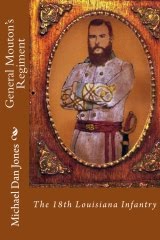
ClickπŸ‘‰General Mouton's Regiment: The 18th Louisiana Infantry
The 18th Louisiana Infantry was one of the hardest-fighting Louisiana regiments in the War for Southern Independence. The original commander of the regiment was Brig. Gen. Alfred Mouton, one of the most beloved and charismatic leaders in the Confederacy. They fought at the Battle of Shiloh, the Bayou Lafourche Campaign, the Bayou Teche Campaign in 1863, and the Red River Campaign in 1864. This is their story. The book contains photographs, maps, illustrations, a bibliography, and an index.

Saturday, October 4, 2025

Today in History (general history)/ On This Day in Confederate History/ Confederate General Birthdays, October


Click πŸ‘‰Today in History (general history) 

On This Day in Confederate History, Oct. 4.

1862: On the second day of the bloody Battle of Corinth, Miss., took place. Confederate Maj. Gen. Earl Van Dorn ordered Confederate artillery to open fire at 4:30 a.m. on Maj. Gen. William Rosecrans' Federals in their fortifications around Corinth. Confederate Brig. Gen. Louis HΓ©bert was supposed to lead the attack, but he had become seriously ill and had to be replaced by Brig. Gen. Martin E. Green, who attacked with four brigades. The Southerners succeeded in capturing Battery Powell, but the assault failed on the other fortifications. A counterattack took back Battery Powell. Col. William P. Rogers of the 2nd Texas Infantry, an old Mexican War comrade of President Davis, was killed in the assault. The Confederates lost 473 men killed, 1,997 wounded, and 1,763 captured or missing. Federal casualties were 355 killed, 1,841 wounded, and 324 missing.

Pvt. Charles H. Ruff, 2nd Texas Infantry
(Liljenquist Collection, Library of Congress)

Also on this day, the Federal Western Gulf Blockading Squadron, consisting of five warships, approached Galveston, Texas to demand its surrender. The city was defended by the 1st Texas Heavy Artillery under Col. Joseph Jarvis Cook. The USS Harriet Lane entered Galveston Bay with a flag of truce to demand the surrender. Cook could not get a boat to find out what the Yankees wanted, and the Harriet Lane withdrew. Lack of communication led to an exchange of artillery, but a 4-day truce was worked out. Brig. Gen. Paul Octave HΓ©bert, the commander of the Dept. of Texas, considered the city indefensible and ordered Cook to evacuate it, including the heavy artillery and civilians. After the truce ended, the mayor and city council went out to the USS Westfield and surrendered the city to Commander William B. Renshaw, USN. A detachment of 150 men from the ships entered the city and raised the U.S. Flag over city hall.

Col. Joseph J. Cook
1st Texas Heavy Artillery Regiment

Great Naval Raid on Lake Charles, La.: Also on this day, USS Kensington at Calcasieu Pass, Louisiana, about 30 miles east of the Texas border, and began a raid up the Calcasieu River to the village of Lake Charles to burn blockade runners and capture the steamboat Dan, owned by Captain Daniel Goos, which had made two successful blockade runs. Running up the shallow river was the Kensington's two-masted sloop with a 12-pounder boat howitzer manned by Lt. Frederick Crocker and 12 bluejackets with muskets and cutlasses. They found the Spanish blockade runner Conchita and burned it, and surprised and captured Col. Nathaniel Clifton at his home. He was the commander of the Calcasieu Parish militiamen, which was made up of only 25 old men and young boys. The detachment went further up the river and found the Dan, which was loaded with cotton, and captured it. He transferred his howitzer and men to the Dan and towed the sloop behind it. Crocker returned to Lake Charles and bombarded the town, demanded a tribute of beef and potatoes, and demanded the women and children come to the lakefront, and he held them under his guns while the beef and potatoes were being gathered. The Federal commander then took 10 hostages and tied them up around the helm of the ship as human shields. He then headed back downriver. Meanwhile, the Calcasieu militia under Captain Warren W. Johnson had gathered and planned to ambush the invaders. However, when they saw the human shields on board, they withheld their fire. But Crocker opened fire on the militiamen, but the shells fell harmlessly around them. The Yankees arrived safely back at the Kensington with their bootee and hostages.

Captain Daniel Goos
Confederate Blockade Runner
The Battle of Calcasieu Pass, Louisiana, 6 May 1864 was a small but sharp battle between two Union gunboats, the U.S.S. Wave and the U.S.S. Granite City, and about 350 Confederates with four small cannons. The Confederates included a diverse group of Texas Germans, Mexicans and Anglo-Celts. The battle was a complete victory for the Confederates. The book includes photos, maps, footnotes, bibliography and index.

Confederate General Birthdays, Oct. 4.

None.

Friday, October 3, 2025

Today in History (general history)/ On This Day in Confederate History/ Confederate General Birthdays, October 3.

Click πŸ‘‰Today in History (general history) Oct. 3.

On This Day in Confederate History, Oct. 3.

1862: The Battle of Corinth, Miss., also called the Second Battle of Corinth, took place on this day. Major Generals Earl Van Dorn and Sterling Price led 22,000 Confederates against 23,000 Federals under Major Generals William Rosecrans and Ulysses S. Grant. The Confederate goal was to take back the strategic railroad crossing at that Mississippi town. The Federals were fighting the old Confederate rifle pits around Corinth, and the Confederates made a series of frontal assaults on the breastworks with a breakthrough that pushed the Northerners back into their redoubts. The fighting ended with the darkness. Van Dorn made plans to resume the attack the following day, but the Federals were now in a much stronger position. Federal Brig. Gen. Pleasant A. Hackleman was killed in action.

A Louisiana Confederate
(Liljenquist Collection, Library of Congress)
(Colorized by author)

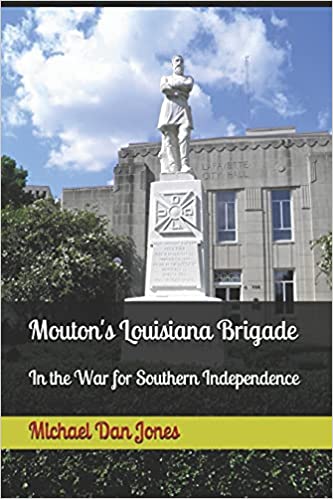
1863: The Confederate Army of Western Louisiana commanded by Maj. Gen. Richard Taylor, braces for another major campaign when the Federal Army of the Gulf under Maj. Gen. Nathaniel Banks begins an offensive across Southwest Louisiana with the goal of invading East Texas. Banks has 19,500 bluecoats, and Taylor can muster less than half that many men. Taylor will once again have to use Fabian's tactics to draw the Federals deeper into a sparsely settled area that will pose major logistical problems for the invaders and present opportunities to attack the bluecoats piecemeal. Taylor has some highly motivated fighters in his super-aggressive Texas cavalrymen under Brig. Gen. Tom Green, Mouton's Louisiana Infantry Brigade, and Walker's Texas Infantry Division. The Texans are determined to keep the Northmen, who have been so destructive in Louisiana, out of Texas, and some hopping-mad Louisianians are determined to get revenge for what the invaders have done to their families.

Col. George W. Baylor
2nd Cavalry (Arizona Brigade)
Green's Cavalry Division


CLICKπŸ‘‰
The Battle of Stirling's Plantation and Bayou Bourbeau:
The Fall 1863 Campaign in Louisiana & Texas

The battles of Stirling's Plantation and Bayou Bourbeau in South Louisiana, and the Rio Grande Expedition in Texas, in the Fall of 1863, were a major Federal attempt to loot thousands of bales of cotton for Northern speculators, and to subjugate western Louisiana and Texas. The campaign left behind a swath of death and destruction that would lead to the even more destructive Red River Campaign of 1864.

1864: Gen. John Bell Hood with his Army of Tennessee, Maj. Gen. Fighting Joe Wheeler's cavalry and Maj. Gen. Nathan Bedford Forrest's cavalry all continue to wreak havoc on Maj. Gen. William T. Sherman's supply lines for his three armies in Georgia. Hood proceeds with the destruction of the Atlanta to Chattanooga to the railroad line. Wheeler and Forrest continue their raids.

An unidentified Confederate
The CDV has a Tennessee back mark
(M.D. Jones Collection)

Confederate General Birthdays, Oct. 3.

None.

Thursday, October 2, 2025

Today in History (general history)/ On This Day in Confederate History/ Confederate General Birthdays, October 2.

Click πŸ‘‰Today in History (general history) Oct. 2. 

On This Day in Confederate History, Oct. 2.

1862: Great Naval Raid on Lake Charles, La.--Lt. Col. Ashley W. Spaight, a later full colonel, and commander of the 11th Battalion Texas Volunteers, which includes three infantry companies, two cavalry companies, and a heavy artillery company, reported the destruction of the Eastern Texas Railroad Depot one mile north of Sabine Pass. The Federal blockaders, led by Lt. Frederick Crocker on the USS Kensington, were also raiding Calcasieu Pass, Louisiana, and sent a launch with well-armed sailors and a 12-pounder boat howitzer up the Calcasieu River to destroy any blockade runners they found, especially the steamer Dan owned by Captain Daniel Goos of Lake Charles, La.  In Lake Charles, the sailors held the women and children under their  guns while the men gathered their tribute. The sailors then took hostages as human shields on their voyage back to the gulf. The only defenders were the Calcasieu Parish Militia commanded by Col. Nathaniel Clifton but made up of only about 25 men. 

Capt. William B. Duncan
Co. F, 11th Bn. Tex. Vols.
(Sam Houston Library & Regional Research Center) 

Col. Ashley W. Spaight
Commander of the 11th Bn. Tex. Vols.
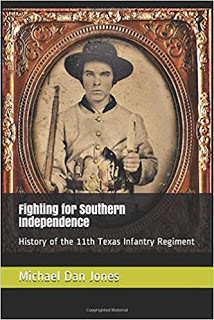
A history of the 11th Battalion (Spaight's) Texas Volunteers in the War for Southern Independence. The unit fought on the Texas Gulf Coast and in Louisiana to fend off Northern invaders of their homeland. They fought in the First Battle of Sabine Pass, Texas, a sea battle of Galveston, Texas, the Battle of Stirling's Plantation, the Battle of Bayou Bourbeau, and the Battle of Calcasieu Pass, all in Louisiana. The book also contains a roster of men who served in the battalion, pictures, maps, a bibliography, and an index.

1864: Gen. John Bell Hood's Army of Tennessee ripped up the railroad tracks of the Western and Atlantic Railroad, which was part of the supply line of Maj. Gen. William T. Sherman's Federal Army at occupied Atlanta, Georgia. Up in Tennessee, Maj. Gen. Nathan Bedford Forrest's Confederate cavalry raiders skirmished with Federals near Columbia, Tennessee.

Confederate General Birthdays, Oct. 2.

Lieutenant General Alexander Peter Stewart was born on this day in 1821 in Rogersville, Tennessee. Stewart was an 1842 graduate of the U.S. Military Academy 1842, the 12th of 56 cadets in his class. The future Confederate resigned from the U.S. Army in 1845 and became a mathematics professor at Cumberland University in Lebanon, Tenn., and at the University of Nashville. In 1861, he was commissioned a major of artillery in the Tennessee Militia but soon entered the Confederate Army and rose rapidly in the ranks. Stewart was appointed a brigadier general in November 1861 and rose to the level of lieutenant general in the Army of Tennessee. He was one of the most competent and reliable generals in that army and took part in nearly all of its battles. After the war, he became the Chancellor of the University of Mississippi and was commissioner of the Chickamauga and Chattanooga National Military Park. He died  Aug. 30, 1908, in Biloxi, Miss. at age 86. He was buried in Bellefontaine Cemetery in St. Louis, Mo.

Lt. Gen. Alexander P. Stewart

Wednesday, October 1, 2025

Today in History (general history)/ On This Day in Confederate History/ Confederate General Birthdays, October 1.

Click πŸ‘‰Today in History (general history) Oct. 1. 

On This Day in Confederate History, Oct. 1.

1861: Three of the Confederacy's top generals had a council of war at Centreville, Va., with President Jefferson Davis to decide on a strategy for securing Southern Independence. Generals Joseph Eggleston Johnston, P.G.T. Beauregard, Maj. Gen. Gustavus Woodson Smith met with their commander-in-chief, but they decided that the Confederate Army wasn't yet ready to mount an offensive. President Davis also inspected the army encampments around Centreville, Va.

1862: Maj. General John C. Pemberton is given command of the new Department of Mississippi and East Louisiana, to take charge of the defense of the Confederacy's two bastions on the Mississippi River, Vicksburg and Port Hudson, to keep the Trans-Mississippi connected with the eastern Confederacy. The vast area to the west of the Mississippi was a vital source of men and supplies for the great armies of the East.

Pvt. L. Cormier of Boone's Battery
Louisiana Light Artillery, Miles Louisiana Legion
wearing a typical uniform worn by the Confederate
garrison at Port Hudson, La.
(CDV, Port Hudson State Historic Site) 
 
This is the history of the 9th Battalion Louisiana Infantry, which fought at the Battle of Baton Rouge and the Siege of Port Hudson, Louisiana, in the War for Southern Independence. The unit took part in the famous charge of Allen's Brigade at Baton Rouge. The men of the unit were fighting in defense of their own home area since most were from East Baton Rouge and nearby parishes. The paperback book includes photos, maps, a bibliography, index, and an annotated roster of the men in the battalion.


1864: Fighting continued on this day along the Confederate Petersburg, Va., siege line as the Federal and Confederate cavalry clashed at the Battle of Vaughan Road. The Federals are led by Maj. General David McMurtrie Gregg and Brigadier General Henry E. Davies, and Confederate commanders are Maj. Gen. Wade Hampton and Brigadier Generals John Dunovant, Pierce M.B. Young, and Matthew C. Butler. The Confederate horse soldiers opened the ball in the morning, determined to take back positions held by the Federals. The Confederates are finally driven off, but fighting resumes that afternoon the bluecoats hold on at the end of the fighting. But the Confederates prevented the Federals from achieving all their objectives. The Confederates have 130 casualties and the Federals 90 in the day's combat. Brig. Gen. Dunovant was killed in action while leading a charge in this battle.

Brig. Gen. John Dunovant
Laid down his life on the altar of 
Southern Independence on this day, aged 39.

Confederate General Birthdays, Oct. 1.

Brigadier General Robert Huston Anderson was born on this day in 1835 in Savanah, Georgia. He graduated from West Point in 1857 and served as a second lieutenant in the prewar U.S. Army. He resigned in 1861 and initially served as a lieutenant of artillery in the Confederate Army. Promotions to major of the 1st Georgia Sharpshooter Battalion, colonel of the 5th Georgia Cavalry, and brigadier general on July 26, 1864. His battles included Fort McAllister, Chattahoochee River, Noonday Creek, Atlanta, Buckhead, Kennesaw Mountain, Big Shanty, Decatur, and Brown's Mill. Savannah, Carolinas Campaigns, Morrisville. Anderson was wounded twice during the war. After the war, Anderson was the police chief of Savannah, Ga., founded the Georgia Sabre Club, and served on the board of visitors at West Point. He died Feb. 8, 1888, in Savannah and was buried there in Bonaventure Cemetery.

Brig. Gen. Robert H. Anderson
πŸ‘±

Brigadier William Hicks "Red" Jackson was born this day in 1835 in Paris, Tennessee. He graduated from West Point in 1856 and served as a second lieutenant in the prewar U.S. Army. While on frontier duty, he skirmished with Indians and participated in the Comanche and Kiowa Expedition of 1860. Resigning from the U.S. Army on May 16, 1861, and joined the Confederate Army as a captain of the artillery. Promotions followed and he was appointed colonel of the 1st Tennessee Cavalry, and on December 29, 1862, was promoted to brigadier general. His battles include Belmont, the Vicksburg Campaign, the Atlanta Campaign, Brown's Mill, and Wilson's Raid. After the war, was involved in agricultural pursuits, The Grange movement, and died at his plantation, Belle Meade, Tennessee on March 30, 1903, and was interred in the family mausoleum on the plantation. His remains were later moved in 1906 to Mount Olivet Cemetery in Nashville, Tenn. 

Brig. Gen. William H. "Red" Jackson
πŸ‘±

Brigadier General Claudius Charles Wilson was born this day in 1831 in Effingham County, Georgia. A prewar lawyer in Savannah, Ga. He joined the Confederate Army in 1861 as a captain in the 25th Georgia Infantry and was promoted to colonel on Sept. 2, 1861. Anderson's battles and campaigns included the Vicksburg Campaign and the Battle of Chickamauga, and he died of "camp fever on Nov. 27, 1863, at Ringgold, Georgia. He was buried at Bonaventure Cemetery in Savannah, Ga. Anderson was promoted to brigadier general posthumously, which was confirmed by the Confederate Senate on Feb. 17, 1864.

Brig. Gen. Claudius C. Wilson
πŸ‘‹

Tuesday, September 30, 2025

Today in History (general history)/ On This Day in Confederate History/ Confederate General Birthdays, September 30.

Click πŸ‘‰Today in History (general history) Sept. 30.

On This Day in Confederate History, Sept. 30.

1863: Siege of Chattanooga: Maj. Gen. Joseph "Fighting Joe" Wheeler and his Confederate Cavalry began a raid on Maj. Gen. William Rosecrans and the Army of the Cumberland's line of communications to besieged Chattanooga, Tenn. Before the raid, Wheeler drove the enemy off Lookout Mountain so Confederates could occupy it and keep a bird's eye view of the city. Wheeler's two divisions were commanded by Brig. Gen. John A. Wharton of Texas and Brig. Gen. William T. Martin of Mississippi. Wheeler found Maj. Gen. Nathan Bedford Forrest's division was in poor shape. He weeded out the unfit men and horses and consolidated the three brigades into one.
Brig. Gen. John A. Wharton

Maj. Gen. Joseph "Fightin' Joe" Wheeler

Confederate cavalryman
Painting by William Ludwell Sheppard 

1864: Battle of Fort Harrison: Confederate Gen. Robert E. Lee, with 10,000 reinforcements with Maj. Gen. Charles Field, and staged a counterattack on Fort Harrison, which the Federals had taken the previous day in the Battle of Chaffin's Farm and New Market Heights in the Petersburg, Va. defenses. While the counterattack failed, the loss of the fort was compensated for by realigning the Confederate earthworks further west. Losses for the Confederates in the two-day battle were a total of 2,000, including 250 killed, 1,250 wounded and 500 captured or missing. The Federal losses totaled 3,372, including 391 killed, 2,317 wounded, and 649 missing or captured.

The Federals also on this day started the Battle of Peebles's Farm, also known as Poplar Springs Church or Poplar Grove Church on the Petersburg, Va. defenses. Lt. Gen. A.P. Hill held the Confederate position with 10,000 men and Maj. Gen. Gouverneur K. Warren commanded the V Corps and a cavalry division under Brig. Gen. David McM. Gregg, a total of 29,800 men. The Federals attack Fort Archer and seized it. Lee recalled some of the reinforcements he had sent to Fort Harrison. Confederate Maj. Gen. Henry Heth mounted a counterattack that routed the Federal IX Corps. Fighting would continue the next day.

Confederate General Birthdays, Sept. 30.

Brigadier General Thomas Jordan was born on this day in 1819 in Luray, Virginia. He graduated from West Point in 1840 and served in the Seminole War in Florida and the Mexican American War during which he was commended by Gen. David Twiggs. Jordan resigned his commission in the U.S. Army in 1861 and joined the Confederate Army as a lieutenant colonel and fought at the First Battle of Bull Run. He then served as Gen. P.G.T. Beauregard's chief of staff at the Battle of Shiloh. Jordan was promoted to brigadier general on April 14, 1862, and served with Beauregard in the defenses at Charleston, S.C. He died November 27, 1895, at age 76 in New York City and is buried in Mount Hope Cemetery in Westchester County, N.Y.

Brig. Gen. Thomas Jordan


CLICKπŸ‘‰
The Battle of Stirling's Plantation and Bayou Bourbeau:
The Fall 1863 Campaign in Louisiana & Texas

The battles of Stirling's Plantation and Bayou Bourbeau in South Louisiana, and the Rio Grande Expedition in Texas, in the Fall of 1863, were a major Federal attempt to loot thousands of bales of cotton for Northern speculators, and to subjugate western Louisiana and Texas. The campaign left behind a swath of death and destruction that would lead to the even more destructive Red River Campaign of 1864.