Saturday, February 14, 2026

Today in History (general history)/ On This Day in Confederate History/ Confederate General Birthdays, February 14.

Click πŸ‘‰ TODAY IN HISTORY (general history) Feb. 14.

ON THIS DAY IN CONFEDERATE HISTORY, Feb. 14.

1862: The Confederate garrison at Fort Donelson was increasingly besieged by the Federal army and navy on this day. Four Federal ironclads arrived to increase the heavy bombardment of the fortress. However, the Confederate shore batteries gave the warships a pounding with the USS St. Louis and USS Louisville especially hard hit. Among the sailors wounded was Flag Officer Andrew Foote. The Confederates also planned to have General Gideon Pillow attack the Federal army's right flank. Elsewhere, the Confederates withdrew from Bowling Green, Kentucky.

Brig. Gen. Bushrod Johnson
Engineering Officer and briefly
commanded Fort Donelson.

1863: The USS Queen of the West is captured by Confederate land forces after it went up the Red River and engaged Fort DeRussy near Marksville, Louisiana. The Southern shore batteries pounded the gunboat until she was grounded. The Confederate artillerists continued the pounding until blue jackets evacuated, evaded capture, and were rescued by the USS DeSoto. The Confederates repaired the gunboat and rechristened it CSS Queen of the West.

1864: Meridian Campaign: Confederates under Lt. Gen. Leonidas Polk realized he didn't have the manpower to stop Sherman's rampaging bummers from taking Meridian, Mississippi, and thus evacuated the town. Sherman entered it with little fighting. Maj. Gen. Nathan Bedford Forrest's cavalry, however, blocked Federal Maj. Gen. Sooy Smith's faction from reaching Meridian.

CONFEDERATE GENERALS HISTORY, Feb. 14.

Brigadier General Alfred Iverson Jr. was born on this day in 1829 in Clinton, Georgia. The son of the Georgia U.S. Senator, he received a military education at the Tuskegee Military Institute. Iverson Jr. served as a 17-year-old second lieutenant in the Mexican American War. After the war, he became a lawyer and then in 1855, was given a first lieutenant commission in the 1st U.S. Cavalry and served in "Bleeding Kansas." He resigned from the U.S. Army in 1861 and became the colonel of the 20th N.C. Inf. in the Confederate Army. Iverson Jr. was promoted on November 1, 1862. His battles and campaigns included the Seven Days Battles, Gaines' Mill, South Mountain, Sharpsburg, Chancellorsville, Gettysburg, the Atlanta Campaign, and the Carolinas Campaign at the end of the war. Following the war, he became a businessman in Macon, Ga., and an orange farmer in Florida. Iverson died on March 31, 1911, and was buried in Oakland Cemetery in Atlanta, Ga. 


Brig. Gen. Alfred Iverson Jr.
πŸ‘±

Brigadier General James Green Martin, on this day in 1819, in Elizabeth, New Jersey. He attended West Point and graduated 14th in his class in 1840. Martin served as a second lieutenant in the U.S. Army and was in the Aroostook War, and in the Mexican-American War in the battles of Monterey, Vera Cruz, Cerro Gordo, Contreras, and Churubusco. In the last battle, he lost his right arm when it was shattered by grapeshot. He was brevetted to the rank of major. Martin sided with the South in the War for Southern Independence and resigned his commission in the U.S. Army in 1861. He became a major general in the North Carolina Militia and then in May 1862, a brigadier general in the Confederate Army. His battles and campaigns included the Overland Campaign in Virginia in 1864, the Battle of Cold Harbor in 1864, and the Siege of Petersburg in 1864-65. After the war, he became a lawyer and practiced that profession for the rest of his life in Ashville, N.C. where he died Oct. 4, 1878, and was buried in Riverside Cemetery there.

Brig. Gen. James G. Martin.
πŸ‘‹

Friday, February 13, 2026

Today in History (general history)/ On This Day in Confederate History/ Confederate General Birthday, February 13.

 Click πŸ‘‰TODAY IN HISTORY (general history) Feb. 13. 

ON THIS DAY IN CONFEDERATE HISTORY, Feb. 13.

1862: Confederate Fort Donelson is attacked by Federals from the land and sea. General Grant leads the army attack and Admiral Foote the navy flotilla. The Northern forces have 24,531 men to the South's 16,171 under generals Simon B. Buckner, John Floyd, and Gideon Pillow. The Yankees stage probing attacks. The ironclad USS Carondelet bombards the fort, testing its defenses.

Maj. Gen. Simon B. Buckner
(CDV, M.D. Jones collection, digitally colorized)

1863: Confederate shore batteries at Vicksburg, Mississippi fail to stop the USS Indianola from passing the Confederate bastion on this day. The warship was a casemate ironclad with an armament of two 11-inch Dahlgren smoothbores, and two 9-inch Dahlgren smoothbores, and its armor was a 3-inch-thick iron plate. The vessel was headed to the mouth of the Red River to block Confederate River traffic.

Ironclad USS Indianola passing the Vicksburg shore batteries.

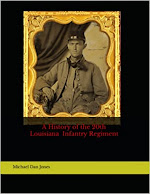
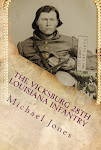
The Vicksburg 28th/29th Louisiana Infantry Regiment was involved in the 1862-63 defense of the "Gibraltar of the Mississippi," Vicksburg, from the first attack by the Union fleet of Admiral Farragut, to the final siege by Lt. Gen. Ulysses S. Grant. The regiment had its finest hour in the war during the Battle of Chickasaw Bayou, Miss. on Dec. 28, 1862, when it was compared to the Spartans at the Battle of Thermopylae in Ancient Greece, for holding off an enemy force many times its size. The regiment was made up of men from throughout Louisiana who endured incredible hardships and danger for their sacred cause of Southern Independence. Included in the book is a roster of the regiment, photographs, maps, footnotes, bibliography and index.


CONFEDERATE GENERAL BIRTHDAYS, Feb. 13.

None.

Thursday, February 12, 2026

Today in History (general history)/ On This Day in Confederate History/ Confederate General Birthdays,

Click πŸ‘‰ TODAY IN HISTORY (general history) Feb. 12.

ON THIS DAY IN CONFEDERATE HISTORY, Feb. 12.

1861: Louisiana Republic President Mouton and Lieutenant Governor Henry M. Hyams processed to Lafayette Square and raised for the first time the new Louisiana National Flag on the flagpole of New Orleans City Hall. It had a red canton with a single gold star, and 13 stripes alternating between blue, white, and red. The president was escorted by a military color guard and when the flag was raised, the New Orleans Washington Artillery fired a 21-gun salute. Three cheers were given by the onlookers.

A Louisiana Tiger Rifles reenactor waving the
Louisiana National Flag, aka Louisiana Republic Flag.
The book is available at Amazon.com in both an
e-book edition and a printed edition. The Tiger Rifles
were Company B, 1st Battalion (Wheat's) Louisiana Volunteers.
The battalion was known to have carried a First National
Confederate flag in the First Battle of Manassas, Va. July 21, 1861.

Louisiana Republic Flag is also called the Secession Flag.
(M.D. Jones Collection)

Meanwhile, President-elect Jefferson Davis was making his way to Montgomery, Alabama, and speaking to cheering crowds along the way.

1862: The Confederate cruiser CSS Florida captures and burns the Yankee clipper Jacob Bell and its $2 million worth of cargo. The Florida was built in Liverpool, England by William C. Miller & Son and launched in December 1861. It was commissioned by the Confederate Navy on Oct. 7, 1862, and placed under the command of Commander John Newland Maffitt. It was 191 ft. in length, a beam of 27 ft. 2-in., and a draft of 13 ft. 0 in., with both sails and a steam engine. It had a top speed of 9.5 knots under steam and 12 knots under sail. The crew complement was 146. The Florida's armament was 6, 6-inch rifled cannon, two, 7-inch rifled cannon, and one 12-pounder cannon. In its career, Florida took 37 prizes, two of which were absorbed by the CS Navy as the CSS Tacony and CSS Clarence. Those two ships took an additional 23 prizes. Florida's career ended on Oct. 7, 1864, at anchor at Bahia, Brazil while Maffitt and half of his crew were ashore. Florida was illegally captured at that time by Cmdr. Napoleon Collins of the sloop-of-war USS Wachusett. It was towed to Newport News, Va. where it suspiciously sank in a collision with the Army Transport USAT Alliance on Nov. 28, 1864, while it was under a court order to be delivered to Brazil.

Cmdr. John Newland Maffitt
Cmdr. of the CSS Florida

1864: Meridian Campaign: Confederates battle Federals at Decatur and Chunky Station as Sherman and Sooy Smith close in on Meridian, Mississippi.

1865: Carolinas Campaign: As the Federals approached Columbia, South Carolina, they drove off Confederate defenders at the Orangeburg Bridge on the North Edisto River. 

CONFEDERATE GENERAL BIRTHDAYS, Feb. 12.

Major General Robert Ransom Jr. was born on this day in 1828 in Warren County, North CarolinaA West Point graduate in 1850, he served in the 1st U.S. Dragoons and attended cavalry school at Carlisle Barracks, Pa. He was promoted to second lieutenant in 1851. Ransom then served on the frontier in New Mexico until 1854 when he became a cavalry instructor at West Point. Promoted to the first lieutenant is served in the 1st U.S. Cavalry at Fort Leavenworth, Kanas. Ransom had become a captain by the time he resigned from the U.S. Army on Jan. 31, 1861. He joined the Confederate Army as a captain and was made the colonel of the 1st North Carolina Cavalry on Oct. 31, 1861. Ransom was promoted to brigadier general on March 1, 1862, and led a brigade in the Peninsula Campaign in 1862 in Huger's Division. That same year his brigade at Harpers Ferry led a division at Marye's Heights in the Battle of Fredericksburg. He was promoted to major general in 1863 and did duty around Richmond, Va. and in 1864 led a division under Gen. P.G.T. Beauregard in the Battle of Drewry's Bluff, Va. Illness in that year forced him out of front-line service and he held various administrative positions until the end of the war. Following the war Ransom was a city marshal in Wilmington, N.C., and a farmer, among other occupations. He died on Jan. 14, 1892, in New Bern, N.C., and was buried at Cedar Grove Cemetery.

Maj. Gen. Robert Ransom Jr.

Wednesday, February 11, 2026

Today in History (general history)/ On This Day in Confederate History/ Confederate General Birthdays, February 11.

 Click πŸ‘‰TODAY IN HISTORY (general history) Feb. 11.

ON THIS DAY IN CONFEDERATE HISTORY, Feb. 11.

1861: Alexander Stephens of Georgia was sworn in on this day in 1861, which is also his birthday, as vice president of the Confederate States of America at the ongoing Confederate Congress at Montgomery, Alabama. President-elect Jefferson Davis left his plantation, Brierfield, in Mississippi and headed for Montgomery for his inauguration. Stephens was born in 1812 on a farm in Taliaferro County, Georgia near the town of Crawfordville. He became an orphan at age 14 when his father and stepmother died. Stephens and his siblings were divided among other relatives. However, he attended the University of Georgia at Athens and graduated at the top of his class in 1832. He then studied the law and was admitted to the bar in 1834. Stephens found success as a lawyer and was elected to the Georgia legislature in 1841 and to the U.S. House of Representatives in 1843 as a Whig. When the Whig Party dissolved he became a Democrat. He was known as a Unionist in Congress and a defender of slavery. When he killed a bill that would have excluded slavery from the Oregon Territory, Stephens was nearly stabbed to death in 1848 by Judge Francis H. Cone during a fight over the issue. He recovered but never regained full use of his right hand. Stephens opposed secession and supported Illinois Sen. Stephen Douglas in the 1860 election. Elected to the Georgia Secession Convention, he voted against withdrawing Georgia from the Union. But he still supported the right of secession of a state.

Vice President Alexander H. Stephens

1862: FORTS HENRY & DONELSON CAMPAIGN: Bowling Green, Ky. was evacuated by the Confederates after the defeat at the Battle of Mill Springs, Ky. Jan. 19, 1862, and the fall of Fort Henry, Tenn. in early February 1862. The city had been Gen. Albert Sidney Johnston's headquarters for his Western Department. They had held Bowling Green since Sept. 18, 1861. It was also the seat of the provisional state government of Confederate Kentucky. 

Gen. Albert Sidney Johnston

1864: Confederates near Madisonville, La. fired a volley from ambush at the 3rd Maryland Cavalry which was on a patrol. The Federal casualties were three wounded and missing, including a lieutenant, Captain Adolph Bery, and one missing, Pvt. B.K. Jones. ambulance driver. They also lost three horses with equipment, 3 carbines, 2 sabers with accouterments, 2 saber blades, 1 pistol, and one ambulance with contents and two horses. No Confederate casualties were reported. 

1865: Confederate cavalry wearing Federal uniforms attacked a Federal picket post at Williamsburg, Va. Both sides reportedly suffered casualties. There were also many Confederate uniforms being made of British Army cloth which was blue-gray in color, and which had been run through the blockade. These uniforms too could look more blue than gray. Confederacy imported thousands of yards of this material from England and the Peter Tait Co. in Limerick, Ireland also made complete uniforms as well from British Army cloth. Other Confederate Army Quartermaster Depots included ones in Richmond, Va. and Columbus, Ga. Houston became a major supply depot for the Trans-Mississippi Department during the war, also making arms, accouterments, and ammunition.
Pvt. August Ritter, 1st Texas Heavy Artillery
is wearing a Houston, Tex. Depot-style Confederate
jacket possibly made from fine British Army
cloth. He worked in the Houston Quartermaster
Depot making uniforms.
(Courtesy K. MacDonald)
Confederate soldier in Columbus, Ga. Depot
style shell jacket.
(Liljenquist Collection, Library of Congress)

Pvt. Alexander Harris wearing a Richmond, Va...
Depot-style Confederate jacket. He served
in Parker's Virginia Light  Artillery.
(Liljenquist Collection, Library of Congress)

CONFEDERATE GENERAL BIRTHDAYS, Feb. 11.

NONE.

Tuesday, February 10, 2026

Today in History (general history)/ On This Day in Confederate History/ Confederate General Birthdays, February 10.

 Click πŸ‘‰TODAY IN HISTORY (general history) Feb. 10.

ON THIS DAY IN CONFEDERATE HISTORY, Feb. 10.

1861: President-elect Jefferson Davis in Mississippi received a message from the Confederate Congress in Montgomery, Alabama notifying him he had been elected provisional president of the Confederacy. The news took him by surprise, but he immediately began planning the trip to Montgomery for the inauguration.


Jefferson Davis received a message from Montgomery at Brierfield near 
Vicksburg, Miss. that he has been elected president of the Confederacy.

1862: Battle of Elizabeth City, N.C.The Confederate fleet on the Pasquotank River at Elizabeth City, North Carolina was defeated by the Federal fleet in a naval engagement. Three vessels were captured and six more were destroyed by the Confederates to prevent capture. 

1863: There is a minor engagement between Northern and Southern troops at Chantilly, Virginia. 

At Old River in Louisiana, a minor clash occurs between Confederates and Federals. The Southerners lost 11 men killed and wounded with 25 captured. Northerners lost eight men killed and wounded. 

1865: Fighting occurred near Charleston, South Carolina between Confederates and Sherman's bummers at James Island and Johnson Station.

Raphael Semmes was promoted to Rear Admiral in the CSN on this day and placed in command of the James River Squadron in Virginia. His flagship was the CSS Virginia II which was a steam-powered ironclad armed with an 11-inch Brooke smoothbore, an 8-inch Brooke rifle, and 2, 6.4-inch Brooke Rifles.

Admiral Raphael Semmes

CONFEDERATE GENERAL BIRTHDAYS, Feb. 10.

Brig. Gen. William R. Scurry

Brigadier William Read Scurry was born on this day in 1821 in Gallatin, Tennessee. He moved to the Republic of Texas in 1839 where he became a lawyer and a district attorney in 1841. He married there had a family and served as a representative in the 9th Congress of the Texas Republic. During the Mexican-American War, Scurry enlisted as a private and finished a major. Following that war, he was a lawyer in Clinton, Texas, and became to co-owner and editor of the Austin State Gazette newspaper. Scurry was a member of the Texas Secession Convention in 1861. He was commissioned a lieutenant colonel in the 4th Texas Cavalry in July of 1861 and fought at the Battle of Valverde and the Battle of Glorieta Pass, in the New Mexico Campaign in 1862. He was promoted to full colonel on March 28, 1862, and then to brigadier general on Sept. 12, 1862. At the Battle of Galveston, Texas, on Jan. 1, 1863, Scurry was in command of the land forces in that victory. He took part in the Bayou Teche Campaign in Louisiana in the spring of 1863, then in October 1863, was given command of the Third Brigade of Walker's Texas Infantry Division. Scurry led his brigade in Walker's Texas (Grayhounds) Division at the battles of Mansfield and Pleasant Hill, then was mortally wounded at the Battle of Jenkin's Ferry, Arkansas April 30, 1864, and died that night. He was buried in the Texas State Cemetery in Austin, Texas.

Monday, February 9, 2026

Today in History (general history)/ On This Day in Confederate History/ Confederate General Birthdays, February 9.

 Click πŸ‘‰TODAY IN HISTORY (general history) Feb. 9.

ON THIS DAY IN CONFEDERATE HISTORY, Feb. 9.

1861: Jefferson Davis of Mississippi was unanimously elected Provisional President of the Confederate States of America by the Provisional Confederate Congress in session at Montgomery, Alabama. Alexander H. Stephens of Georgia was elected vice president of the Confederacy. President Davis was born in 1809 in Kentucky, the son of a Revolutionary War veteran Samuel Davis. He moved with his family to Louisiana, briefly, then to Mississippi at an early age. He graduated from the U.S. Military Academy at West Point, N.Y. in 1824. He served as a second lieutenant in the Black Hawk War and married Sarah Taylor, daughter of Colonel Zachary Taylor. He left the army and his wife died just three months after the marriage. Davis ran a plantation in Mississippi for 10 years and was then elected to Congress just before the Mexican-American War he married his second wife, Varina Howell in 1845. Resigning from Congress, he became colonel of the famous Mississippi Rifles which he led in that war. Wounded at the Battle of Buena Vista, Mexico, he returned home a war hero. Davis was elected from Mississippi to the U.S. Senate. In 1853, he became Secretary of War under President Franklin Pierce. Davis returned to the Senate at the end of the Pierce administration and served until Mississippi seceded in 1861.


President Jefferson Davis

Also on this day, the Confederate Congress adopted the laws of the United States that did not conflict with the Confederate laws. 

1864: At Libby prisoner of war prison in Richmond, Virginia, 109 prisoners escape. Of those who escaped 48 were recaptured, two drowned, and 58 reached the Federal lines.

1865: Carolinas Campaign: Confederates skirmish with Sherman's federals in South Carolina at Binnaker's Bridge on the South Edisto River, and Holman's Bridge.

CONFEDERATE GENERAL BIRTHDAYS, Feb. 9.

NONE.

Sunday, February 8, 2026

Today in History (general history)/ On This Day in Confederate History/ Confederate General Birthdays, February 8.

 Click πŸ‘‰TODAY IN HISTORY (general history) Feb. 8.

ON THIS DAY IN CONFEDERATE HISTORY, Feb. 8.

1861: The Provisional Confederate Congress in Montgomery, Alabama adopts the Provisional Confederate Constitution. The document was similar to the U.S. Constitution with certain reforms, such as a single six-year term for the president and vice president (term limits), free trade, clean legislation, etc. Also, the slave trade was prohibited. 

Confederate Congress adopts the Provisional Constitution.
of the C.S.A. on this day in 1861.

The signers and the states they represented were:

1862: The Battle of Roanoke Island, North Carolina takes place. The Federals were under the command of Maj. Gen. Ambrose Burnside with a 10,000-man division and a flotilla of navy gunboats. The Confederate defenders were under the command of Brig. Gen. Henry A. Wise and Col. Henry M. Shaw with 3,000 men, two shore batteries, and four forts. The Federals also had another flotilla of gunboats under Flag Officer Louis M. Goldsborough. On the previous day, the gunboats bombarded the position and landed their troops and six howitzers without opposition. Wise came down sick and turned command over to Shaw. On the 8th, the Federals attacked and overwhelmed the outnumbered Confederates. The Northerners lost 2,64 killed, wounded, and missing. The Southerners lost 23 killed, 58 wounded, 62 missing, and 2,500 captured.

1865: Carolinas Campaign: Confederates battle Sherman's rampaging invaders at the South Edisto River in South Carolina. Confederate cavalry General Fighting Joe Wheeler receives a reply from Sherman to his complaint about Sherman's men's destruction of private property. The Federal general shows no concern.

CONFEDERATE GENERAL BIRTHDAYS, Feb. 8.

Lieutenant General Richard Stoddert Ewell was born on this day in 1817 in Georgetown, District of Columbia. Ewell was an 1840 graduate of West Point and ranked 13th out of the 42 cadets who graduated with him. He was promoted to 1st lieutenant by 1845 and in the Mexican American War served under Gen. Winfield Scott's Mexico City Campaign. His gallantry in the battles of Contreras and Churubusco earned him a promotion to captain. After the war, he served on the frontier and was wounded in a skirmish with Apache in 1859. Ewell resigned his commission in the U.S. Army on May 7, 1861, and was promoted to brigadier general in the Confederate Army on June 7, 1861. He commanded a brigade at the First Battle of Manassas, on July 21, 1861. Promoted to major general on Jan. 24, 1862, he led a division in Stonewall Jackson's Valley Campaign of 1862. After serving in the Seven Days Battles, he was severely wounded in the leg at the Battle of Cedar Mountain, Va. Aug. 9, 1862, and his leg had to be amputated. Ewell returned to duty before Gettysburg, and he was promoted to lieutenant general and given command of the late Stonewall Jackson's Second Corps. He won an outstanding victory at the Second Battle of Winchester but was criticized for his hesitancy to capture the high ground on the first day of the Battle of Gettysburg. Ewell led the corps at the Wilderness and Spotsylvania in 1864, but his physical strength was failing, and Gen. Lee reassigned him to the command of the Richmond defenses. He was captured at the Battle of Sailor's Creek at the end of the war and wasn't released until July 1865. After the war, Ewell worked as a farmer near Spring Hill, Tenn. and he died Jan. 25, 1872, and was buried in the Old City Cemetery in Nashville, Tenn.

Lt. Gen. Richard S. Ewell
πŸ‘±

Brigadier General Bernard Elliott Bee Jr. was born on this day in 1824 in Charleston, South Carolina. Bee graduated from West Point with the Class of 1845, ranking 33rd of 41 cadets. He was breveted two times for bravery in the Mexican American War at the Battle of Cerro Gordo and was wounded at Chapultepec. After the war, he did garrison duty in Mississippi and then frontier duty in New Mexico and Minnesota. Bee was breveted to lieutenant colonel for the Utah War.  He resigned from the U.S. Army on March 3, 1861, and was soon promoted to brigadier general and led his South Carolina Brigade at the First Battle of Manassas. He became famous there for giving Lt. Gen. T. J. "Stonewall" Jackson his famous nickname when he rallied his shattered command behind Jackson and his Virginians. Bee was mortally wounded in the stomach shortly afterward. He died the next day and was buried in St. Paul's Episcopal Church Cemetery in Pendleton, S.C.

Brig. Gen. Bernard E. Bee
πŸ‘±

Brigadier General John King Jackson was born on this day in 1828 in Augusta, Georgia. Before the war, he was a lawyer in Georgia and active in the state militia. At the beginning of the war, he was a lieutenant colonel in command of the Augusta Infantry Battalion and soon became a lieutenant colonel in the 5th Georgia Infantry, C.S.A. He fought at the Battle of Santa Rosa Island in 1861 and was promoted to brigadier on Jan. 14, 1862. Jackson led a brigade at the Battle of Shiloh, the Battle of Murfreesboro, at the Battle of Chickamauga, and Missionary Ridge, and was then assigned to Lake City, Florida. In late 1864, Jackson served in various posts in the Carolinas Campaign and surrendered with the Army of Tennessee on April 26, 1865. Jackson resumed his legal career in Augusta after the war but died on Feb. 27, 1866, and was buried in Augusta's City Cemetery.

Brig. Gen. John K. Jackson
πŸ‘‹