Thursday, July 31, 2025

Today in History (general history)/ On This Day In Confederate History/ Confederate General Birthdays, July 21.

Click πŸ‘‰Today in History (general history) July 31. 

On This Day in Confederate History, July 31.

1864: In the aftermath of the Battle of the Crater, in the Petersburg, Va. Campaign, Confederate generals were praised, particularly generals William Mahone, Bushrod Johnson, and Stephen Elliot. The Federal generals were tainted by their actions in the battle. General George G. Meade brought charges against Ambrose Burnside, and a court of inquiry censured him and brigadier generals James Ledlie, Edward Ferro, Orlando B. Wilcox, and Col. Zenas R. Bliss. Later, in 1865, the Congressional Joint Committee on the Conduct of the War absolved Burnside and censured Meade. 

A Confederate lieutenant colonel
with a New Orleans back mark.
(Liljenquist Collection, Library of Congress)

 In the Atlanta Campaign, General John Bell Hood and Major General Joseph "Fighting Joe" Wheeler responded to a Federal Cavalry raid on the Confederate supply lines, which began July 27. Federal cavalry generals George Stoneman, Edward McCook, and Kenner Garrard were scheduled to meet at Lovejoy Station on July 28 to destroy it. They have initial successes in capturing 300 prisoners and almost 500 wagons. Wheeler engages Garrard in heavy skirmishing at Flat Rock on July 28 and 29 and forces him back to Latimer, Ga. 

Confederate General Birthdays, July 31.

Brigadier General Philip Cook was born on this day in 1817 in Twiggs County, Georgia. A prewar lawyer in Macon County, Georgia, Cook had some military experience in the U.S. Army in the Seminole Wars in Florida. In 1861, he joined the Confederate Army as a private in the 4th Georgia Infantry and worked his way up to brigadier general. He fought in the Seven Days Campaign, Second Manassas, Sharpsburg, and Chancellorsville where he was wounded. While recovering, he served for a brief time in the Georgia legislature. Returning to duty in 1864, he took command of a brigade at the Battle of Cold Harbor, Va., and was wounded for a second time during the Siege of Petersburg, Va. After recovering, Cook fought in the Battle of Cedar Creek and then at Petersburg again where he was wounded again in 1865. Following the war, he practiced law in Americus, Georgia, and was elected to the U.S. House of Representatives, then Secretary of State in Georgia. Cook died May 21, 1894, in Atlanta, Georgia, and was buried in Rose Hill Cemetery in Macon, Georgia.

Brig. Gen. Philip Cook

Brigadier General Thomas Hart Taylor was born on this day in 1825 at Frankfort, Kentucky. Before the war, Taylor was a lawyer and farmer who raised cattle. He received some prewar military experience in the Mexican-American War. During the War for Southern Independence, he joined the Confederate Army as a captain of the cavalry and became a lieutenant colonel. He became colonel of the 1st Kentucky Infantry Regiment and then commanded a brigade in Eastern Tennessee. Taylor was appointed a brigadier general but failed to get nominated by President Davis or approved by the Confederate senate. He was captured at the end of the Siege of Vicksburg, Miss., and after he was exchanged served at Mobile, Ala., and in the Battle of Meridian, Miss. He became commander of local defense troops and reserves at Mobile until the evacuation of that city on April 11, 1865. Following the war, Taylor was a businessman in Mobile, then a U.S. Marshal for five years in Kentucky. Taylor then became the chief of police in Louisville, Ky., and was a superintendent of Louisville and Portland Canal. He died on April 12, 1901, in Louisville and was buried in State Cemetery in Frankfort, Ky.

Brig. Gen. Thomas H. Taylor
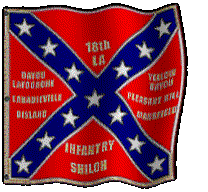
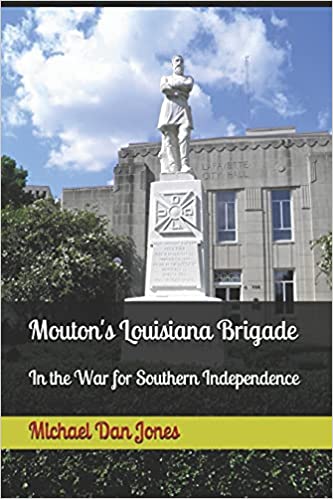
This is the story of one of the most unique Louisiana infantry brigades in the War for Southern Independence. It was made up of an ethnically diverse hodgepodge of Louisiana's very diverse population, including South Louisiana Cajuns, North Louisiana Rednecks, and New Orleans Irish, Germans, and other ethnic groups then populating the Crescent City. The regiments of the brigade included the 18th Louisiana Infantry Regiment, the 24th Louisiana Infantry (Crescent) Regiment, and the 10th (Yellow Jackets), and the 12/16th Louisiana infantry battalions. Early in the war, some of the units fought in other brigades at the Battle of Shiloh, Tennessee. When the brigade was formed in Louisiana in the fall of 1862, they fought in the Lafourche Campaign of 1862, the Bayou Teche Campaign of the spring of 1863, the Great Texas Overland Expedition of 1863, and the Red River Campaign of 1864. The brigade was led by one of the most colorful, chivalrous, and competent Confederate commanders of the war, Brigadier General Alfred Mouton of Lafayette, Louisiana. The fighting men of the brigade time and again fought with great valor and left a legacy of gallantry that makes their descendants proud to this day.

Wednesday, July 30, 2025

Today in History (general history)/ On This Day in Confederate History/ Confederate General Birthdays, July 30.

Click πŸ‘‰ Today in History (general history) July 30.

On This Day in Confederate History, July 30.

1864: The Battle of the Crater at Petersburg, Va., took place on this day, one of the epic battles of the war. It was the culmination of Lt. Gen. U.S. Grant's plan to break the Confederate defense line. The attack was carried out by Maj. Gen. Ambrose Burnside's IX Corps with about 8,500 men. Confederate Maj. Gen. William Mahone led the Confederate counterattack with about 6,100 men. The Federals had a tunnel dug underneath the Confederate fortifications and packed the part underneath the Confederates with 360 barrels of gunpowder. The explosion was ignited beneath the part of the line held by the 18th and 22nd South Carolina and immediately killed 283 Confederates. The huge crater proved to be an obstacle to the Federal troops assaulting the line. Among those assaulted was the U.S. Colored Troops of Brig. Gen. Edward Ferrero, who was seen drinking behind the lines with Maj. Gen. James H. Ledlie. The crater was too deep and became a death trap for the Federals. Confederates under Mahone quickly manned the top of the crater, and the battle of a "turkey shoot" for the Southerners. Mahone reinforced Maj. Gen. Bushrod Johnson's Division and some artillery. The Federals lost 504 men killed, 1,881 wounded, and 1,413 missing or captured for a total of 3,798. The Confederates lost 361 men killed, 727 wounded, and 403 missing or captured for a total of 1,491. 

Battle of the Crater by John Adams Elder, 1899

It was under Brig. Stephen Elliott's part of the
 line, Elliott's Salient, under which the Yankee 
mine exploded in the Battle of the Crater. He was
asleep in a bomb-proof when it erupted, and he 
led his two surviving 
regiments as part of the counterattack
 and was severely wounded in the chest and arm.

Confederate General Birthdays, July 30.

None.`

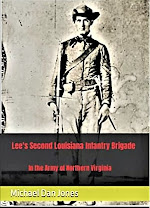
This is the history of one of the hardest-fighting brigades in Gen. Robert E. Lee's legendary Army of Northern Virginia, the Second Louisiana Infantry Brigade. It was one of Lee's most reliable infantry brigades, often used in some of his most dangerous situations, and it never let him down. The brigade included the 1st, 2nd, 9th, 10th, 14th, and 15th infantry regiments, and the 1st Battalion Louisiana Zouaves. The brigade was commanded throughout the war by outstanding brigadiers, including Brig. Gen. William E. Starke, Brig. Gen. Francis T. Nicholls, and Brig. Gen. Leroy Stafford. The brigade fought in such epic battles as Second Manassas, Sharpsburg (Antietam), Fredericksburg, Chancellorsville, Gettysburg, Mine Run, the Wilderness, Spotsylvania Courthouse, Petersburg, and many other smaller battles and skirmishes. The men of the brigade were representative of the diverse population of Louisiana of the time, including typical Southern farm boys, ruffians from the New Orleans waterfront, as well as refined gentlemen from some of Louisiana's finest families. There was also a virtual Babylon of foreign languages spoken in the brigade. This is their story, from secession to Appomattox.


Tuesday, July 29, 2025

Today in History (general history)/ On This Day in Confederate History/ Confederate General Birthdays, July 29.

ClickπŸ‘‰Today in History (general history) July 29. 

On This Day in Confederate History, July 29.

1862: The Battle of Moore's Mill, Missouri took place on this day in 1862 when Colonel Odon Guitar's 9th Missouri State Militia (Federal) Cavalry, the 3rd  Indiana Battery, and the 3rd Iowa Cavalry, numbering 733 men, were attacked by Colonel Joseph C. Porter's 1st Northeast Missouri (Confederate) Cavalry, Blackfoot Rangers, and Cobb's Guerillas, numbering between 260 and 350 troopers in Callaway County Missouri in the northeastern part of the state. The battle started when the Confederate Missourians ambushed the Federal Missourians along the banks of Auxvasse Creek. The Federals took cover in the trees, and Guitar brought out his artillery. Porter ordered a charge on the guns and captured one of the pieces. The Federals recaptured the gun and drove off the Confederates. After firing on each other from cover for several hours, Porter's men ran short of ammunition and had to withdraw. Guitar's men were too exhausted to pursue their enemies. The Federals lost 13 killed and 55 wounded. Confederate casualties were estimated to be 11 killed and 21 severely wounded.

Maj. James W. Porter
1st N.E. Missouri Cavalry
Brother of Col. Joseph C. Porter
(Wikipedia Commons)

The Confederate cruiser C.S.S. Alabama, one of the most famous and successful Confederate Navy warships in the war under the command of Captain Raphael Semmes, was successfully launched on this day in 1862. It secretly set sail from Birkenhead, England, and evaded the U.S.S. Tuscarora which was waiting to intercept it. Alabama was 220 feet in length, 31 feet 8 inches in beam, and had a 17-foot draft. It had both auxiliary sails and steam engines and was capable of a speed of 13 knots. Alabama's armament included 6, 32-pounders, one 110-pounder, and one 68-pounder. It was built by John Laird Sons & Company. Alabama's motto was "Aide Toi, Et Dieu T'aidera" ("God helps those who help themselves).

CSS Alabama
Ravaged the Yankee merchant fleet
and sank the USS Hatteras.

Admiral Raphael Semmes

Confederate General Birthdays, July 29.

None.

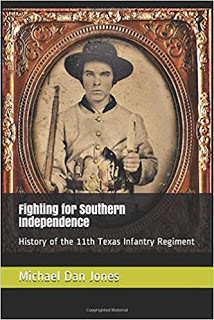
This is the history of one of the finest bodies of Confederate infantry in the War for Southern Independence. General Kirby Smith and Lieutenant General Richard Taylor regarded Randal's Texas Brigade as the best infantry brigade in the Trans-Mississippi West. The brigade was primarily composed of the 11th Texas Infantry Regiment, 14th Texas Infantry Regiment, the 28th Texas Cavalry (Dismounted), and the 6th Battalion (Gould's) Texas Infantry. It participated in major battles of the Trans-Mississippi Department, including all or part of the battles of Bayou Bourbeau, Mansfield, Pleasant Hill— all in Louisiana— and Jenkins' Ferry in Arkansas. The men of Randal's Texas Brigade played a significant role in keeping Texas largely free from the destruction inflicted on other Southern states during the war.

Monday, July 28, 2025

Today in History (general history)/ On This Day in Confederate History/ Confederate General Birthdays, July 28.

Click πŸ‘‰Today in History (general history) July 28.

On This Day in Confederate History, July 28.

1864: The Battle of Ezra Church, Ga. in the Atlanta Campaign occurred today 158 years ago.  Confederate General John Bell Hood, commander of the Army of Tennessee had 18,450 men in the battle, and Maj. Gen. W.T. Sherman had 13,266 of his Federal Army of Tennessee. Hood was planning to attack by surprise an isolated part of the much larger Federal Army. Sherman wanted to cut off a vital railroad link into Atlanta. Not only were the Federals not caught by surprise, but they were also well dug in and ready for an attack. Leading the attack was Lt. Gen. Stephen D. Lee's Corps, formerly Hood's Corps. While the Confederate assaults were repulsed, they did succeed in preventing the Federals, under Maj. Gen. Oliver O. Howard, from reaching the railroad line. Confederate casualties were estimated to be about 3,000, and those of the Federals 642. Among the Confederate casualties was Lt. Gen. Alexander P. Stewart, who was one of the commanders in the Army of Tennessee, and was wounded.

Lt. Gen. Stephen D. Lee
He led a corps at Ezra Church
formerly led by Gen. J.B. Hood
(Library of Congress)

This is the story of one of the most heroic and hardest-fighting regiments in the Confederate Army, the 13th Louisiana Infantry. The men of this regiment were largely from the New Orleans area. They fought in such famous battles as Shiloh, Perryville, Murfreesboro, Chickamauga, Atlanta (Campaign), Franklin, and Nashville in the main Confederate Army of the Tennessee in the Western Theater of operations. They served under such Confederate generals as P.G.T. Beauregard, Braxton Bragg, Joseph Johnston, John Bell Hood, and Richard Taylor.

The second day of the First Battle of Deep Bottom, Va. in the Petersburg Campaign also occurred on this day. Federal Lt. Gen. U.S. Grant planned a diversionary attack at that location near Richmond to force Gen. Robert E. Lee to transfer reinforcements from Petersburg and weaken the Confederates there for a planned attack on July 30, 1864. Maj. Gen. Philip Sheridan's Cavalry tried to turn the Confederate left, but three brigades of Confederate infantry stopped the attempt. The dismounted bluecoat cavalry repulsed the attack with repeating carbines, while some mounted Yanks in pursuit captured about 200 Confederates. Howard made no more attempts to storm the strong Confederate defenses after this day. Federal casualties were 62 killed, 340 wounded, and 86 missing or captured. The Confederates lost 80 killed, 392 wounded, and 208 captured.

 Confederate General Birthdays, July 28.

Brigadier General William Edwin Baldwin was born on this day in 1827 at Stateburg, South Carolina. Prior to the war, he was a bookstore owner and member of the local militia company at Columbus, Miss. During the war, he became the colonel of the 14th Mississippi Infantry and then was promoted to brigadier general. His battles were Fort Donelson (captured), Coffeeville, Port Gibson, Champion's Hill, and Vicksburg (captured). He was killed on Feb. 19, 1864, in an accident when a broken stirrup caused him to fall off his horse near Mobile, Alabama, and was buried in Friendship Cemetery in Mobile. 

Brig. Gen. William E. Baldwin
πŸ‘±

Brigadier General James Henry Lane was born on this day in 1833 at Mathews Court House, Va. He was a 1854 graduate of the Virginia Military Institute, received a Master's Degree from the University of Virginia, and was a professor at VMI and of natural philosophy at the North Carolina Military Institute. During the war, he was a major and lieutenant colonel, and then colonel of the 28th North Carolina Infantry. Lane was promoted to brigadier general on Nov. 1, 1862. His battles and campaigns included Big Bethel, Seven Days Battles (wounded twice), Second Manassas, Sharpsburg, Gettysburg, Overland Campaign, Cold Harbor (wounded), Siege of Petersburg, and Appomattox. Following the war, he was a professor of civil engineering at Virginia Agricultural and Mechanical, and Alabama Polytechnic. Lane died on Sept. 21, 1897, in Auburn, Alabama, and was buried in Pine Hill Cemetery in Auburn.

Brig. Gen. James H. Lane
πŸ‘±

Brigadier General William Duncan Smith was born on this day in 1825 in Augusta, Ga. He graduated from West Point in 1862 ranking 35th out of 59 cadets. During the Mexican-American War, Smith was wounded in the Battle of Molino del Rey. He resigned from the U.S. Army on Jan. 28, 1861, and joined the Confederate Army on March 16, 1861, as a captain of the cavalry. Smith was soon promoted to major in the 1st Georgia Regular Infantry. He was then promoted to colonel of the 20th Georgia Infantry and to brigadier general on March 7, 1862. He fought in the Battle of Secessionville, S.C., on June 16, 1862. General Smith died on Oct. 4, 1862, of yellow fever while on duty in Charleston, South Carolina. He was buried in the City Cemetery in Augusta, Georgia.

Brig. Gen. William D. Smith
πŸ‘‹

Sunday, July 27, 2025

Today in History (general history)/ On This Day in Confederate History/ Confederate General Birthdays, July 27.

Click πŸ‘‰Today in History (general history) July 27. 

On This Day in Confederate History, July 27.

1861: Fort Fillmore in New Mexico Territory was set on fire and abandoned by the Federals under Major Isaac Lynde two days after the First Battle of Mesilla, which they lost. The bluecoats retreated to Fort Stanton. But when the 500 retreating Yankees were confronted by 300 Confederates, they surrendered without a field. The Confederates, commanded by Lt. Col. John Baylor, had also won a victory at the First Battle of Mesilla

Unidentified soldier in Confederate pullover
hunting-style shirt with dark military-type
trim with double barrel shotgun, revolver,
and side knife (Liljenquist Collection/Library of Congress)

1864: The First Battle of Deep Bottom in Henrico County, Va. takes place as a diversionary maneuver by the Federals. Lt. Gen. U.S. Grant, planning to make a major attack on the Petersburg, Va. Confederate defenses on July 30, sends Maj. Gen. Winfield S. Hancock's II Corps and two divisions from Maj. Gen.  Philip H. Sheridan's Cavalry Corps threatened Richmond, Va. Grant hopes Gen. Robert E. Lee will weaken his Petersburg defenses by forcing Confederates to send reinforcements to Richmond. Lee does send 16,500 reinforcements but things don't turn out like Grant wants at Petersburg. The battle started July 27 when Hancock advances with three divisions and takes up positions opposite Richmond's defenses. But Lee's reinforcements, commanded by Lt. Gen. Richard Anderson, including Maj. Gen. Henry Heth's Infantry Division, and Maj. Gen. W.H.F. "Rooney" Lee's Cavalry Division, strengthen Richmond's defenses. Local troops from Richmond will also man the trenches at Bailey's Creek from New Market Road to near Fussell's Mill. The battle will continue on July 28.

This is the history of one of the hardest-fighting infantry regiments in the War for Southern Independence, the 23rd Tennessee Infantry. The regiment was raised predominantly from the Middle Tennessee counties, where there was considerable support for secession and Southern Independence. The men were overwhelmingly made up of yeoman farmers of predominantly Anglo-Celtic descent who were to face some of the largest, bloodiest, and most memorable battles of the war, both in the West and the East. They got their baptism of fire in the Battle of Shiloh, followed by the battles of Perryville, Murfreesboro, Hoover's Gap, Chickamauga, and Knoxville in the West with the famed Army of Tennessee. They were then transferred to the East, where they fought in the Bermuda Hundred Campaign in Virginia, under the legendary General P.G.T. Beauregard, and then in the famed Army of Northern Virginia in the Petersburg Campaign, and ended the war with the great General Robert E. Lee at Appomattox Courthouse. The book covers the history of the regiment from letters, diaries, memoirs, and official records to cover both officers and men in a personal way. It also has an annotated roster of some 1,164 men who served in the regiment, as well as maps, photos, illustrations, bibliography, footnotes, and index.

In the Atlanta Campaign, both Gen. John Bell Hood's Confederate Army of Tennessee and Maj. Gen. W.T. Sherman's Federals maneuver to gain an advantage. Hood wants to catch an isolated Federal unit to attack and Sherman wants to cut Atlanta's last railroad link. The result will be the Battle of Ezra Church, Ga. the next day. Hood sends Lt. Gen. Stephen D. Lee's Corps to make the attack. 

Confederate General Birthdays, July 27.

Brigadier Thomas Lanier Clingman was born on this day in 1812 at Huntsville, Surry County, North Carolina. He was a prewar lawyer and politician. Elected to the U.S. House of Representatives in 1843, a U.S. Senator in 1858, and was expelled from the Senate in 1861 for supporting the Confederacy. Clingman became commander of the 25th North Carolina Infantry and was elevated to brigadier general. His battles and campaigns included the Peninsula Campaign, Goldsboro Bridge, Battery Wagner, Drewry's Bluff, Cold Harbor, Siege of Petersburg, Globe Tavern, Fort Fisher, and Bentonville near the end of the war. Following the war, he spent time exploring and measuring mountains in North Carolina and Tennessee. Clingman died July 27, 1897, in Morganton, North Carolina, and was buried at Riverside Cemetery there.

Brig. Gen. Thomas L. Clingman

Saturday, July 26, 2025

Today in History (general history)/ On This Day in Confederate History/ Confederate General Birthdays, July 26.

Click πŸ‘‰Today in History (general history) July 26. 

On This Day in Confederate History, July 26.

1863: Brig. Gen. John Hunt Morgan and 360 of his men were captured this day at Salineville, Ohio, ending his spectacular raid through Indiana and Ohio. He began the raid on July 2, 1863, with 2,400 Confederate cavalrymen as a diversion to Federal Maj. Gen. William Rosecran's Chattanooga Campaign. His force got whittled down as the weeks passed until he was captured, and only 400 of his men made it back to Confederate territory. He and his men were fined at the Ohio State Penitentiary rather than sent to P.O.W. camps. However, on Nov. 27, 1863, Morgan and his men escaped through a tunnel, one of the most spectacular P.O.W. escapes of the war.

1864: At the Siege of Petersburg, Va., both sides were dug in for a long siege but Lt. Gen. U.S. Grant was planning a major assault, including digging a tunnel under Confederate lines and blowing a big hole in the line, and then staging an all-out assault to break the siege. He was also planning a diversionary movement toward Richmond, Va., to weaken the Southern line at Petersburg. This movement was assigned to Maj. Gen. Winfield Scott Hancock's II Corps and Maj. Gen. Phillip Sheridan's Cavalry.
When Gen. Robert E. Lee heard about the Federal movements, he reinforced Richmond by sending 16,500 Confederates. The result would be the First Battle of Deep Bottom South over the next two days.  

Confederate General Birthdays, July 26.

Brigadier General John Marshall Jones was born in 1820 in Charlottesville, Va. He was a 1841 graduate of West Point, 39th in a class of 52 cadets. Jones served as a second lieutenant in the 7th U.S. Infantry, as an instructor at West Point, helped revise rifle & artillery tactics, had duty at fort garrisons, and served in the Utah War. He resigned from the U.S. Army on May 27, 1861. Jones began the war as a captain of artillery, was promoted to colonel of infantry, and served on Stonewall Jackson's staff. He was promoted to brigadier general in May 1863 and given a Virginia infantry brigade in Maj. Gen. Edward "Allegheny" Johnson's Division. His battles included Front Royal, the Seven Days Battles, Second Bull Run, Fredericksburg, Chancellorsville, Gettysburg, and the Wilderness. At the Battle of Gettysburg, Jones was severely wounded during the assault on Culp's Hill. He was killed in action on May 5, 1864, in the Battle of the Wilderness, Va. Lt. Gen. Richard Ewell said his loss was irreparable. He is buried in Maplewood Cemetery in Charlottesville, Va. In his personal life, he married Margaret Ann Freeman of Culpepper, Va., on Feb. 25, 1852. 

Brig. Gen. John Marshall Jones

This is the story of one of the most unique and famed Louisiana units in the War for Southern Independence, the 1st Louisiana Zouaves. Made up largely of foreigners from many countries, the men wore the gaudy French Zouave uniform and fought with a fierce determination for the new Southern Republic.


Friday, July 25, 2025

Today in History (general history)/ On This Day in Confederate History/ Confederate General Birthdays, July 25.

Click πŸ‘‰Today in History (general history) July 25. 

On This Day in Confederate History, July 25.

1861: The U.S. Congress, on this day in 1861, passed the Crittenden-Johnson Resolution , which specifically stated the Federals were fighting for the Union and the Constitution, and not for freeing the slaves. The vote was unanimous for the passage of the resolution.

1862: The Camden Confederate newspaper in South Carolina reported on this day in 1862 that the numerical strength of Maj. Gen. George B. McClellan's Army of the Potomac was less than previously reported. The paper also reported on a bombardment at Vicksburg, Miss., and exchange of prisoners with "the Yankee Government," and Yankee Maj. Gen. John Pope had taken command of his Army of Virginia, in which he bragged that "I have come to you from the West, where we have always seen the backs of our enemies. . . ." It also had an outrageous story about Brig. Gen. Benjamin "Beast" Butler's infamous "women's order." The article stated, "Transparent hypocrite and unblushing liar, as well as beast."

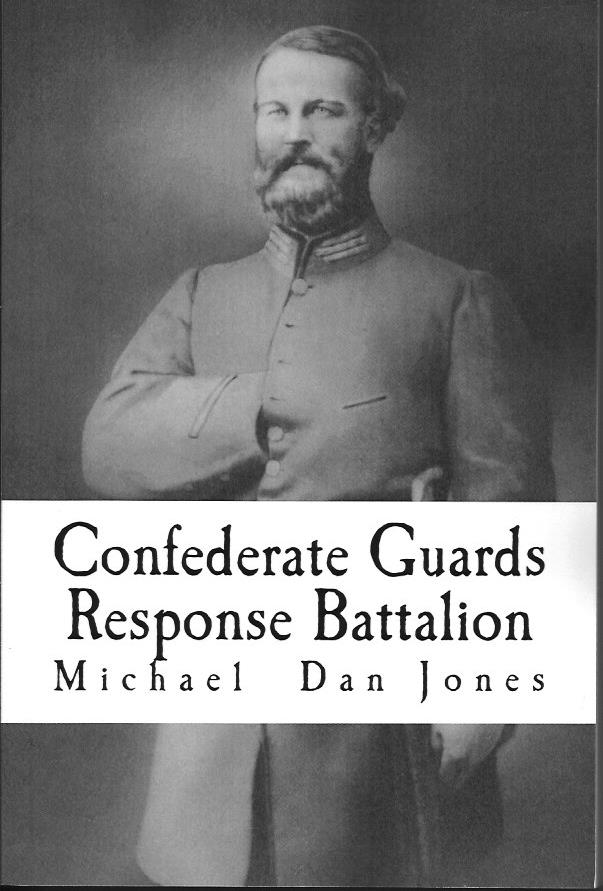
1st Lt. William R. Macbeth
Co. B, Confederate Guards Response Battalion
KIA April 6, 1862, in the Battle of Shiloh.
He was, about 26-year-old born in Ireland
and in 1860 had a personal estate of $20,000. 
He was married to Martha Selser Bass and had a daughter,
Lydia Bass Macbeth was born in 1861.
His uniform hat is at the Confederate Memorial  Hall in New Orleans.

1864: Lt. Gen. Jubal Early and his Army of the Valley followed up the victory at Kernstown, Va., by pursuing Maj. Gen. George Crook's Federal forces and heavily skirmishing with them at Martinsburg, Va. Gen. Robert E. Lee reported on this pursuit in a report dated July 26, he wrote, "General Early states he attacked Major-General Crook on the 24th instant on the old battle-field of Kernstown, completely routing him, and pursued him five miles beyond Winchester, where he was compelled to halt from the exhaustion of his men, they had marched twenty-five miles that day. The pursuit was continued by the cavalry. Among the prisoners captured was General [James A.] Mulligan, mortally wounded.  Brigadier-General [Robert D.] Lilley and our other officers and men captured on the 20th were recovered. The strength of the enemy is stated to have been 15,000 infantrymen, besides the cavalry under [William] Averell."

Brig. Gen. Robert D. Lilley, who 
had been captured July 20, 1864, at
Stephenson's Depot but was recovered. He was also
wounded three times and his right arm amputated.

Confederate General Birthdays, July 25.

None.

A history of Company B, 1st Special Battalion (Wheat's), Louisiana Volunteers in the War Between the States. The Tiger Rifles, Company B, of Wheat's Battalion became famous because of their flashy Zouave uniforms, their famous battalion commander, Major Roberdeau Wheat, and their heroics at the First Battle of Manassas. Their nickname, Tigers, became attached, first to the battalion, and then to all Louisiana troops serving in the Army of Northern Virginia. The book tries to separate fact from myth about the Tigers. The men became so notorious for their antics in camp, they got blamed for a lot of things they didn't do, although they did plenty on their own to deserve their reputation. Also examined is the possible real identity of their company commander, Captain Alexander White. His name is an alias, but as far as is known, his real identity has been a mystery. The book focuses tightly on the men of the Tiger Rifles and brings them to life as much as the limited resources allow.