Sunday, November 30, 2025

Today in History (general history)/ On This Day in Confederate History/ Confederate General Birthdays, November 30.

Click πŸ‘‰Today in History, Nov. 30. 

ON THIS DAY IN CONFEDERATE HISTORY, Nov. 30.

1862: Near the Leeward Islands in the Atlantic Ocean, the CSS Alabama under the legendary Captain Raphael Semmes masterfully evades the Federal warship USS Vanderbilt and then captures the 136-ton Boston bark Parker Cook with a cargo that included butter, cheese, pork, dried fruit, and ship's bread.

1863: Fighting continued in the Mine Run Campaign in Virginia on this day with skirmishes between North and South at Licking Run Bridge, along Mine Run, and near Raccoon Ford.

Fort Esperanza, on the northeastern tip of Matagorda Island in Texas, was attacked by a strong Federal force under Maj. General C.C. Washburn from the XIII Army Corps. The fort was garrisoned by 500 men of the 8th Texas Infantry Regiment and the 5th Texas Militia under Col. W.R. Bradfute with 7 24-pounders, and one 128-pounder Columbiad on a pivot mounting. The Yankee invaders had six regiments of infantry and two artillery companies. After holding out against the overwhelming force of bluecoats for four days, the Confederates evacuated the fort and retreated. The Federals then occupied the fort. The Federalists lost 1 killed and 10 wounded. The Confederates suffered 1 killed and 10 captured.

Private J.E. Mayfield
8th (aka 12th) Texas Infantry Regiment
(Lawrence T. Jones Collection, DeGolyer Library, Southern Methodist University)
(Image colorized, orange blotches are discoloration)

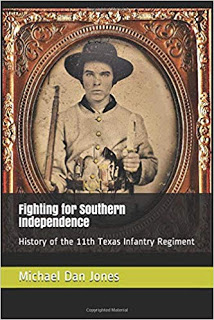
This is the history of one of the finest bodies of Confederate infantry in the War for Southern Independence. General Kirby Smith and Lieutenant General Richard Taylor considered Randal's Texas Brigade to be the best infantry brigade in the Trans-Mississippi West. The brigade was principally composed of the 11th Texas Infantry Regiment, the 14th Texas Infantry Regiment, the 28th Texas Cavalry (Dismounted), and the 6th Battalion (Gould's) Texas Infantry. It fought in such major Trans-Mississippi Department battles, in all or part, as the battles of Bayou Bourbeau, Mansfield, Pleasant Hill, all in Louisiana, and Jenkins' Ferry in Arkansas. The men of Randal's Texas Brigade played a major role in keeping Texas largely free of the destruction wrought on other Southern states in the war.

1864: Gen. John Bell Hood's Confederate Army of Tennessee and Maj. Gen. John Schofield's XXIII Corps and the XIV Corps, both numbering about 27,000 men each, fought the extremely bloody BATTLE OF FRANKLIN, TENNESSEE. The Federals were strongly entrenched, and the Confederates would have to make a frontal assault over an open field. Hood's generals advised against a frontal assault, but the commanding general was determined to make the attack. The fighting was close, and the Confederates gallantly gave it their all, but the fortifications were too strong and too well-manned for a frontal attack to succeed. Schofield began withdrawing his army at 11 o'clock that night, and by the next morning, the Confederates found empty entrenchments. The casualties were staggering for the Confederates, with five generals killed, including Patrick Cleburne, John Adams, Hiram B. Granbury, States Rights Gist, and Otto Strahl, and John C. Carter mortally wounded. Hood reported a total of 4,500 men killed, wounded, and missing or captured. The Federalists lost 189 killed, 1,033 wounded, and 1,104 missing or captured for a total of 2,326 casualties.

Brig. Gen. Hiram B. Granbury
Killed in action at the Battle of Franklin, Tenn.

Confederate General Birthdays, Nov. 30.

Major General Gustavus Woodson Smith was born on this day in 1821 in Georgetown, Kentucky. He graduated from West Point in 1842, served in the Mexican-American War, and was brevetted a first lieutenant and captain for service at the Battle of Contreras. He resigned from the U.S. Army in 1854 and became the Commissioner of Streets in New York City from 1858 to 1861. Smith joined the Confederate Army and was commissioned a major general. At the Battle of Seven Pines, Va., on May 31, 1862, he became temporary commander of the Army of the Potomac (soon to be renamed Army of Northern Virginia) when Gen. J.E. Johnston was wounded. Gen. Robert E. Lee took command of the army on June 1, 1862, and Smith went on sick leave. In August 1862, he returned to duty in August 1862 and was assigned to command the Department of North Carolina and Southern Virginia, and in November became the interim Confederate Secretary of War. He resigned from the army on Feb. 17, 1863, and subsequently served as a volunteer aid to Gen. P.G.T. Beauregard, as superintendent of the Edowah Iron Works, and as a major general in the Georgia Militia. Following the war, Smith served as the Kentucky Insurance Commissioner and wrote several books on the War for Southern Independence and the Mexican War. He died on June 24, 1896, in New York City, N.Y., and was buried in Cedar Grove Cemetery in New London, Connecticut.

Maj. Gen. Gustavus W. Smith

Saturday, November 29, 2025

Today in History (general history)/ On This Day in Confederate History/ Confederate General Birthdays, November 29.

Click πŸ‘‰ TODAY IN HISTORY (general history) Nov 29

ON THIS DAY IN CONFEDERATE HISTORY, Nov. 29.

1863, General Longstreet's Confederate assault Nov. 29 on Federal Fort Sanders is the climax of the partial Siege of Knoxville, Tenn. Confederate Gen. James Longstreet decided Fort Sanders was the key to victory at Knoxville. The fort consisted of a line of earthworks with a ditch 12 ft. wide and 8 ft. deep. It was manned by 440 Federals of the 79th New York Infantry with 12 artillery pieces. Longstreet tasked 3,000 men in three brigades led by Brig. Gen. Benjamin G. Humphreys, Brig. Gen. Goode Bryan and Col. Solon Z. Ruff (Wofford's Brigade) with the assault. Longstreet planned a surprise attack at dawn with no bombardment. The men faced extensive obstacles before they could even reach the fort. The assault was a bloody failure for the Confederates.  Confederate losses were 129 killed, 458 wounded, and 226 captured for a total of 813. The Federals lost 8 men killed and 5 wounded. Among the Confederate dead was Colonel Ruff, leading Wofford's Brigade.

Sgt. William A. Smith
12th Va. Inf.
(Library of Congress)

Col. Solon Z. Ruff
18th Ga. Inf.
Killed leading Wofford's Brigade

In 1864, Federal General Scofield's Federal Army was in danger of being cut off from its destination of Nashville, Tenn., on this day by General John Bell Hood's Confederate Army of Tennessee at Springhill, Tenn., Confederate Maj. Gen. Patrick Cleburne's Division was moving toward Springhill Road but was blocked by Gen. George D. Wagner's Federal Division. That night, incredibly, with the Confederates bivouacked within eyesight of the road, five Federal divisions marched right past Hood's army without a challenge. It would go down in history as one of the great mysteries and lost opportunities of the war for the Confederates. 

Lt. Gen. John Bell Hood

CONFEDERATE GENERAL BIRTHDAYS, Nov. 29.

None.

Friday, November 28, 2025

TODAY IN HISTORY (GENERAL HISTORY/ ON THIS DAY IN CONFEDERATE HISTORY/ CONFEDERATE GENERAL BIRTHDAYS, November 28

Click πŸ‘‰ TODAY IN HISTORY (general history) Nov. 28 

ON THIS DAY IN CONFEDERATE HISTORY, Nov. 28

1861: The State of Missouri is admitted to the Confederate States of America as the 13th state. Missouri Gov. Claiborne Fox Jackson was solid with the South. He died in exile on Dec. 6, 1862, in Little Rock, Arkansas.

1862: In the BATTLE OF CANE HILL, ARKANSAS, 2000 Confederates under General John Marmaduke held off 5000 Federals under General James G. Blunt for 15 hours in a rearguard action. The Southrons then made a successful withdrawal to Van Buren, Arkansas, ending the Federal pursuit.

Capt. Dan Turrentine, 
12th Arkansas Infantry
(Library of Congress)

This is the history of one of the finest bodies of Confederate infantry in the War for Southern Independence. General Kirby Smith and Lieutenant General Richard Taylor considered Randal's Texas Brigade to be the best infantry brigade in the Trans-Mississippi West. The brigade was principally made up of the 11th Texas Infantry Regiment, 14th Texas Infantry Regiment, the 28th Texas Cavalry (Dismounted) and the 6th Battalion ( Gould's) Texas Infantry. It fought in such major Trans-Mississippi Department battles, in all or part, as the battles of Bayou Bourbeau, Mansfield, Pleasant Hill, all in Louisiana, and Jenkins' Ferry in Arkansas. The men of Randal's Texas Brigade played a major roll in keeping Texas largely free of the destruction wrought on other Southern states in the war.
1864: Battle of Columbia, Tenn: Confederate General Stephen D. Lee's Corps of the Army of Tennessee demonstrates before the Federals dug in at the Duck River in Columbia, Tennessee, while General Hood takes the rest of the army outflanks the Yankees' army in an attempt to cut off its retreat at Spring Hill, Tennessee.
Two Tennessee Confederates
(Library of Congress)

CONFEDERATE GENERAL BIRTHDAYS, Nov. 2

Brigadier General Lawrence O'Brien Branch was born in 1828 in Enfield, North Carolina. Before the war, he was elected to the U.S. House of Representatives and served in the 34th, 35th, and 36th Congresses. In 1859, he challenged Rep. Galusha Grow to a duel after an argument on the House floor. However, both men were arrested before the duel could take place. Branch joined the Confederate Army in May 1861 and, in September, was elected colonel of the 33rd North Carolina Infantry. The North Carolinian was appointed brigadier general and led this brigade at the Battle of Hanover Courthouse, the Seven Days Battles, Cedar Mountain, Second Manassas, Chantilly, and Harper's Ferry. At the Battle of Sharpsburg, Md., Sept. 17, 1863, he and his brigade arrived with A.P. Hill's Division in time to stop a Federal breakthrough. After the fighting stopped, while talking with other Confederate generals, he was hit in the head by a bullet from a Federal sharpshooter, which killed him instantly and mortally wounded Brig. Gen. Maxcy Gregg. Branch was buried in Raleigh, North Carolina at Old City Cemetery. 

Brig. Gen. Lawrence O. Branch
Ξ©

Thursday, November 27, 2025

Today in History (general history)/ On this Day in Confederate History/ Confederate General Birthdays.

 Click πŸ‘‰ THIS DAY IN HISTORY (general history) Nov. 27

ON THIS DAY IN CONFEDERATE HISTORY.

In 1861, the "TRENT AFFAIR" became more serious as the illegal seizure of the two Confederate commissioners became a cause cΓ©lΓ¨bre in England, as it was characterized as an insult to the British flag.

  • A photograph of an illustration depicts the Trent Affair, an incident 
  • where the U.S. Navy captured two Confederate diplomats from a 
  • British ship. Confederate diplomats James Murray Mason and 
  • John Slidell is shown aboard a vessel. On the left is England's 
  • Foreign Secretary Lord John Russell, standing on land with one 
  • foot on the back of a lion and ripping a piece of paper titled 
  • "Right of Search". On the right stands President Lincoln's 
  • Secretary of State, William S. Seward, with the Confederate President 
  • Jefferson Davis in the background. (Library of Congress)

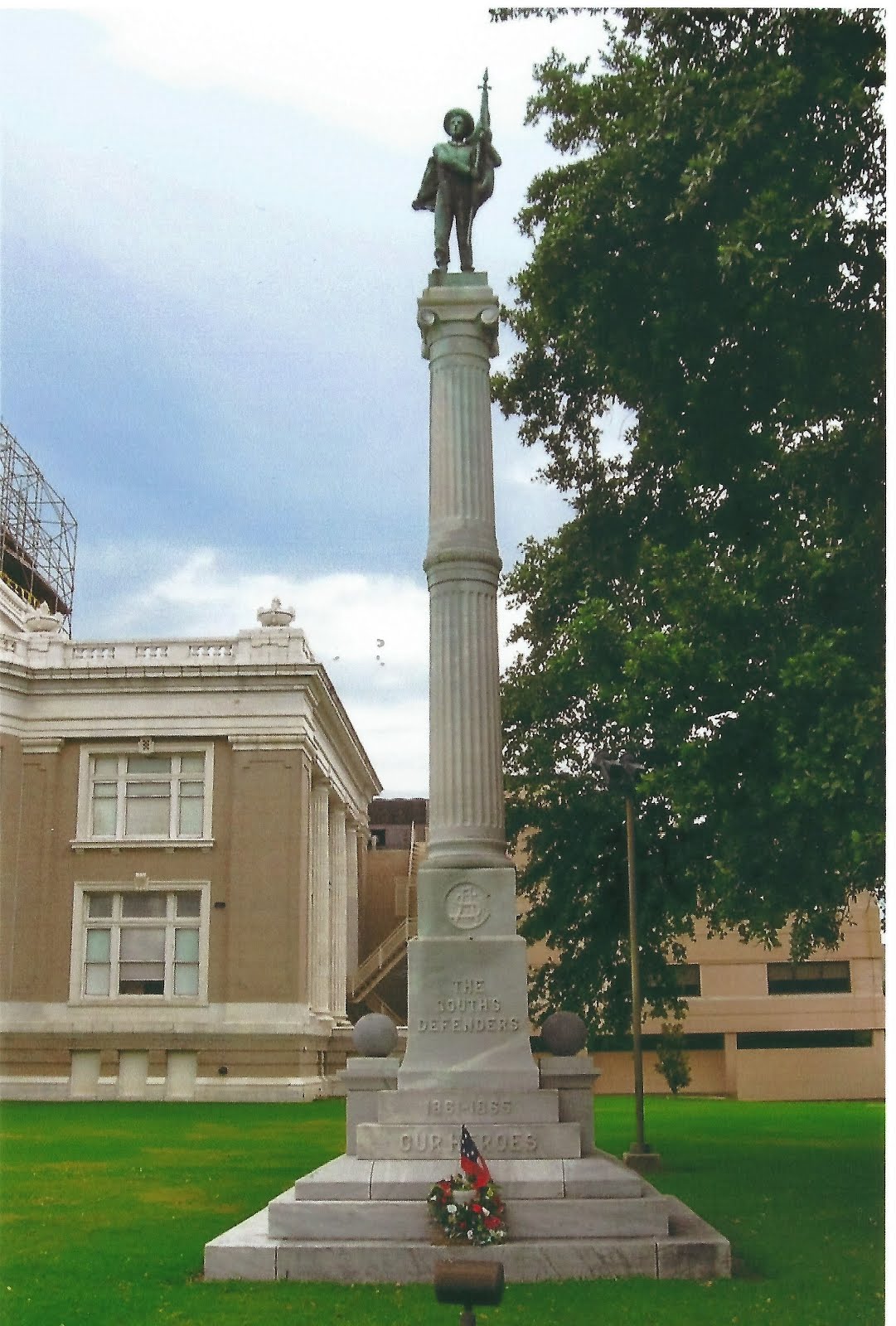
  • The bronze Confederate Private Monument, depicting an ordinary 
  • soldier, thought to be Sam Davis, who fought for the southern 
  • Confederacy in the U.S. Civil War of the 1860s stands, or perhaps 
  • stood in Centennial Park in Nashville, the capital city of Tennessee 
  • (Library of Congress)

In 1863, Confederate scout and "Boy Hero" Sam Davis became a martyr to the cause of Southern Independence when he was hanged as a spy at Pulaski, Tennessee by the Yankees because he wouldn't betray his friends. Private Davis wrote on the eve of  his execution, “I have got to die tomorrow morning — to be hung by the federals.” 

Pvt. Sam Davis, Confederate 
1st Tenn. Inf./Coleman's Scouts
(Wikipedia Commons)

Federal General Meade's Mine Run offensive is stopped at the Battle of Payne's Farm (also known as the Battle of Mine Run) by Confederate General Edward Johnson's division. The Federal strength was 81,000 and the Confederates fielded 48,000 in the Mine Run Campaign, but far fewer actually fought at Payne's Farm. The battle was fought by Maj. Gen. Edward "Allegheny" Johnson's Division of Ewell's Second Corps, ANV.  It was a meeting engagement where they just bumped into each other rather than a planned battle. Johnson launched an attack, not knowing the whole strength of the enemy, on the part of Maj. Gen. William H. French's III Corps and Maj. Gen. John Sedgwick's VI Corps, the two combined corps numbered about 32,000. The Confederate attack failed, but it did slow down the Federal advance and save the Army of Northern Virginia. Gen. Robert E. Lee now had the time to withdraw and build powerful fortifications that spoiled the Federal company of Maj. Gen. George Meade. Federal casualties numbered 1,653, with a total of 629 casualties for the Confederates.

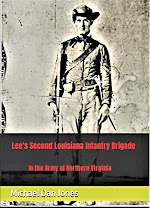
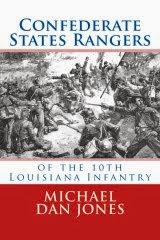
This is the history of Company K, Confederate States Rangers, 
and the regiment to which it belonged, the 10th Louisiana Infantry. 
It fought in nearly every major engagement of General Robert E. 
Lee's Army of Northern Virginia, including the Yorktown Peninsula 
of 1862, the Seven Days, Cedar Run, Second Manassas, 
Sharpsburg (Antietam), Fredericksburg, Chancellorsville, 
Gettysburg, Mine Run, Payne's Farm, The Wilderness, 
Spotsylvania Court House, the Shenandoah Valley Campaign 
of 1864, Petersburg and Appomattox. The book features 
photographs, illustrations, maps, a bibliography, and an Index.

CONFEDERATE GENERAL BIRTHDAYS.

Brigadier General Hugh Weedon Mercer, in 1808, Fredericksburg, Virginia. He graduated from West Point in 1828. He resigned in 1835 and became a bank cashier in Savannah, Georgia. However, he was active in the Georgia Militia. In 1861, Mercer joined the Confederate Army and was commissioned a colonel of the 1st Georgia Infantry and was promoted to brigadier general in  November. He served as district commander in Savannah until 1864. He led a brigade in the Atlanta Campaign and fought at Dalton, Marietta, and  Kennesaw Mountain, where his son was wounded. Due to physical debility, Mercer was assigned to command of the 10th Battalion, Georgia Infantry in defense of Savannah. He resumed his business career in Savannah, Baltimore, and died in 1877 in Baden Baden, Germany, where he was being treated for health problems. He was buried in Bonaventure Cemetery in Savannah.

Brig. Gen. Hugh W. Mercer

Wednesday, November 26, 2025

Today in History (general history)/ On This Day in Confederate History/ Confederate General Birthdays, November 26.

Click πŸ‘‰Today in General History, Nov. 26. 

On This Day in Confederate History, Nov. 26.

1861: Western Virginia, holding a Pro-Union Secession Convention, voted to secede from Virginia without the rest of the state having a say in it. But while the Lincoln administration denies there is a right to secession, it ironically accepts this secession, and the state of West Virginia is created.

1862: Lt. Gen. Leonidas Polk takes command of a corps of the Army of Tennessee. The Episcopal Bishop of Louisiana is well thought of by his men and by President Davis. Polk had tried to retire back to his spiritual flock in Louisiana, but President Davis felt he was still needed for the nation's army.

Private W.R. Clack of Co. B, 43rd Tennessee 
Infantry Regiment, with saber, pistol, and small book.
(Liljenquist Collection, Library of Congress)

1863: Maj. Gen. Patrick Cleburne's Division of the Army of Tennessee continues to perform the critical role of rear-guard for the retreating Southern army following the disastrous defeat at the Battle of Missionary Ridge, Tenn. Cleburne's men clash with pursuing Federals at Chickamauga Station and Pea Valley in the state of Tennessee.

Flag of the 7th Arkansas Infantry Regiment
Cleburne's Division, Army of Tennessee
(The Returned Battle Blags)

1864: The 4th Tennessee Cavalry clashed with seven regiments of Sherman's Federal Army at Sandersville, Ga. Nov. 25-26 as the destructive scorched early policy of the Lincoln administration continues to be carried out in Georgia. The courthouse and jail there are burned as well as the railroad depot of neighboring Tennille, Ga.

Confederate General Birthdays, Nov. 26.

Major General William Henry Talbot Walker was born on this day in 1816 in Augusta, Georgia. He graduated from West Point in 1832, served Seminole War (severely wounded) and the Mexican-American War (wounded), and resigned from the U.S. Army on Dec. 20, 1860. He transferred to the Confederate Army as a colonel, then had promotions to brigadier general and major general. His battles included Chickamauga, Walker was appointed a colonel in the Georgia Militia and then a major general.  His battles included Kennesaw Mountain and Atlanta. General Walker was wounded a number of times and then was killed in action on July 22, 1864, when shot off his horse during the Battle of Atlanta, Ga. He was buried in Walker Cemetery at the University of Augusta, Ga

Maj. Gen. William H.T. Walker
πŸ‘±

Brigadier General Alfred Moore Scales was born on this day in Reidsville, North Carolina. Prewar,  he was a teacher, and lawyer and was elected to the North Carolina Legislature and then the U.S Congress. During the war, Scales rose from private to brigadier general. His battles included the Peninsula Campaign, Fredericksburg, Chancellorsville, Gettysburg, Overland Campaign, and the Siege of Petersburg. Following the war, Scales resumed the practice of law, was elected governor of North Carolina, served as a bank president, and died on Feb. 9, 1892, in Greensboro, N.C., and was buried there at Green Hill Cemetery.

Brig. Gen. Alfred M. Scales
πŸ‘‹