









Click 👉 THIS DAY IN HISTORY (general history) Nov. 27
ON THIS DAY IN CONFEDERATE HISTORY.
In 1861, the "TRENT AFFAIR" became more serious as the illegal seizure of the two Confederate commissioners became a cause célèbre in England, as it was characterized as an insult to the British flag.

- A photograph of an illustration depicts the Trent Affair, an incident
- where the U.S. Navy captured two Confederate diplomats from a
- British ship. Confederate diplomats James Murray Mason and
- John Slidell is shown aboard a vessel. On the left is England's
- Foreign Secretary Lord John Russell, standing on land with one
- foot on the back of a lion and ripping a piece of paper titled
- "Right of Search". On the right stands President Lincoln's
- Secretary of State, William S. Seward, with the Confederate President
- Jefferson Davis in the background. (Library of Congress)

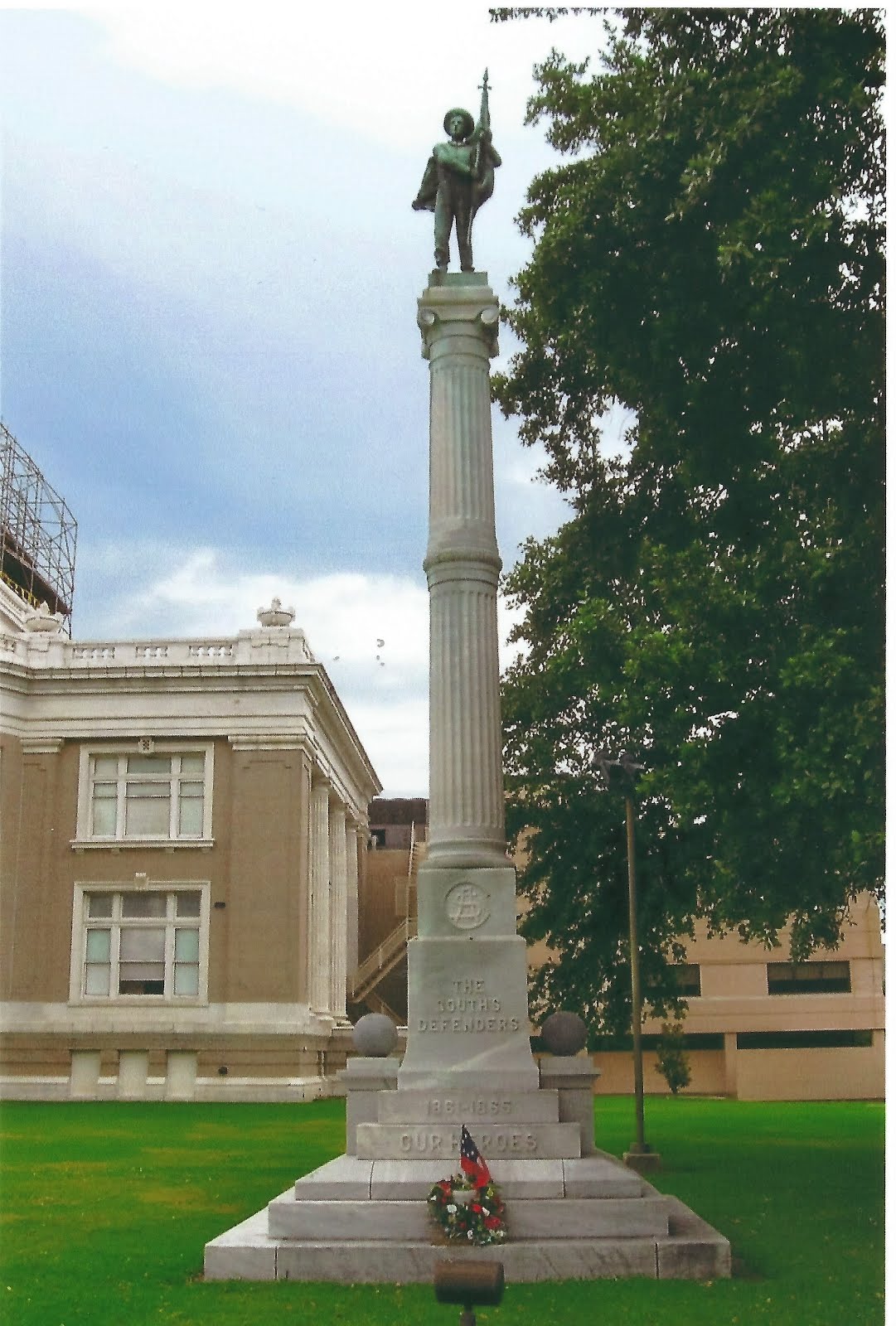
- The bronze Confederate Private Monument, depicting an ordinary
- soldier, thought to be Sam Davis, who fought for the southern
- Confederacy in the U.S. Civil War of the 1860s stands, or perhaps
- stood in Centennial Park in Nashville, the capital city of Tennessee
- (Library of Congress)
In 1863, Confederate scout and "Boy Hero" Sam Davis became a martyr to the cause of Southern Independence when he was hanged as a spy at Pulaski, Tennessee by the Yankees because he wouldn't betray his friends. Private Davis wrote on the eve of his execution, “I have got to die tomorrow morning — to be hung by the federals.”

Federal General Meade's Mine Run offensive is stopped at the Battle of Payne's Farm (also known as the Battle of Mine Run) by Confederate General Edward Johnson's division. The Federal strength was 81,000 and the Confederates fielded 48,000 in the Mine Run Campaign, but far fewer actually fought at Payne's Farm. The battle was fought by Maj. Gen. Edward "Allegheny" Johnson's Division of Ewell's Second Corps, ANV. It was a meeting engagement where they just bumped into each other rather than a planned battle. Johnson launched an attack, not knowing the whole strength of the enemy, on the part of Maj. Gen. William H. French's III Corps and Maj. Gen. John Sedgwick's VI Corps, the two combined corps numbered about 32,000. The Confederate attack failed, but it did slow down the Federal advance and save the Army of Northern Virginia. Gen. Robert E. Lee now had the time to withdraw and build powerful fortifications that spoiled the Federal company of Maj. Gen. George Meade. Federal casualties numbered 1,653, with a total of 629 casualties for the Confederates.

CONFEDERATE GENERAL BIRTHDAYS.
Brigadier General Hugh Weedon Mercer, in 1808, Fredericksburg, Virginia. He graduated from West Point in 1828. He resigned in 1835 and became a bank cashier in Savannah, Georgia. However, he was active in the Georgia Militia. In 1861, Mercer joined the Confederate Army and was commissioned a colonel of the 1st Georgia Infantry and was promoted to brigadier general in November. He served as district commander in Savannah until 1864. He led a brigade in the Atlanta Campaign and fought at Dalton, Marietta, and Kennesaw Mountain, where his son was wounded. Due to physical debility, Mercer was assigned to command of the 10th Battalion, Georgia Infantry in defense of Savannah. He resumed his business career in Savannah, Baltimore, and died in 1877 in Baden Baden, Germany, where he was being treated for health problems. He was buried in Bonaventure Cemetery in Savannah.


No comments:
Post a Comment