Saturday, November 21, 2026

Today in History (general history)/ On This Day in Confederate History/ Confederate General Birthdays, November 21.

Click 👉 TODAY IN HISTORY (general history) Nov. 21

ON THIS DAY IN CONFEDERATE HISTORY, Nov. 21

1861: Confederate Cabinet: President Davis reorganises his cabinet, appointing Judah Benjamin secretary of war, Thomas Bragg, attorney general. The president also appointed General Lloyd Tilghman commander of Forts Henry and Donelson on the Tennessee and Cumberland Rivers. 

1862: Fredericksburg Campaign: It becomes obvious to General Lee that Burnside is concentrating his whole Yankee army at Fredericksburg. That same day, Federal General Sumner demanded the surrender of the city by 5 o'clock that afternoon or else he would commence bombarding it. The threat is an empty one and no bombardment occurs. General Lee advised city officials that the invasion would be resisted and the civilians began evacuating.

A  young Confederate private wearing
an Atlanta Depot-style jacket.
The ambrotype has a Georgia provenance. 
(M.D. Jones Collection, 9th Plate Ambrotype, colourised by AI)

1863: Chattanooga Campaign: General Bragg at Missionary Ridge in Tennessee overestimates the strength of his position while General Grant prepares for a massive assault. Bragg has also transferred Longstreet's Corps plus Bushrod Rust Johnson's Division to Knoxville, Tenn., which was then under a partial siege.

1864: Sherman's March to the Sea: General Hood moves the Army of Tennessee, including 30,000 infantry and 8,000 cavalrymen, out of Florence, Alabama toward Tennessee. Sherman's March to the Sea continues with Confederate cavalry and Georgia militia harassing the bluecoats. 

CONFEDERATE GENERAL BIRTHDAYS, Nov. 21

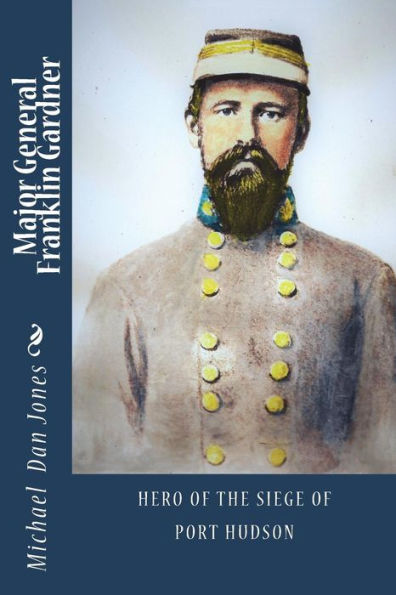
Brigadier General Richard Brooke Garnett was born on this day in 1817 in Essex, Virginia. He graduated from West Point in 1841 and served in the Seminole War, the Mexican-American War, and the Utah Expedition. He resigned from the U.S. Army on May 17, 1861, and joined the Confederate Army. Garnett initially served as a major of artillery, then as the lieutenant colonel of Cobb's Legion. He was arrested by Jackson at the First Battle of Kernstown, Va., for retreating. However, General Lee released Garnett from arrest and gave him command of a brigade in Longstreet's Corps. He fought credibly at the Battle of Sharpsburg, Md., and the Battle of Fredericksburg, Va., and was killed in action in Pickett's Charge at the Battle of Gettysburg, Pa., on July 3, 1863. His body was never identified, but it was assumed he was among the unidentified Confederate dead later reburied in Hollywood Cemetery in Richmond, Va. A cenotaph was erected in memoriam to Brig. Gen. Richard Brooke Garnett at that location. Pictures of Richard Brooke Garnett are in dispute. Some Garnett family members claim that pictures identified as him are of his cousin, Robert S. Garnett, also a Confederate general. Some claim that a long-identified picture of Confederate General Franklin Gardner is actually Richard Brooke Garnett. He was promoted to brigadier general on November 14, 1861, and was given command of a brigade in Stonewall Jackson's Army of the Valley. 


Brigadier General William McComb, in 1828, in Mercer County, Pennsylvania. He moved to Clarksville, Tenn., in 1864, where he ran a flour mill in Cumberland County. He started the war as a private in the 14th Tenn. Inf. but quickly moved up the ranks to second lieutenant and major of the regiment. McComb was wounded in battles at Gaines' Mill, Va., in 1862; Sharpsburg, Md., in 1862; and at Chancellorsville, Va. in 1863. He commanded an Alabama brigade as a colonel and was promoted to brigadier general on Jan. 20, 1865. McComb was paroled at Appomattox Court House, Va., April 9, 1865. After the war, he took up the life of a Virginia farmer in Louisa County, which he did for almost 50 years. McComb died July 12, 1918, and is buried in Mechanicsville Baptist Cemetery in Louisa County, Va.

Brig. Gen. William McComb

Today in History (general history)/ On This Day in Confederate History/ Confederate General Birthdays, November 20.


Today in History (general history)/ On This Day in Confederate History/ Confederate General Birthdays, November 20.

  Click 👉 TODAY IN HISTORY (general history) Nov. 20

ON THIS DAY IN CONFEDERATE HISTORY, Nov. 20

1862: General Bragg changed the name of the Army of the Mississippi to the Army of Tennessee after moving the army to Kentucky and then Tennessee. Bragg divided the army into two corps, commanded by Lt. Gen. Leonidas Polk and Lt. Gen. William J. Hardee. He then formed a third corps out of Lt. Gen. E. Kirby Smith's Department of East Tennessee. However, the Third Corps was soon broken up. Bragg commanded the AOT in 1862-63, then Gen. Joseph E. Johnston, 1863-64,  then Gen. J.B.  Hood, 1864-65, and in 1865, Lt. Gen. Richard Taylor (briefly), and J.E. Johnston again in the last few months of the war. The peak strength of the Confederate Army of Tennessee was in September 1863, during the Battle of Chickamauga, when it had 48,000 infantry and 15,000 cavalry, marking its greatest victory of the war.

Pvt. William P. Ward (1842-1916) of Cobb County, Ga.
He served in Co. F, 40th Ga. Inf. and later Co. B, 41st Ga. Inf.
The 40th Georgia & 41st Georgia fought in the battles of  Perryville, 
Chickasaw Bayou, Champion's Hill, and the Siege of Vicksburg, where it
was surrendered on July 4, 1863. After being exchanged,
it served in Stovall's brigade of the AOT, where it fought in 
 the Chattanooga and Nashville campaigns before its surrender, 
and the men were paroled at the end of the war.
(Liljenquist Collection, Library of Congress)
(Colorized by AI)

1863: Siege of Knoxville, Tenn.: Confederate forces around Chattanooga, Tennessee continue their siege. At Knoxville, General Longstreet is waiting on reinforcements before attacking the main Federal bastion, Fort Sanders.

1864: Sherman's March to the Sea: Georgia state militia and home guards continue to try to retard Sherman's March to the Sea at Clinton, Walnut Creek, East Macon, and Griswoldsville, Georgia.

Confederate General Birthdays, Nov, 20

None

Friday, November 20, 2026

Today in History (general history)/ On This Day in Confederate History/ Confederate General Birthdays, November 19.

 Click 👉 TODAY IN HISTORY (general history), Nov. 19

ON THIS DAY IN CONFEDERATE HISTORY, Nov. 19

1863: SIEGE OF KNOXVILLE, Tenn.: Confederates under Lt. Gen. James Longstreet were now before Knoxville, Tenn., but the Confederate general knew he didn't have the manpower or firepower he would need for a real siege of the East Tennessee city. Longstreet wanted to try an attack on the formidable earthworks around the city; he knew it would grow stronger every day. He determined that the only vulnerable point was Fort Sanders. 

Lt. Gen. James Longstreet
(Library of Congress)

This is the history of one of the most fiercely fighting infantry regiments in the War for Southern Independence, the 23rd Tennessee Infantry. The regiment was raised predominantly from the Middle Tennessee counties, where there was considerable support for secession and Southern Independence. The men were overwhelmingly made up of yeoman farmers of predominantly Anglo-Celtic descent who were to face some of the largest, bloodiest, and most memorable battles of the war, both in the West and the East. They got their baptism of fire in the Battle of Shiloh, followed by the battles of Perryville, Murfreesboro, Hoover's Gap, Chickamauga, and Knoxville in the West with the famed Army of Tennessee. They were then transferred to the East, where they fought in the Bermuda Hundred Campaign in Virginia, under the legendary General P.G.T. Beauregard, and then in the famed Army of Northern Virginia in the Petersburg Campaign, and ended the war with the great General Robert E. Lee at Appomattox Courthouse. The book covers the history of the regiment from letters, diaries, memoirs, and official records to cover both officers and men in a personal way. It also has an annotated roster of some 1,164 men who served in the regiment, as well as maps, photos, illustrations, bibliography, footnotes, and index.

1864: THE BLOCKADE THAT FAILED: ''The two outstanding facts concerning the blockade of the southern states by the United States Navy during the Civil War are, one, that it was, for the first three and a half years, almost totally ineffective, insofar as preventing supplies from reaching the rebels was concerned, and, two, that by the end of 1864, when it did become effective, the war was already over, for all practical purposes." Daniel O'Flaherty, American Heritage, August 1955. Click on the link for the entire article.''

The Anaconda Plan for the Blockade of the South.
(Library of Congress)

CONFEDERATE GENERAL BIRTHDAYS, Nov. 19

Major General Fitzhugh Lee, in 1835, Fairfax, Virginia. The son of Commander Sydney Smith Lee, older brother of Gen. Robert E. Lee, Fitzhugh graduated from West Point in 1856 and served the prewar 2nd U.S. Cavalry under the command of Col. Albert Sidney Johnston and his uncle, Lt. Col. Robert E. Lee on the Texas Frontier. The young lieutenant distinguished himself in combat against the Comanche Indians and was severely wounded in May 1859. He resigned his commission when Virginia seceded and joined the Confederate Army. He was serving on the staff of Gen.Joseph E. Johnston at the First Battle of Manassas on July 21, 1861. Lee worked his way up to the rank of major general of cavalry and was one of the Confederate Army's finest cavalry commanders. After the war, he was active in Virginia politics in Virginia, serving as governor of that state from 1886 to 1890. During the Spanish-American War in 1898, he served as a major general in the U.S. Army and served as the military governor of Cuba in the postwar occupation. Lee died in Washington, D.C., on April 28, 1905, and was buried in Hollywood Cemetery in Richmond, Va.

Maj. Gen. Fitzhugh Lee

Wednesday, November 18, 2026

Today in History (general history)/ On This History in Confederate History/ Confederate General Birthdays, November 18.

Click 👉 TODAY IN HISTORY (general history)

ON THIS DAY IN CONFEDERATE HISTORY, Nov. 18

1861: The Provisional Confederate Congress opens its fifth session in the capital of the Confederacy, Richmond, Virginia. In Russellville, Kentucky, a group formed a secession convention and voted to secede from the Union. They also elected a Confederate governor of the state.

1862: Fredericksburg Campaign: Burnside's Federals arrive at Falmouth, Virginia, across from Fredericksburg, and begin skirmishing with Confederates. 

1864: President Davis orders General Howell Cobb to mobilize the Georgia militia to oppose Sherman's rampage across Georgia.  Also opposing Sherman's "scorched earth" policy was Lt. Gen. William Hardee, commanding the Department of South Carolina, Georgia, and Florida, and Maj. Gen. Joseph "Fighting Joe" Wheeler commanded the cavalry in the department, but had neither the manpower nor the firepower to stop Sherman's bummers.

A Georgia Confederate with Georgia state
seal buckle and musket.
(Library of Congress
(Restored & colorized by AI)

Maj. Gen. Joseph Wheeler

PRICE'S MISSOURI RAID: General Sterling Price's Confederate raiders depart Missouri while Confederate partisans fight Federal troops at Fayette, Missouri. The expedition had proven to be a failure. But it did show the Confederacy still had the power to mount such major raids into Northern territory and tied up considerable Federal resources to guard against them.
Maj. Gen. Sterling Price

CONFEDERATE GENERAL BIRTHDAYS

Brigadier General Jesse Johnson Finley, in 1812, at Lebanon, Tennessee. His brigade included all the Florida infantry in the Army of Tennessee. His brigade fought well in the rear guard of the Confederate retreat from Missionary Ridge. It also saw heavy fighting in the Atlanta Campaign. Finley was wounded twice in battle.  After the war, he served in the U.S. House of Representatives. He died Nov. 6, 1904, in Lake City, Florida, and is buried in Evergreen Cemetery in Gainesville, Florida.

Brig. Gen. Jesse J. Finley

Tuesday, November 17, 2026

Today in History (general history)/ On This Day in Confederate History/ Confederate General Birthdays, November 17.

Click 👉TODAY IN HISTORY (general history) Nov. 17

ON THIS DAY IN CONFEDERATE HISTORY, Nov. 17

1862: Confederate Secretary of War George W. Randolph resigns after disagreements with President Davis and some Confederate generals. He is replaced temporarily by General G.W. Smith. James Seddon was appointed Secretary of War on Nov. 21, 1862, and served the longest in that office, until Feb. 5, 1865.

Also in 1862, the Confederate Cruiser C.S.S. Alabama arrived in the French colony of Martinique, shadowed by the U.S.S. San Jacinto. San Jacinto pulls into port briefly, then goes out again to be in a good position to attack the Confederate cruiser. However, Alabama's commander, Capt. Raphael Semmes, outsmarts the Yankee and slips by undetected. The very presence of Alabama in the Caribbean strikes fear in the blockading Federal ships, with good reason.

Admiral Raphael Semmes, cmdr. of the  C.S.S. Alabama.

CSS ALABAMA (US Navy Historical Center)


Col. Alfred M. Hobby of the 8th Tex. Inf.

1863: In the Battle of Mustang Island off the coast of Texas, a detachment of 98 Confederate infantry, in Fort Semmes, including the 3rd Texas State Militia and Company I of the 8th Texas Infantry under Captain William H. Maltby, was greatly outnumbered by three Federal infantry regiments under Brig. Gen. Thomas E.G. Ransom was backed by the U.S.S. Monongahela. The Confederates surrendered to the Northern invaders after brief fighting. The prisoners of war were taken to New Orleans. 

1864: President Jefferson Davis denounces any plans by individual states to make a separate peace with the United States. Skirmishing occurs in Georgia and in North Alabama at Maysville and New Market.
President Jefferson Davis

CONFEDERATE GENERAL BIRTHDAYS, Nov. 17

None

Monday, November 16, 2026

Today in History (general history)/ On This Day in Confederate History/ Confederate General Birthdays, November 16.

 Click 👉TODAY IN HISTORY (general history) Nov. 16

ON THIS DAY IN CONFEDERATE HISTORY, Nov. 16

1863: BATTLE OF CAMPBELL'S STATION, TN: (National Park Service)

In early November 1863, Lt. Gen. James Longstreet, with two divisions and about 5,000 cavalry, was detached from the Confederate Army of Tennessee near Chattanooga to attack Maj. Gen. Ambrose E. Burnside's Union Department of the Ohio troops at Knoxville, Tennessee. Following parallel routes, Longstreet and Burnside raced for Campbell's Station, a hamlet where the Concord Road, from the south, intersected the Kingston Road to Knoxville. Burnside hoped to reach the crossroads first and continue to safety in Knoxville; Longstreet planned to reach the crossroads and hold it, preventing Burnside from reaching Knoxville and forcing him to fight outside his earthworks. By forced marching on a rainy November 16, Maj. Gen. Ambrose E. Burnside's advance reached the vital intersection and deployed first. The main column arrived at noon with the baggage train just behind. Scarcely 15 minutes later, Longstreet's Confederates approached. Longstreet attempted a double envelopment: attacks timed to strike both Union flanks simultaneously. Maj. Gen. Lafayette McLaws's Confederate division struck with such force that the Union right had to redeploy, but held. Brig. Gen. Micah Jenkins's Confederate division maneuvered ineffectively as it advanced and could not turn the Union left. Burnside ordered his two divisions astride the Kingston Road to withdraw three-quarters of a mile to a ridge in their rear. This was accomplished without confusion. The Confederates suspended their attack while Burnside continued his retrograde movement to Knoxville. Had Longstreet reached Campbell's Station first, the Knoxville Campaign's results might have been different.


Major General Lafayette McLaws 

This is the history of one of the hardest-fighting infantry regiments in the War for Southern Independence, the 23rd Tennessee Infantry. The regiment was raised predominantly from the Middle Tennessee counties, where there was considerable support for secession and Southern Independence. The men were overwhelmingly made up of yeoman farmers of predominantly Anglo-Celtic descent who were to face some of the largest, bloodiest, and most memorable battles of the war, both in the West and the East. They got their baptism of fire in the Battle of Shiloh, followed by the battles of Perryville, Murfreesboro, Hoover's Gap, Chickamauga, and Knoxville in the West with the famed Army of Tennessee. They were then transferred to the East, where they fought in the Bermuda Hundred Campaign in Virginia under the legendary General P.G.T. Beauregard, and then in the famed Army of Northern Virginia in the Petersburg Campaign, and ended the war with the great General Robert E. Lee at Appomattox Courthouse. The book covers the history of the regiment from letters, diaries, memoirs, and official records to cover both officers and men in a personal way. It also has an annotated roster of some 1,164 men who served in the regiment, as well as maps, photos, illustrations, bibliography, footnotes, and index.

1864: Sherman's March to the Sea was in its second day, with 60,000 troops fulfilling Maj. Gen. William T. Sherman's pledge to "Make Georgia Howl." He was opposed by 8,000 Confederate cavalry under Major General Joseph "Fighting Joe" Wheeler and the Georgia State Militia under Gen. Gustavus W. Smith.

Sherman's March to the Sea (Battles and Leaders)

CONFEDERATE GENERAL BIRTHDAYS, Nov. 17

None

Saturday, November 14, 2026

Today in History (general history)/ On This Day in Confederate History/ Confederate General Birthday, November 15.

 Click 👉 TODAY IN HISTORY (general history)

ON THIS DAY IN CONFEDERATE HISTORY, Nov. 15

1861: The Trent Affair: USS San Jacinto with Confederate diplomat prisoners, John Slidell and James Mason, docks at Fort Monroe, Virginia. They are then transferred to Fort Warren in Boston Harbor. The diplomatic crisis deepened between the United States, Great Britain, and France. The Confederate diplomats were illegally taken from a British mail packet ship, the Trent, in the Atlantic Ocean by the Federal warship San Jacinto.

1863: General "Fighting  Joe" Wheeler's Confederate cavalry unites General Longstreet's forces for the Siege of Knoxville, Tennessee. Maj. Gen. Ambrose Burnside headed for the strategic crossroads of Campbell's Station in hopes of blocking Longstreet there and gradually withdrawing back to the city.

An unidentified Confederate
wearing a typical Confedederate
cavalry shell jacket with "C" for
cavalry buttons. 
(CDV, M.D. Jones Collectionn, AI colorized)

Confederate Cavalryman
(Painting by W.M. Sheppard 1903)

1864:  Georgia State Militia fights with Federals around Atlanta while the bluecoats complete the destruction of the city before their "March to the Sea." Brig. Gen. Plesant J. Philips commanded three brigades of Georgia Militia, which engaged Sherman in November near Macon, Georgia, in the Battle of Griswoldville.

Clinch Rifles, Augusta, Ga., Georgia Militia
(Heritage Auctions)

CONFEDERATE GENERAL BIRTHDAYS, Nov. 15

Major General Pierce Manning Butler Young was born on this day in 1836, in Spartanburg, South Carolina. He resigned from West Point in 1861, two months before graduation when Georgia seceded. He had previously attended the Georgia Military Institute. Starting out as a second lieutenant in the 1st Georgia Infantry, he was appointed adjutant of Cobb's Legion and worked his way up to major, lieutenant colonel, colonel, brigadier general, and major general of cavalry. His battles and campaigns included Maryland, Gettysburg, Bristoe, Mine Run, Overland, and Carolinas. After the war, he had a long political career, including four terms in the U.S. House of Representatives. Young died July 6, 1896, and is buried in Oak Hill Cemetery, Cartersville, Georgia.

Maj. Gen. Pierce M.B. Young

Friday, November 13, 2026

Today in History (general history)/ On This Day in Confederate History/ Confederate General Birthdays, November 13.

 Click 👉 TODAY IN HISTORY (general history), Nov. 13

ON THIS DAY IN CONFEDERATE HISTORY

1860: SOUTH CAROLINA SECESSION: South Carolina Legislature is called into special session to consider secession following the 1860 election of Lincoln to the presidency."The South Carolina General Assembly called for a convention to consider secession following news of Lincoln's victory. The 169 delegates convened at the South Carolina Institute Hall in Charleston on December 20. The body included four former governors, three future governors, four former US senators, and five former US congressmen."(National Park Service)

A Charleston Zouave Cadet
An early defender of South Carolina
and Southern Rights. They carried Model 1841 Rifles.
(Restored & colorized by AI)

1864: Sherman's "bummers" enter Atlanta, Georgia, and begin the process of destroying the city. Sherman carried out his plan to destroy the city and then "March Across Georgia from Atlanta to the Sea" to do the same to as much of the state as the army could cover then turn north and do the same to the Carolinas before joining up with Grant's army in Virginia. Numerous crimes were carried out against innocent civilians in this deliberate "scorched earth" policy of the Lincoln administration.


CONFEDERATE GENERAL BIRTHDAYS, Nov. 13

Lt. Gen. Theophilus Hunter Holmes was born on this day in 1804 in Sampson, North Carolina. He is an 1829 graduate of West Point, finishing 44th in a class of 46 cadets. His long U.S. Army career included the Seminole Wars and the Mexican-American War. In the War for Southern Independence, Holmes' record included important departmental commands in the Trans-Mississippi and North Carolina. His campaigns included the Seven Days Battles and the Battle of Helena, Ark. After the war, he farmed in North Carolina and died June 21, 1880, in Fayetteville, N.C. 

Lt. Gen. Theophilus Holmes

Thursday, November 12, 2026

Today in History (general history)/ On This Day in Confederate History/ Confederate General Birthdays, November 11.

Click 👉 TODAY IN HISTORY (general history) 

ON THIS DAY IN CONFEDERATE HISTORY, Nov. 12

1861: The blockade runner Fingal, purchased by the Confederate government in England, runs the Federal blockade to arrive in Savannah, Georgia. The ship will later be converted into an ironclad, to become the C.S.S. Atlanta. Asa and Nelson Tift won the contract to do the conversion. The Atlanta received ironclad casemates, was equipped with eight gunports and its armament included two 7-inch Brooke rifles on pivot mounts at the bow and stern: two 6.4-inch Brooke rifles, one spar torpedo, and a Naval Ram. The crew numbered 145 officers and men.

1863: General Longstreet's Confederate infantry and "Fighting Joe" Wheeler's Confederate cavalry arrived in Loudon, Tennessee, to take part in the Siege of Knoxville.

CONFEDERATE GENERAL BIRTHDAYS, Nov. 12

Brigadier General Paul Octave Hébert was born on this day in 1818 in Iberville Parish, Louisiana. A brilliant student, he graduated first in his class from Jefferson College in 1836 and at the top of his class at West Point in 1840. He was made a professor of engineering at West Point in 1841. Resigning from the army in 1844, Hébert was appointed by Gov. Alexandre Mouton as Chief Engineer of Louisiana. During the Mexican-American War, he was commissioned a lieutenant colonel of the 3rd U.S. Infantry, transferred to the 14th Infantry Regiment, and fought with distinction at Contreras, Churubusco, Molino del Rey, Chapultepec, and Mexico City. Gen. Winfield Scott brevetted him a colonel for his bravery. Resigning after the war, he was elected to the Louisiana Senate and then governor of Louisiana. He also served in the Louisiana Militia as a colonel and brigadier general. Hébert was also commissioned as a brigadier general in the Confederate Army and given command of Texas. He disappointed the Texans when he considered Galveston not defensible and gave up the city without a fight in October 1862, and was replaced by General John Bankhead Magruder, who liberated Galveston on January 1, 1863. He was present at the Battle of Milliken's Bend, La., on June 7, 1863, and afterward was posted back to Texas for the rest of the war. Following the war, Hébert supported the Republicans in New Orleans, served on the state Board of Engineers, and switched back to the Democrats in 1876. Hébert passed away at Bayou Goula, Louisiana, on August 29, 1880, and was buried in St. Paul's Cemetery there. However, because of encroachment by the Mississippi River, his remains were reburied at St. Raphael Cemetery at Point Pleasant near Plaquemine, LA.

Gen. Paul O. Hébert is seen here in his
dark blue, early war uniform as the colonel
of the 1st Louisiana Heavy Artillery Regiment
(Regulars) which was one of the first two 
which was part of the Louisiana National
Army (after secession and before it joined the Confederacy)
rather than state militia. It saw
action in the battles for New Orleans in 1861-62,
the  Vicksburg Campaign in 1862-63, and  the
Mobile Campaign of 1864-65.
(Library of Congress/Colorized by AI)

This is the history of the First Louisiana Heavy Artillery Regiment in the War for Southern Independence. The regiment began the war by safeguarding the Confederacy's most populous city, New Orleans. The big "Thunder Guns" were then assigned to the Confederate "Gibraltar" of the Confederacy, Vicksburg, Mississippi. It then finished the war at one of the South's last great cities and ports, Mobile, Alabama. In each case, the First Louisiana Heavies were involved in some of the most critical and desperate fights in the South's valiant struggle to establish its Southern Republic among the nations of the world.

Tuesday, November 10, 2026

Today in History (general history)/ On This Day in Confederate History/ Confederate General Birthdays, November 11.

 Click 👉 TODAY IN HISTORY (general history) Nov. 11.

ON THIS DAY IN CONFEDERATE HISTORY, Nov. 11.

1863: In Richmond, Va., Confederate War Department clerk John B. Jones writes in his diary about the damage speculators are doing to the Confederate economy. He writes, "I have written Custis Lee, the President's aide, that but one alternative remains: for the President, or someone else, to assume all power, temporarily, and crush the speculators."

John B. Jones is seen in this 1851-52 painting seated at left,
in George Caleb Bingham's "Canvassing for Votes." Jones
and Bingham were friends in Missouri before the war.

1864: In the Battle of Bull's Gap, in East Tenn., Maj. Gen. John C. Breckinridge led 3,000 Confederates from Virginia and pushed back 2,500 Federals under Maj. Gen. Alvan Cullem Gillem near Knoxville by Nov. 14. Federal casualties totaled 324, and Confederates lost 100 men.

Maj. Gen. John C. Breckinridge

Major Bolinn R. Chinn
Commander of the  9th Battalion Louisiana Infantry
(Restored & colorized by AI)
This is the history of the 9th Battalion, Louisiana Infantry, which fought at the Battle of Baton Rouge and the Siege of Port Hudson, Louisiana in the War for Southern Independence. The unit took part in the famous charge of Allen's Brigade at Baton Rouge. The men of the unit were fighting in defense of their own home area since most were from East Baton Rouge and nearby parishes.

CONFEDERATE GENERAL BIRTHDAYS, Nov. 11.

Brigadier General Benjamin McCulloch, in 1811 in Rutherford County, Tennessee. He was a legend in his own time, having come to Texas from Tennessee in 1835 to fight in the War for Texas' Independence from Mexico. He met Col. David Crockett in Nacogdoches and planned to go to San Antonio with him, but measles laid him up for several weeks, but saved him from being killed at the Alamo with Crockett. He served under General Sam Houston at the Battle of San Jacinto. He also served as a Texas Ranger and in the war with Mexico. In the War for Southern Independence, McCulloch led a brigade in the Battle of Oak Hill, Mo., commanded the Confederate right wing at the Battle of Elkhorn Tavern, Ark, and was killed in action in that battle on March 7, 1862. His remains are now at rest in the Texas State Cemetery in Austin. McCulloch County, Texas, is named in his honor.

Brig. Gen. Benjamin McCulloch
He was wearing a black suit and
black Wellington boots when he
was killed at Elk Horn Tavern.

Monday, November 9, 2026

Today in History (general history)/ On This Day in Confederate History/ Confederate General Birthdays, November 9.

Click 👉TODAY IN HISTORY (general history), Nov. 9 

ON THIS DAY IN CONFEDERATE HISTORY, Nov. 9

1862: At Fredericksburg, Va.,  Federal cavalry under Federal Col. Ulric Dahlgren raided and captured 34 Confederates, and the bluecoat troopers lost one man. Gen. Robert E. Lee conducted a court of inquiry about the incident, but no charges were filed.

1863: Confederate and Federal cavalry clashed at Bayou Sara, La. (also called the skirmish at Tunica Bend) on this day, with the Southerners driving off the blue coats. Bayou Sara is a riverboat town. "Col. Henry Maury, Fifteenth [Confederate] Cavalry Regiment: We dashed in yesterday above Bayou Sara on a plundering party of Yankees, 300 strong; drove them to their ironclads, with great slaughter. We brought off their wagon train and 25 prisoners from under the broadsides of their gunboats. Only 3 of ours [were] wounded." [O.R., Series I, Vol. 26, Part I, p.452.]

Col. Henry Maury, 15th Confederate Cavalry
He was a cousin of Maj. Gen. Dabney Maury.
(Printerest/warbetweenthestates.com catalog)

John Wilkes Booth performs in "The Marble Heart" at Ford's Theater in Washington, D.C., with Lincoln in the audience. Booth played the villain and reportedly delivered several threatening lines while looking directly at Lincoln. However, Lincoln was said to be very impressed with Booth's acting.

John Wilkes Booth
(Library of Congress)

 1864: At Kingston, Ga., Sherman plans his "March to the Sea" while Hood's Army of Tennessee hopes to draw Sherman into Tennessee. Hood is also waiting for Maj. Gen. Nathan Bedford Forrest arrived with reinforcements and took command of all the cavalry of the Army of Tennessee.

CONFEDERATE GENERALS BORN ON THIS DAY, Nov. 9

Lieutenant General Ambrose Powell Hill was born on this day in 1825 at Culpeper, Virginia. Hill was an 1847 graduate of West Point and was 15th in a class of 38 graduating cadets. Hill served in the Mexican-American War with the U.S. Cavalry but was in no major battles. He resigned from the U.S. Army on March 1, 1861, and initially served as colonel of the 13th Virginia Infantry Regiment. He rose rapidly in the ranks and led what became famous as A.P. Hill's Light Division of the Second Corps. He then commanded the Third Corps with the rank of lieutenant general. His battles included First Manassas, the Peninsula Campaign, Seven Days Battles, Cedar Mountain, Second Manassas, Sharpsburg, Fredericksburg, Chancellorsville, Gettysburg, Bristoe Station, Mine Run, the Wilderness, North Anna, Cold Harbor the third battle of the siege of Petersburg. Hill was killed in action on April 2, 1865, at the Third Battle of Petersburg. He is buried underneath a magnificent monument and statue of him in Richmond, Va. But as of this writing, Richmond authorities announced Hill's statue and grave there would be moved?

Lt. Gen. Ambrose P. Hill
👱

Brigadier General William Henry Forney, in 1823, Lincolnton, North Carolina. He served in the Army of Northern Virginia and was wounded a number of times but survived the war. Post-war he served in the U.S. Congress and the Gettysburg Battlefield Commission. He died on Jan. 16, 1894, in Jacksonville, Alabama, and was buried in the City Cemetery there.

Brig. Gen. William H. Forney
👋

Sunday, November 8, 2026

Today in History (general history)/ On This Day in Confederate History/ Confederate General Birthdays, November 8.

 Click 👉 TODAY IN HISTORY (general history) Nov. 8

ON THIS DAY IN CONFEDERATE HISTORY, Nov. 8

1861: THE TRENT AFFAIR: James Mason and John Slidell, Confederate commissioners to Great Britain, were illegally seized from a British merchant ship, the Trent, by the U.S.S. San Jacinto, sparking an international dispute between the US and the UK.

First Assistant Engineer William Ahern of the Confederate States Navy in Uniform (1860-1865). He served on: CSS Jamestown, CSS Georgia, CSS Palmetto State, CSS Drewry, and CSS Florida.
(Liljenquist Collection, Library of Congress)
(Restored and colorized by AI)

1862: The CSS Alabama, under Captain Raphael Semmes, captured and burned the merchant ship T.B. Wales in the Atlantic Ocean near Bermuda on this day. The Confederate cruiser's motto was "Aide Toi, Et Dieu T'Aidera" (God helps those who help themselves). The commerce raider displaces 1,050 tons and measures 220 ft. in length, with a 31 ft. 8 in. beam and a 17 ft. 8 in. draft. It is propelled by both steam engines, auxiliary sails, and a single screw propeller. Alabama could do 13 knots (15 mph). It is manned by 145 officers and men, and its armament includes 6 32-pounders, 1 110-pounder gun, and a 68-pounder gun.\

Lt. Arthur Sinclair IV and Lt. Richard F. Armstrong at one of
the CSS Alabama's 32-pounders.

1863: The aftermath of the Bristoe Campaign saw Gen. Robert E. Lee's Army of Northern Virginia and Maj. Gen. George G. Meade's much larger Army of the Potomac are digging in and starting to plan for their next actions. Major engagements included the Battle of Bristoe Station on Oct. 14, the Battle of Buckland Mills, and the Second Battle of Rappahannock Station. The Army of Northern Virginia settled in at Orange County, and the Federal Army at the Brandy Station area. Meade began planning his next campaign in the Mine Run area.

1864: Following his highly successful raid into Western Tennessee with his victory at the Battle of Johnsonville, Tenn., Gen. Forrest slowly receded back to northern Mississippi. General P.G.T. Beauregard, theater commander, laid plans to attach Forrest to Hood's Army of Tennessee and put him in command of all the cavalry with the AOT.

CONFEDERATE GENERAL BIRTHDAYS, Nov. 8.

Brigadier General Claudius Wistar Sears, 1817, Peru, Massachusetts. He graduated in 1837 from West Point and served in the Seminole War before resigning in 1842 and settling in Holly Springs, Mississippi, to teach at St. Thomas Hall. Sears then became a professor at the University of Louisiana in New Orleans. He joined the Confederate Army in 1861 and was made a brigadier general on March 1, 1864. His campaigns included the Peninsula Campaign and Maryland Campaign in 1862, the Vicksburg Campaign in 1863, and the Atlanta and Franklin-Nashville campaigns in 1864. Following the war, Sears taught mathematics at the University of Mississippi. He died Feb. 15, 1881, in Oxford, Miss. at age 63 and was buried in Saint Peter's Cemetery there.

Brig. Gen. Claudius W. Sears

Saturday, November 7, 2026

Today in History (general history)/ On This Day in Confederate History/ Confederate General Birthdays, November 7.

Click 👉Today in History (general history) Nov. 7. 

ON THIS DAY IN CONFEDERATE HISTORY

1861: Battle of Belmont, Missouri, Confederate victory. In the battle, Brig. Gen. U.S. Grant with 3,114 blue coats fought against 5,000 Confederates under Maj. Gen. Leonidas Polk. Grant's force attacked Polk's small outpost at Belmont. General Polk reacted by sending reinforcements and heavy artillery support from across the Mississippi River, counterattacked, and caught Grant by surprise when they were en route back to the river with 106 prisoners. Grant got most of his troops back across the river. The blue-coat general lost his horse, saddle, mess chest, and gold pen. The Federals lost 120 men killed, 383 wounded, and 104 captured or missing. The Confederates suffered 105 killed, 419 wounded, and 117 captured or missing. Historians generally rate Grant a great general and Polk a mediocre one. But when the two met in battle, Polk defeated Grant, and that is a historical fact.


This is the story of one of the most unique infantry units in the Confederate Army, the 20th Louisiana Infantry Regiment. It was made up largely are recent immigrants to New Orleans from the cities and farms of Germany and Ireland. Raised by Colonel Augustus Reichard, a naturalized citizen of the U.S. born in Germany who was very prominent in the New Orleans German community, and the consul for several German states. He and other Germans had been active in the Louisiana State Militia and were eager to prove themselves loyal Confederates once the state seceded. They saw plenty of action during the war in such notable battles as Shiloh, Perryville, Murfreesboro, Chickamauga, Chattanooga, Missionary Ridge, Resaca, New Hope Church, Ezra Church, Atlanta, Jonesboro, Franklin, Nashville, and Spanish Fort. The book has footnotes, images, maps, a bibliography, an index, and an annotated roster of over 1,000 soldiers who served in the regiment.

1863: The Battle of Rappahannock Station, Va., took place on this day. In the battle, the Confederates were safeguarding a crossing of the Rappahannock River on the enemy side in advance of the main Confederate defenses on the other side. Both sides had about 2,000 men in combat. Brig. Gen. Henry Hays' Louisiana Tigers Brigade was occupying a position with backup from Capt. Charles A. Green's Louisiana Guards battery of four field pieces. They were also reinforced in the battle by a brigade of 3 North Carolina regiments. They were being attacked by Federal forces under Maj. Gen. John Sedgwick. The bluecoats penetrated the Confederate defenses at several points and managed to capture the bulk of Hays' men. Hays himself was not present when the battle occurred. The Confederates lost 1,670 men, 1600 of whom were captured. The Federal casualties were 419 men in all.

A well-equipped Louisiana infantryman.
(Liljenquist Collection, Library of Congress)
(Colorized by AI)

CONFEDERATE GENERAL BIRTHDAYS, Nov. 7

NONE