Wednesday, October 21, 2026

Today in History (general birthday)/On This Day in Confederate Birthday/ Confederate General Birthdays, October 19.

 Click πŸ‘‰Today in History (general history) Oct. 19.

On This Day in Confederate History, Oct. 19.

1862: Bragg's Heartland Campaign: The Army of Tennessee withdrew from Kentucky through the Cumberland Gap, and although historians deem it a major failure, Maj. Gen. Joseph "Fighting Joe" Wheeler later pointed out the tremendous material gain. He wrote: ‘We recovered Cumberland Gap and redeemed Middle Tennessee and North Alabama. Two months of marches and battles by the armies of Bragg and Kirby Smith had cost the Federals a loss in killed, wounded, and prisoners: 26,530. We had captured 35 cannons, 16,000 stands of arms, millions of rounds of ammunition, 1,700 mules, 300 wagons loaded with military stores, and 2,000 horses." In addition, Confederate War Department clerk John B. Jones noted Gen. Braxton Bragg" succeeded in getting away with the largest amount of provisions, clothing, etc., ever obtained by an army, including 8,000 beef cattle, 50,000 barrels of pork, and a million yards of Kentucky cloth."

1863:  Great Texas Overland Campaign: Brig. Gen. Tom Green's crack Confederate cavalry division in the Army of Western Louisiana continued harassing Maj. Gen. William B. Franklin's divisions of the Army of the Gulf, this time with skirmishing at Grand Coteau, Louisiana.

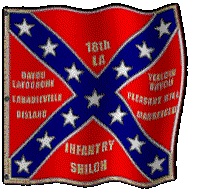
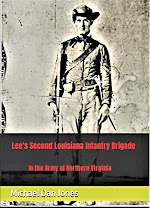
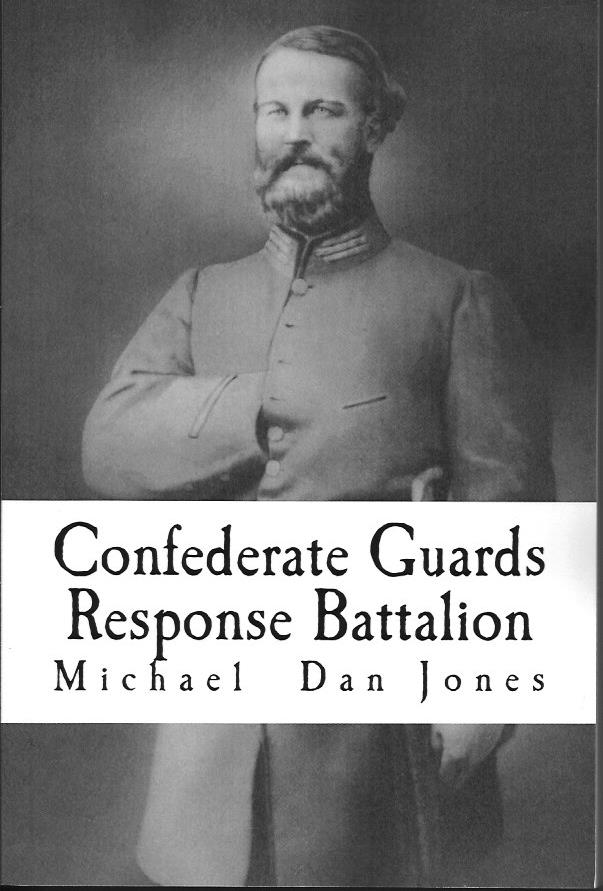
This is the history of one of the hardest-fighting Louisiana units in the War for Southern Independence, the Confederate Guards Response Battalion. It covers the unit's organization in New Orleans, the Battle of Shiloh and their campaigns in Louisiana, including the Bayou Lafourche Campaign in 1862, the Bayou Terche Campaign in 1863, the Texcas Overland Campaign in 1863, and the Red River Campaign in 1864. The book includes photographs, maps, illustrations, a bibliography, and an index.

1864: Lt. Gen. Jubal Early's Army of the Valley comes close to an overwhelming victory at the Battle of Cedar Creek, Va., but the morning victory turned into an overwhelming defeat in the afternoon. The battle pitted about 14,000 Confederates against 31,600 Federals under Maj. Gen. Philip Sheridan. Gen. Early's morning attack catches the unprepared blue coats with coordinated frontal and flanking maneuvers. The Yankees are scattered and routed, but Early, thinking the enemy is defeated and the battle won, fails to follow up that afternoon. But the absent Sheridan comes back and gathers his men and stages a devastating counterattack that renders the battle a victory for the North. Confederate casualties were 320 killed, 1,540 wounded, and 1,050 captured or missing. The Federals lost 644 killed, 3,430 wounded, and 1,491 captured or missing. The dead include one Confederate general, Stephen Dodson Ramseur, and two Federal generals, Daniel Davidson Bidwell and Charles Russell Lowell.

Maj. Gen. Stephen D. Ramseur
Mortally wounded at the Battle of Cedar Creek

Confederate General Birthdays. Oct. 19.

None.

Today in History (general history)/ On This Day in Confederate History/ Confederate General Birthdays, October 20.

Click πŸ‘‰Today in History (general history) Oct. 20. 

On This Day in Confederate History, Oct. 20.

1862: Confederate Cavalry under Col. John Hunt Morgan captured a federal supply train near Bardstown, Ky., and burned all 150 wagons. Morgan's Men were being pursued by Maj. Gen. Gordon Granger's Federal cavalry. Morgan's Brigade, on its first Kentucky Raid in 1862, consisted of the 2nd Kentucky Cavalry, Georgia Partisan Rangers, Tennesseans, and Texans.

A typical Confederate cavalryman wearing a shell jacket with cavalry
"C" buttons and holding a folded-up newspaper. One can only imagine
what the newspaper signifies. Perhaps he was sending a coded message? His
other hand also looks like some sort of coded message.
(CDV, M.D. Jones Collection, colorized by AI)

1863: Col. George G. Dibrell's Confederate Cavalry captured a large federal supply train for Maj. Gen. Ambrose Burnside's command destroyed it and inflicted 479 casualties on the bluecoats near Philadelphia, Tennessee.

1864: Lt. Gen. Jubal Early's Confederate Army of the Valley, badly beaten by the Federals the previous day at the Battle of Cedar Creek, has a skirmish with Maj. Gen. Philip Sheridan's pursuing forces at Fisher's Hill and then continues its retreat.

Lt. Gen. Jubal Early
Oil on Canvas painting by John W. Lowes
(Virginia Historical Society)

Confederate General Birthdays, Oct. 20.

Maj. Gen. Benjamin Franklin Cheatham was born in Nashville, Tennessee, on this day in 1820. He served as a captain in the 1st Tennessee Infantry and as colonel of the 3rd Tennessee during the Mexican-American War. He also served as a brigadier general in the Tennessee Militia. Cheatham was commissioned a brigadier general in the Confederate Army on May 9, 1861, and was promoted to major general on March 10, 1862. His battles and campaigns included Belmont, Shiloh, Perryville, Murfreesboro, Chickamauga, Chattanooga, Atlanta, Franklin-Nashville, and the Carolinas. After the war, he was the superintendent of the Tennessee State Prisons and postmaster of Nashville, and died Sept. 4, 1886, in Nashville and was buried there in Mount Olivet Cemetery.


                                             Maj. Gen. Benjamin F. Cheatham

πŸ‘±

Maj. Gen. Mansfield Lovell was born on this day in 1822 in Washington, D.C. He graduated from West Point in 1842, served in the Mexican-American War, and was severely wounded in the Battle of Chapultepec. In 1854, he resigned from the army to serve in a filibuster campaign to Cuba. Lovell then served as the deputy street commissioner in New York City. He was appointed a major general in the Confederate Army on Oct. 7, 1861, and commanded in New Orleans, Louisiana. He also fought in the Second Battle of Corinth, Miss. Following the war he farmed near Savannah, Georgia, worked as a civil engineer in New York City, died there on June 1, 1884, and was buried in Woodlawn Cemetery in the Bronx, New York.

Maj. Gen. Mansfield Lovell
πŸ‘±

Brigadier General. Francis Marion Cockrell was born on this day in 1824 in Walton County, Georgia. A prewar lawyer, he practiced in Warrensburg, Missouri. In 1861, Cockrell joined the Missouri State Guard and was commissioned in the Confederate Army in the 2nd Missouri Regiment and rose to the rank of colonel. He was promoted to brigadier general on July 18, 1863. His battles included Champion's Hill, Big Black River Bridge, the Siege of Vicksburg (wounded), the Atlanta Campaign, wounded in the Battle of Franklin, and defending Fort Blakely, Alabama. Following the war, Cockrell was elected to the U.S. Senate, serving from 1875 to 1905, and served on the Interstate Commerce Commission and on the Board of Ordnance and Fortifications for the War Department in Washington, D.C. He died on Dec. 13, 1915, in Washington, D.C.

Brig. Gen. Francis M. Cockrell
πŸ‘‹

Today in History (general history)/ On This Day in Confederate History/ Confederate General Birthdays, October 21.

Click πŸ‘‰Today in History (general history), Oct. 21. 

On This Day in Confederate History, Oct. 21.

1861: The Battle of Ball's Bluff, Va. is another early war victory in this promising year of victories for the Confederates, including the First Battle of Manassas, Va., July 21, 1861; the Battle of Oak Hills (Wilson's Creek) Aug. 10, 1861; and the Battle of Ball/s Bluff, Va. Oct. 21, 1861. Brig. Gen. Charles Stone and Brig. Gen. Edward D. Baker (U.S. Sen. & Friend of Lincoln) was in command of about 1,720 Federals. Brig. Gen. Nathan G. Evans commanded 1,709 Confederates. The battle developed a reconnaissance and an intended raid on Leesburg, Va. They eventually ran into Gen. Evans' Confederates at 3 o'clock that afternoon which developed into a serious battle. The Southerners drove the Northerners to the rear of the bluff, with Baker being killed at about 4:30. The 17th Mississippi Infantry under Col. Winfield Scott Featherston arrived on the scene late in the battle and staged an assault that broke the Federal line and routed the blue coats. Many Northerners drowned while crossing the Potomac River. The Federals lost 223 killed, 226 wounded, and 553 captured. The Confederates lost 36 men killed, 117 wounded, and two captured. Baker is the only sitting U.S. Senator to ever be killed in battle. 

Col. Winfield Scott Featherston
of the 17th Miss. Inf. was promoted
to brigadier general for his gallantry
 at Ball's Bluff, Va.
(Restored & colorized with AI)

1863: The Battle of Opelousas, La. took place on this day at a railroad crossing three miles south of that important strategic town in St. Landry Parish, La. in the Great Texas Overland Expedition. Confederates have about nine regiments of cavalry, two battalions of infantry, and several artillery pieces under Brig. Gen. Tom Green. Maj. Gen. William B. Franklin, commanding the Army of the Gulf, had an overwhelming force. The powerful Federal artillery opened on the Southerners, and the arrival of infantry drove the Confederates back and the blue coats occupied Opelousas, one of the temporary capitals of the state. Franklin held this area while awaiting further orders. Here's an excerpt from Gen. Richard Taylor's report (Officia Records: Vol. 26, Pt. 1, P. 389):  "October 22,1863. General: I have the honor to report that, on yesterday morning, the advance of the enemy along his whole line compelled me to withdraw from Opelousas. The enemy’s advance of some 5,000 up the Teche road turned our position at Opelousas. This I was prepared to expect. After some skirmishing in front of Opelousas, in which we lost 2 killed, General Green withdrew to Washington, inflicting some loss on the enemy."


1st Lt. William B. Champlin, Co.D & F, 2nd La. Cav. 
He was captured on Nov. 30, 1863, near the Salt
Works near New Iberia, La., and exchanged Dec. 31, 1863.

1864: Franklin-Nashville Campaign: Gen. John Bell Hood's Army of Tennessee on this day raided the Nashville and Northwestern Railroad in Tennessee, which supplied Maj. Gen. William T. Sherman's Federal army from the major supply depot at Johnsonville, Tenn.

Confederate General History, Oct. 21.

None.

Sunday, October 18, 2026

Today in History (general history)/ On This Day in Confederate History/ Confederate General Birthdays, October 18.

 Click πŸ‘‰ Today in History (general history) Oct. 18.

On This Day in Confederate History, Oct. 18.

1861: Maj. Gen. David Twiggs, in poor health and over 70 years of age, resigned on Oct. 11, 1861, from his command of the Department of the South. No. 1 in Louisiana, and was succeeded by Maj. Gen. Mansfield Lovell on this day in 1861. Department No. 1 headquarters was in New Orleans, which was already under threat by Federal blockade runners and a build-up of Federal forces on Ship Island in the Gulf of Mexico.

1862: Brig. Gen John Hunt Morgan's Confederate cavalry brigade captured Lexington, Ky., after a short firefight during which Morgan's brother, Wash Morgan, was killed by friendly fire. The Confederates proceeded to destroy Federal military supplies in Lexington. The Southron forces then left the city.

1863: Confederate cavalry under Brig. Gen. Tom Green continued to harass Federals under Maj. Gen. William B. Franklin's Army of the Gulf at Carrion Crow (Carencro) Bayou in Louisiana during the Texas Overland Expedition. The Federal Army was trying to invade Texas by going across Southwest Louisiana after the defeat of the Second Battle of Sabine Pass on Sept.8, 1863. 

Brig. Gen. Thomas Green
One of the most aggressive cavalry commanders
of the war. (Restoration & colorization AI)

Pvt. James Dallas Collier, Co. D,
11th Battalion  (Spaight's) Texas Volunteers
(Musician) (Find A Grave)  (Restoration & colorization by AI)

Col. Ashley W. Spaight 
A history of the 11th Battalion (Spaight's) Texas Volunteers in the War for Southern Independence. The unit fought on the Texas Gulf Coast and in Louisiana to fend off Northern invaders of their homeland. They fought in the First Battle of Sabine Pass, Texas, a sea battle of Galveston, Texas, the Battle of Stirling's Plantation, Bayou Bourbeau, and the Battle of Calcasieu Pass, all in Louisiana. The book also contains a roster of men who served in the battalion, pictures, maps, a bibliography, and an index.

1864: Gen. John Bell Hood's Army of Tennessee skirmished with Maj. Gen. William T. Sherman's Federals near Huntsville, Alabama, and then headed for Gadsen, Alabama. Hood then switched from attacking Sherman's supply lines to begin his Tennessee Campaign.

Confederate General Birthdays, Oct. 18.

Brigadier General Samuel Benton was born on this day in 1820 in Williamson County, Tennessee.  He was mortally wounded in the chest in the Battle of Atlanta, Ga. and died six days later, two days before his promotion to brigadier general reached him.

 Brig. Gen. Samuel Benton
πŸ‘±

Brigadier General John Breckinridge Grayson was born on this day in 1806 in Fayette County, Kentucky. He died of pneumonia and tuberculosis on Oct. 21, 1861, in Tallahassee, Florida.

Brig. Gen. John B. Grayson
πŸ‘±

Brigadier General Lucius Marshall Walker was born on this day in 1829 in Columbia, Tennessee. He died of wounds Sept. 7, 1863, received in a duel with Confederate Brig. Gen. John S. Marmaduke.

Brig. Gen. Lucius M. Walker
πŸ‘±

Brigadier General Charles Sidney Winder was born on this day in 1829 in Talbot County, Maryland. He was mortally wounded on Aug. 9, 1862, in the Battle of Cedar Run, Va., and died later that evening.

Brig. Gen. Charles S. Winder
πŸ‘‹

Saturday, October 17, 2026

Today in History (general history)/ On This Day in Confederate History/ Confederate General Birthdays, October 17.

 Click πŸ‘‰ Today in History (general history) Oct. 17.

On This Day in Confederate History, Oct. 17.

1862: Brig. Gen. George Burgwyn Anderson, mortally wounded on Sept. 17, 1862, at the Battle of Sharpsburg, MD, died on this day in Raleigh, N.C., of complications from his wound. He had hoped to avoid amputation, but on Oct. 17, his foot was amputated, and he died following surgery. Anderson was buried in Historic Oakwood Cemetery in Raleigh, N.C. He left behind a wife and child. The general was 31 years old.

1863: In Gen. Lee's Bristoe Campaign in Virginia, the Confederates and Federals skirmished at Groveton, Manassas Junction, Frying Pan Church, and other places, following which the Army of Northern Virginia moved back into its defenses at the Rappahannock River. The campaign concludes indecisively. But before the year ends, there will be one more campaign, the Mine Run Campaign. 

Gen. Robert E. Lee in 1863
(Library of Congress)

1864: After recovering from his serious wound from the Battle of the Wilderness, Lt. Gen. James Longstreet resumed command of the First Corps of the Army of Northern Virginia, which was engaged in the fateful Petersburg Campaign. Although his right arm was paralyzed and in a sling, he spent the rest of the Siege of Petersburg in command of forces in front of Richmond, the James River, and Bermuda Hundred. Longstreet taught himself to write with his left hand and eventually regained use of his right hand.

Lt. Gen. James Longstreet

Confederate General Birthdays, Oct. 17.

None.

Friday, October 16, 2026

Today in History (general history)/ On This Day in Confederate History/ Confederate General Birthdays, October 16.

Click πŸ‘‰Today in History (general history) Oct. 16.

On This Day in Confederate History, Oct. 16.

1863: Skirmishing continues on a daily basis in Louisiana's Teche country as super-aggressive Confederate cavalry brigades under Brig. Tom Green relentlessly harasses Federal Maj. Gen. William B. Franklin's divisions of the Army of the Gulf. On this day, the skirmishing takes place at Grand Coteau. Franklin reports none killed and six wounded of his men in the skirmish. Confederate generals Alfred Mouton and Green, and Col. James P. Major were reportedly present, and the Confederates had about the same number of casualties.

Pvt. Benjamin W. Varnell, 
Co. B, 1st. Texas Cavalry Reg't.
Army of Western Louisiana
(Liljenquist Collection, Library of Congress)
(Colorization by AI)

1864: A skirmish happened on this day when Col. Ellison Capers' 24th South Carolina Infantry was ordered to go back to Ship's Gap, Ga., and hold the pass until ordered to retire. Capers positioned two companies under Capt. Roddey in advance about a fourth of a mile and to block the Federals as long as he could. The blue coats then appeared in force and quickly outflanked Roddey and his thin gray line, capturing most of it. However, the Federals soon encountered Capers' main battle line and were driven back by a withering fire from the South Carolinians. But Capers was soon informed he was about to be outflanked so he withdrew slowly to the foot of the ridge and was led to the bivouac of Brig. Gen. States Rights Gist's brigade on the Summerville Road.

Confederate General Birthdays, Oct. 16.

Brigadier General William Preston was born on this day in 1816 in Louisville, Kentucky. A prewar lawyer in Kentucky, he served in the Kentucky House of Representatives and then the U.S. House of Representatives as a Whig. Preston also served President James Buchanan as a diplomat in Spain. In the Mexican-American War, he served as a lieutenant colonel of the 4th Kentucky Volunteers. In 1861, he became an aide-de-camp to his brother-in-law Gen. Albert Sydney Johnston and was appointed a brigadier general in 1862. Johnston died in Preston's arms at the Battle of Shiloh. He led the Orphan Brigade in the Vicksburg Campaign in 1863. He served as a representative of the Confederacy to Emperor Maximilian in Mexico in 1864. Following the war, Preston was again elected to the Kentucky House of Representatives and died Sept. 21, 1887, in Louisville, Ky., and was interred there in Cave Hill Cemetery.

Brig. Gen. William Preston

Today in History (general history)/ On This Day in Confederate History/ Confederate General Birthdays, October 15.

 Click πŸ‘‰Today in History (general history) Oct. 15. 

On This Day in Confederate History, Oct. 15.

1863: Confederate submarine C.S.S. Hunley tragically sank during a training accident in Charleston Harbor, S.C., drowning its inventor, Captain Horace Hunley, and seven other crew members. The other crewmen who died in that sinking were Robert Brockbank, Joseph Patterson, Thomas W. Park, Charles McHugh, Henry Baird, John Marshall, and Charles L. Sprague. There was also a prior sinking in a training exercise in which five crewmen died and three survived.

Also on this day, the second day of the Battle of Buzzard's Prairie, La. takes place. Early in the morning of the 15th of October, Brig. Gen. Tom Green advanced the 4th, 5th, and 7th Texas cavalry regiments to a plantation fence bordering the prairie. He placed Semmes' Battery on the left and the Valverde Battery on the right. Col. William Polk "Gotch" Hardeman of the 4th Texas led a contingent of skirmishers, made up of one company from each regiment, out onto the prairie to lure two Federal divisions into attacking the strong Confederate position. General William Franklin took the bait and ordered out Brig. Gen. Godfrey Weitzel's Division to attack across the open prairie, supported by artillery batteries. Advancing in full battle order with flags flying, the Federals crossed the prairie and easily pushed the Confederate skirmishers back to the fence line.      

Brig. Gen. Thomas Green
(Restored and colorized by AI)

The horse soldiers of the 4th, 5th, and 7th Texas cavalry regiments then made a wild dash and full-throated "Rebel Yell" on the right of Weitzel's line.  The soldiers from New York and Massachusetts became panic-stricken, and the  Yankee right collapsed. Coming to the rescue for the Federals was Lt. William Marland of Nim's Battery, who stopped the rout and drove the Confederates back with grape and canister, as well as exploding an ammunition chest of Semmes' Battery.

Pvt. Simeon J. Crews
Co. F, 7th Tex. Cav.
(Liljenquist Collection, Library of Congress)

       The battle then settled into an exchange of musket and cannon fire that lasted several hours. While the Federals had overwhelming numbers, Franklin didn't order another full-strength attack until about 10 o'clock that morning, led by the Midwesterners of Burbridge's Brigade. The Confederates withdrew behind Bayou Bourbeau while Hardeman had the 7th Texas Cavalry slow down the Yankees from concealed positions, around the Chretien Plantation. The 7th then withdrew across the bayou, and the 4th and 5th Texas began skirmishing with the Midwesterners to slow their advance. Green's men were driven off, but he accomplished his goal of taking the measure of the Federal Army's strength. 


CLICKπŸ‘‰
The Battle of Stirling's Plantation and Bayou Bourbeau:
The Fall 1863 Campaign in Louisiana & Texas

The battles of Stirling's Plantation and Bayou Bourbeau in South Louisiana, and the Rio Grande Expedition in Texas, in the Fall of 1863, were a major Federal attempt to loot thousands of bales of cotton for Northern speculators, and to subjugate western Louisiana and Texas. The campaign left behind a swath of death and destruction that would lead to the even more destructive Red River Campaign of 1864.

Confederate General Birthdays, Oct. 15.

Major General Thomas Lafayette Rosser was born on this day in 1836 in Campbell County, Virginia. He attended West Point but left in 1861 to enlist in the Confederate Army as a first lieutenant and commanded the Second Company, Washington Artillery of New Orleans in the First Battle of Manassas. Rosser rose through the ranks to major general by November 1864. His battles included First Manassas, the Seven Days Battles, Mechanicsville, Second Manassas, South Mountain, Sharpsburg, Kelly's Ford, Hanover, Gettysburg, the Wilderness, Trevillian Station, Cedar Creek, Tom's Brook, Petersburg, and Appomattox. After the war, he worked for an express company and a railroad, worked to have Confederate monuments constructed, bought a plantation, and was a brigadier general of U.S. volunteers in the Spanish-American War. Rosser died March 29, 1910, in Charlottesville, Va., and was buried there in Riverview Cemetery.

Maj. Thomas L. Rosser
πŸ‘±

Brigadier General Henry Harrison Walker was born on October 15, 1832, in Sussex County, Virginia. He graduated from West Point in 1853, ranking 41st in a class of 53 cadets. Walker resigned from the U.S. Army on May 3, 1861, and joined the Confederate Army and serving as the lieutenant colonel of the 40th Virginia Infantry. He was appointed a brigadier general on July 1, 1863. His battles included Gaines' Mill, where he was wounded twice, Bristoe Station, Mine Run, lost a foot at Spotsylvania Court House, Siege of Petersburg, and was paroled May 7, 1865. Following the war, Walker became a stockbroker in New Jersey and died on March 22, 1912, in Morristown and was buried there in Evergreen Cemetery.

Brig. Gen. Henry H. Walker
πŸ‘‹

Today in History (general history)/ On This day in Confederate History/ Confederate General Birthdays, October 14.

Click πŸ‘‰Today in History (general history) Oct. 14. 

On This Day in Confederate History, Oct. 14.

1862: Confederate Lt. Gen. John C. Pemberton is given command of the Department of Mississippi and East Louisiana, which includes the two major Confederate fortifications on the Mississippi River, about 200 miles apart, Vicksburg, Miss., and Port Hudson, La., about 16 miles north of Baton Rouge. He is also in command of Confederate forces in Southwestern Tennessee.

1863: The Battle of Buzzard's Prairie, La., took place on Oct. 14-15 between Federal Brig. Gen. Stephen Burbridge's 4th Division, 13th Corps; Brig. Gen. Godfrey Weitzel's 1st Division, 19th Corps; and Confederate Brig. Gen. Tom Green's Cavalry Division, including the brigades of Col. Arthur P. Bagby, Col. John P. Major, and Capt. Oliver Semmes' 1st Confederate Battery. The Federals were camped at Carencro, aka Buzzard's Prairie by the Cretien Plantation, awaiting further orders and their advance across Southwest Louisiana to invade Texas. General Green's Confederates were making a reconnaissance in force to determine the strength of the invaders and harass them. The Confederates made sudden probing attacks, and Semmes' Battery exchanged fire with Nim's Massachusetts Battery. The Confederates then withdrew about two miles to await more action on the following day.


CLICKπŸ‘‰
The Battle of Stirling's Plantation and Bayou Bourbeau:
The Fall 1863 Campaign in Louisiana & Texas

The battles of Stirling's Plantation and Bayou Bourbeau in South Louisiana, and the Rio Grande Expedition in Texas, in the Fall of 1863, were a major Federal attempt to loot thousands of bales of cotton for Northern speculators, and to subjugate western Louisiana and Texas. The campaign left behind a swath of death and destruction that would lead to the even more destructive Red River Campaign of 1864.

1864: The Battle of Bristoe Station, Va. occurred on this day in the Bristoe Campaign. Confederate Lt. Gen. A.P. Hill's Third Corps, about 17,218 men, fought the Federal II Corps of Maj. Gen. G.K. Warren, about 8,383 men, which was the rear guard of Maj. Gen. George Meade's Army of the Potomac. Warren had a strong defensive position behind the embankment of the Orange & Alexandria Railroad. Warren ambushed two brigades of Brig. Gen. Henry Heth's Division and succeeded in capturing a battery of artillery. Hill sent reinforcements but they were unable to break the strong Federal line. Confederate Brig. Gen. Carnot Posey was mortally wounded in the battle and died on Nov. 13, 1863. The Confederates suffered an estimated 1,380 casualties to 540 for the Federals.

Confederate General Birthdays, Oct. 14.

Brigadier-General Ellison Capers was born on this day in 1837 in Charleston, South Carolina. An 1857 graduate of the South Carolina Military Academy, Capers was a math professor at SCMA and at Zion College in the prewar years. He joined the Confederate Army in 1861 as a major and was present for the bombardment of Fort Sumter and at the Battle of Secessionville. Capers served in the coastal defense forces in South Carolina then as the lieutenant colonel in the 24th South Carolina Infantry in the Battle of Chickamauga in the Army of Tennessee. He was severely wounded in the Battle of Franklin and promoted to brigadier general on March 1, 1865. Following the war, Capers was elected Secretary of State of South Carolina, became an Episcopal priest, taught at the University of the South, and became an Episcopal bishop. He died on Oct. 14, 1908, and was buried in the Trinity Episcopal Churchyard.

Brig. Gen. Ellison Capers

Tuesday, October 13, 2026

Today in History (general history)/ On This Day in Confederate History/ Confederate General Birthdays, October 13.

 Click πŸ‘‰Today in History (general history) Oct. 13.

On This Day in Confederate History, Oct. 13.

1862: Confederate Col. Joseph "Fighting Joe" Wheeler was put in command of all the cavalry of the Army of Tennessee. He was promoted to brigadier general on Oct. 30, 1862, and to major general on Jan. 20, 1863.

1863: The First Battle of Auburn, Va. was fought on this day in the Bristoe Campaign between 2,000 Federal infantry under Maj. Gen. William French and 3,000 Confederate cavalrymen under Maj. Gen. J.E.B. Stuart. The Confederates were planning to attack a federal wagon train, but the Federals and Confederates stumbled into each other and had a brief firefight that lasted about 30 minutes. There were about 50 casualties on both sides.

1864: Col. John Singleton Mosby's 43rd Virginia Cavalry (Partisan Rangers), captured and burned a train on the Baltimore and Ohio Railroad near Kearneysville, Va., and also captured a Federal Army paymaster with $170,000.

Col. John S. Mosby
(From a sketch/colorized by AI)


Mosby's Rangers

  • Top row (left to right): Lee Herverson, Ben Palmer, John Puryear, Tom Booker, Norman Randolph, Frank Raham.
  • Second row: Robert Blanks Parrott, John Troop, John W. Munson, John S. Mosby, Newell, Neely, Quarles.
  • Third row: Walter Gosden, Harry T. Sinnott, Butler, Gentry.

Confederate General Birthdays, Oct. 13.

None.

Monday, October 12, 2026

Today in History (general history)/ On This Day in Confederate History/ Confederate General Birthdays, October 12.

Click πŸ‘‰Today in History (general history) Oct. 12.

On This Day in Confederate History, Oct. 12.

1861: The Trent Affair: Confederate diplomats John Murray Mason of Virginia and John Slidell of Louisiana, to Europe to promote recognition of the Confederacy, successfully ran the blockade from Charleston, South Carolina, in the steamer Gordon, renamed the Theodora, bound for Cuba en route to Europe.

1862: Stuart's Maryland/Pennsylvania Raid: Maj. Gen. J.E.B. Stuart and his Confederate cavalry, en route to Virginia after his successful raid into Pennsylvania, evaded the Federal cavalry under Brig. Gen. George Stoneman guarding the crossing of the Potomac River at Poolesville, Md., and crossed at White's Ford into Loudoun County, Virginia. The Confederates then rode safely into Leesburg, Va., with their captured horses, supplies, and civilian hostages to be exchanged for Confederate civilians being held by the Federals. Stuart didn't lose a man or a horse in the raid.

1863: The Skirmish at Buckhorn Tavern, Alabama occurred on this day when Confederate Brig. Gen. Phillip D. Roddey's Alabama Cavalry Brigade intercepted Federal Brig. Gen. Robert Mitchell's Cavalry Brigade in the darkness south of the town of New Market. The Confederates and Federals were close enough to see each other when their carbines flashed upon firing. However, neither side wanted to charge in the dark.

1864: Franklin, Tenn. Campaign: Units of Confederate Gen. John Bell Hood's Army of Tennessee and Maj. Gen. William T. Sherman's Federal armies skirmished on this day near Kingston, LaFayette, Resaca, and Rome, Ga. Gen. Hood was maneuvering for the opportunity to attack an isolated portion of Sherman's massively larger armies, which included the armies of Tennessee, Cumberland, and Ohio.

Confederate General Birthdays, Oct. 12.

Lieutenant General William Joseph Hardee was born on this day in Camden County, Georgia. Gen. Hardee graduated from West Point in 1838, 26th in a class of 45 cadets. In the Mexican-American War, he won two brevet promotions. He also wrote the infantry manual in 1855, which was used by both sides in the War for Southern Independence. During the war, he led a corps that led the attack at Shiloh on April 6, 1862, and was wounded in that battle. He led his corps in battles at  Perryville, Ky., Murfreesboro, Tenn., Third Chattanooga, Tenn., Peachtree Creek, Atlanta in Ga., and Averasborough and Bentonville in N.C. His 16-year-old son Willie was tragically mortally wounded at Bentonville. After the war, Hardee and his family settled in Selma, Alabama, where he was president of the Selma and Meridian Railroad. He died on Nov. 6, 1863, in Selma and is buried there at Live Oak Cemetery.

Lt. Gen. William J. Hardee
(Colorized by AI)

Hardee-style Confederate battle flag.

Sunday, October 11, 2026

Today in History (general history)/ On This Day in Confederate History/ Confederate General Birthdays, October 11.

 Click πŸ‘‰Today in History (general history) Oct. 11

On This Day in Confederate History, Oct. 11.

1862: Maj. Gen. J.E.B. Stuart's Confederate cavalry on his Maryland/Pennsylvania Raid arrived within 8 miles of Gettysburg on this day on the way back to Virginia. They then arrived at Emmitsburg, Md. where they were welcomed by pro-Confederate sympathizers and quickly moved on, taking obscure routes to avoid detection by Federal scouts. That night the raiders cut telegraph lines to obstruct the Baltimore and Ohio Railroad. 

Stuart's Ride Around the Yankee Army

1863: The Battle of Collierville, Tenn., takes place when Brig. Gen. James Chalmers' Confederate cavalry numbering 3,000 men attack a Federal garrison at Collierville numbering 1,280 infantry, Maj. Gen. William T. Sherman. The Confederates surrounded the town and drove all the bluecoats into their fort. Sherman barely escaped capture, but his personal belongings and his horse Dolly, on the train he had just come into town on, were captured. Fearing that large Federal reinforcements were coming, Chalmers withdrew without storming the fort. Confederate casualties were 51 killed and wounded, and the Federals lost 110 killed, wounded, and missing.

Brig. Gen. James Chalmers
(Restored and colorized by AI)

Confederate General Birthdays, Oct. 11.

Brigadier General Elkanah Brackin Greer was born on this day in1825 in Paris, Tennessee. He gained military training and experience in the Mexican-American War as a member of the 1st Mississippi Rifles commanded by Col. Jefferson Davis. Greer saw action at the Battle of Monterrey and the Battle of Buena Vista. He moved to Marshall, Texas in 1848 to practice law. Greer was active in the Texas branch of the Knights of the Golden Circle and supported secession. In 1861, he became a member of the 3rd Texas Infantry Regiment in the Confederate Army. His battles included the Battle of Oak Hill, Mo., the Battle of Elkhorn Tavern, Ark. (slight wound), and the Siege of Corinth, Miss. He was promoted to brigadier general in October 1862. Greer was assigned to be the chief of conscription in the Trans-Mississippi Department and, late in the war, was in command of the Reserve Corps. Following the war, he practiced law and was a planter and merchant. Greer died March 25, 1877, while visiting his sister in DeVall, Arkansas. He was buried in Elmwood Cemetery in Memphis, Tennessee.


Brig. Gen. Elkanah B. Greer

Saturday, October 10, 2026

Today in History (general history)/ On This Day in Confederate History/ Confederate General Birthdays, October 10.

Click πŸ‘‰Today in History (general history) Oct. 10.

On This Day in Confederate History, Oct. 10.

1862: Maj. Gen. J.E.B. Stuart and his Confederate cavalry on their Maryland/Pennsylvania Raid captured Chambersburg, Pa., at about 7 p.m. this day. Stuart ordered his men not to take any personal property or plunder for private gain. Along the way that day, at Mercersburg, Pa., they seized clothing and shoes for the army and paid for it in Confederate money. At Chambersburg, they burned the Chambersburg railroad depot, which was stocked with trains, a machine shop, and warehouses with military supplies, and tore up the track. The Confederate cavalrymen also captured 280 convalescent Federal soldiers and paroled them. They also seized fresh horses, mules, arms, and supplies.

Maj. Gen. J.E. B. Stuart
(Restored & colorized by AI)

1863: In the Bristoe, Va. Campaign in Virginia, Gen. Robert E. Lee's Army of Northern Virginia and Maj. Gen. George Meade's Army of the Potomac maneuvered for advantage, resulting in skirmishes at Russell's Ford, on Robertson's River, Bethsaida Church, and James City, Va.

1864: Maj. Gen. Nathan Bedford Forrest's Confederate raiders in Eastport, Mississippi, fought off an attack by Federals landing off five Federal transport vessels. Several of the transports were disabled before they could land troops.

Confederate General Birthdays, Oct. 10.

Brigadier General Dandridge McRae was born on this day in 1829 in Baldwin, Alabama. After graduating from South Carolina, he moved to Arkansas, where he was admitted to the bar, joined the Arkansas State Militia, and was commissioned a captain. In February 1861, he led a company in seizing the Federal Arsenal at Little Rock, the state capital. In the Confederate Army, he was elected to be the lieutenant colonel and on Nov. 5, 1862, was commissioned a brigadier general. His battles included Wilson's Creek, Mo., Pea Ridge, Ark., Helena, Ark., Mark's Mill, Ark., and Jenkins' Ferry, Ark. After the war, he practiced law and was elected Deputy Secretary of State. He died on April 23, 1899, in Searcy, Ark., and was buried there.

Brig. Gen. Dandridge McRae
(Restored and colorized by AI)
πŸ‘±
Brigadier General Zebulon York was born on this day in 1819 in Avon, Maine. He studied law at the University of Louisiana at New Orleans, Louisiana, and settled in Concordia Parish, LA, where he was a lawyer and planter and became immensely wealthy. He represented his parish at the Louisiana Secession Convention and voted for secession. York raised a company of infantry and eventually commanded the 14th Louisiana Infantry and was then promoted to brigadier general in command of the 2nd Louisiana Infantry Brigade. His battles included the Peninsula Campaign, Second Manassas, Sharpsburg, Fredericksburg, Gettysburg, Bristoe Campaign, Mine Run Campaign, the Wilderness, Spotsylvania Court House, and the Valley Campaigns of 1864. He was severely wounded in the Third Battle of Winchester, Va. in 1864 and his arm had to be amputated. After the war, he regained some of his wealth as the owner of five steamboats. He died in Natchez, Miss., and is buried in Natchez City Cemetery. 

Brig. Gen. Zebulon York
πŸ‘‹

Friday, October 9, 2026

Today in History (general history)/ On This Day in Confederate History/ Confederate General Birthdays, October 9.

Click πŸ‘‰Today in History (general history) Oct. 9.

On This Day in Confederate History, Oct. 9.

1862: Stuart's Raid on Md. & Pa.: Gen. Robert E. Lee ordered Maj. Gen. James Ewell Brown Stuart on an expedition to Maryland and Pennsylvania to gather intelligence on the Army of the Potomac and wreak havoc on Federal property following the Battle of Sharpsburg.  It was his second complete ride around the Federal Army led by Maj. Gen. George B. McClellan.

Private John Poole Sellman of Co. K, 1st Virginia Cavalry
 Regiment and Co. A, 1st Maryland Cavalry 
Regiment in uniform with Maryland state seal buttons.
(Liljenquist Collection, Library of Congress)
(Colorized by AI)

1863: A skirmish at Bristoe Station, Va., marked the beginning of Gen. Robert E. Lee's attempt to outflank Maj. Gen. George Meade's Army of the Potomac. There is hard fighting at James City, Brandy Station, Jeffersonton, and Auburn.

1864: The Battle of Tom's Brook, Va., on this day was between Confederate Maj. Gen. Thomas L. Rosser's 3,500 cavalrymen and Brig. Gen. Alfred Torbert's 6,300 Federal cavalrymen resulted in a clear victory for the Northerners. There are 57 Federal casualties and 350 for the Confederates.

Confederate General Birthdays, Oct. 9.

Brigadier General Samuel McGowan was born on this day in 1819 in Laurens District, South Carolina. Educated at South Carolina College and studying the law, McGowan gained military experience in the Mexican-American War in the Palmetto Regiment. He was commended for gallantry near Mexico and achieved the rank of captain. He was appointed a brigadier general in the South Carolina Militia in 1860 and was present at the firing on Fort Sumter in 1861. In the Confederate Army, he rose from lieutenant colonel of the 14th South Carolina to brigadier general on Jan. 17, 1863, and led a brigade. His battles included Fort Sumter, First Manassas, the Seven Days battles, Second Manassas, Chancellorsville, and Spotsylvania Court House. He suffered four wounds, including one in his last battle at Spotsylvania Court House. After the war, he served in the U.S. Congress and was elected associate justice in the South Carolina Supreme Court. He was married to Susan Caroline Wardlaw McGowan. He died August 9, 1897, in Abbeville, South Carolina, and is buried in Upper Long Cane Cemetery.

Brig. Gen. Samuel McGowan
(Restored & colorized by AI)