Saturday, November 28, 2026

Today in History (general history)/ On This Day in Confederate History/ Confederate General Birthdays, November 28.

 Click 👉 TODAY IN HISTORY (general history) Nov. 28 

ON THIS DAY IN CONFEDERATE HISTORY, Nov. 28

1861: The State of Missouri is admitted to the Confederate States of America as the 13th state. Missouri Gov. Claiborne Fox Jackson was solid with the South. He died in exile on Dec. 6, 1862, in Little Rock, Arkansas.

1862: In the BATTLE OF CANE HILL, ARKANSAS, 2000 Confederates under General John Marmaduke held off 5000 Federals under General James G. Blunt for 15 hours in a rearguard action. The Southrons then made a successful withdrawal to Van Buren, Arkansas, ending the Federal pursuit.

Capt. Dan Turrentine, 
12th Arkansas Infantry

Daniel Addison Turrentine was born March 25, 1832, in Bedford County, Tennessee, to Sarah and James Turrentine
FamilySearch. He was the second eldest of seven children and grew up on his father’s farm. In 1841, the family moved to Blue Bayou, Sevier County, Arkansas, where Daniel worked as a mechanic before the war
FamilySearch. [Copilot AI]

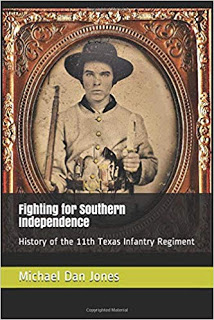
This is the history of one of the finest bodies of Confederate infantry in the War for Southern Independence. General Kirby Smith and Lieutenant General Richard Taylor considered Randal's Texas Brigade to be the best infantry brigade in the Trans-Mississippi West. The brigade was principally made up of the 11th Texas Infantry Regiment, 14th Texas Infantry Regiment, the 28th Texas Cavalry (Dismounted) and the 6th Battalion ( Gould's) Texas Infantry. It fought in such major Trans-Mississippi Department battles, in all or part, as the battles of Bayou Bourbeau, Mansfield, Pleasant Hill, all in Louisiana, and Jenkins' Ferry in Arkansas. The men of Randal's Texas Brigade played a major roll in keeping Texas largely free of the destruction wrought on other Southern states in the war.
1864: Battle of Columbia, Tenn.: Confederate General Stephen D. Lee's Corps of the Army of Tennessee demonstrates before the Federals dug in at the Duck River in Columbia, Tennessee, while General Hood takes the rest of the army outflanking the Yankees' army in an attempt to cut off its retreat at Spring Hill, Tennessee.
Two Tennessee Confederates
(Library of Congress)

CONFEDERATE GENERAL BIRTHDAYS, Nov. 2

Brigadier General Lawrence O'Brien Branch was born in 1828 in Enfield, North Carolina. Before the war, he was elected to the U.S. House of Representatives and served in the 34th, 35th, and 36th Congresses. In 1859, he challenged Rep. Galusha Grow to a duel after an argument on the House floor. However, both men were arrested before the duel could take place. Branch joined the Confederate Army in May 1861 and, in September, was elected colonel of the 33rd North Carolina Infantry. The North Carolinian was appointed brigadier general and led this brigade at the Battle of Hanover Courthouse, the Seven Days Battles, Cedar Mountain, Second Manassas, Chantilly, and Harper's Ferry. At the Battle of Sharpsburg, Md., Sept. 17, 1863, he and his brigade arrived with A.P. Hill's Division in time to stop a Federal breakthrough. After the fighting stopped, while talking with other Confederate generals, he was hit in the head by a bullet from a Federal sharpshooter, which killed him instantly and mortally wounded Brig. Gen. Maxcy Gregg. Branch was buried in Raleigh, North Carolina at Old City Cemetery. 

Brig. Gen. Lawrence O. Branch
Ω

Friday, November 27, 2026

Today in History (general history)/ On This Day in Confederate History/ Confederate General Birthdays, November 27.

 Click 👉 THIS DAY IN HISTORY (general history) Nov. 27

ON THIS DAY IN CONFEDERATE HISTORY.

In 1861, the "TRENT AFFAIR" became more serious as the illegal seizure of the two Confederate commissioners became a cause célèbre in England, as it was characterized as an insult to the British flag.

  • A photograph of an illustration depicts the Trent Affair, an incident 
  • where the U.S. Navy captured two Confederate diplomats from a 
  • British ship. Confederate diplomats James Murray Mason and 
  • John Slidell are shown aboard a vessel. On the left is England's 
  • Foreign Secretary Lord John Russell, standing on land with one 
  • foot on the back of a lion and ripping a piece of paper titled 
  • "Right of Search". On the right stands President Lincoln's 
  • Secretary of State, William S. Seward, with the Confederate President 
  • Jefferson Davis in the background. (Library of Congress)

  • The bronze Confederate Private Monument, depicting an ordinary 
  • soldier, thought to be Sam Davis, who fought for the southern 
  • Confederacy in the U.S. Civil War of the 1860s, stands, or perhaps 
  • stood in Centennial Park in Nashville, the capital city of Tennessee 
  • (Library of Congress)

In 1863, Confederate scout and "Boy Hero" Sam Davis became a martyr to the cause of Southern Independence when he was hanged as a spy at Pulaski, Tennessee by the Yankees because he wouldn't betray his friends. Private Davis wrote on the eve of  his execution, “I have got to die tomorrow morning — to be hung by the Federals.” 

Pvt. Sam Davis, Confederate 
1st Tenn. Inf./Coleman's Scouts
(Wikipedia Commons, restored & colorized by AI)

Federal General Meade's Mine Run offensive is stopped at the Battle of Payne's Farm (also known as the Battle of Mine Run) by Confederate General Edward Johnson's division. The Federal strength was 81,000, and the Confederates fielded 48,000 in the Mine Run Campaign, but far fewer actually fought at Payne's Farm. The battle was fought by Maj. Gen. Edward "Allegheny" Johnson's Division of Ewell's Second Corps, ANV.  It was a meeting engagement where they just bumped into each other rather than a planned battle. Johnson launched an attack, not knowing the whole strength of the enemy, on the part of Maj. Gen. William H. French's III Corps and Maj. Gen. John Sedgwick's VI Corps, the two combined corps numbered about 32,000. The Confederate attack failed, but it did slow down the Federal advance and save the Army of Northern Virginia. Gen. Robert E. Lee now had the time to withdraw and build powerful fortifications that spoiled the Federal campaign of Maj. Gen. George Meade. Federal casualties numbered 1,653, with a total of 629 casualties for the Confederates.

Sgt. Joseph C. LeBleu, Co. K, 10th Louisiana Infantry
He was the regimental color bearer at the Battle of Malvern
Hill, Va. and the flag pole was shot in two but he was unhurt.
LeBleu finished the war as a second lieutenant in the the 7th
Louisiana Cavalry. He returned to his home near Lake Charles, La.,
married and had a large family. In the Spanish-American War,
he served in the Louisiana militia with the rank and raised a
unit kown as the LeBleu's Rangers. He was active in the United
Confederate Veterans and organized the first Sons of Confederate
Veterans Camp in Lake Chales in 1910. LeBleu died on Nov. 6, 1914
and is buried in the Old Catholic Cemetery in Lake Charles.
(Image courtesy of Dan Jones, restoration & colorization by AI)

This is the history of Company K, Confederate States Rangers, 
and the regiment to which it belonged, the 10th Louisiana Infantry. 
It fought in nearly every major engagement of General Robert E. 
Lee's Army of Northern Virginia, including the Yorktown Peninsula 
of 1862, the Seven Days, Cedar Run, Second Manassas, 
Sharpsburg (Antietam), Fredericksburg, Chancellorsville, 
Gettysburg, Mine Run, Payne's Farm, The Wilderness, 
Spotsylvania Court House, the Shenandoah Valley Campaign 
of 1864, Petersburg and Appomattox. The book features 
photographs, illustrations, maps, a bibliography, and an Index.

CONFEDERATE GENERAL BIRTHDAYS.

Brigadier General Hugh Weedon Mercer, in 1808, Fredericksburg, Virginia. He graduated from West Point in 1828. He resigned in 1835 and became a bank cashier in Savannah, Georgia. However, he was active in the Georgia Militia. In 1861, Mercer joined the Confederate Army and was commissioned a colonel of the 1st Georgia Infantry and was promoted to brigadier general in  November. He served as district commander in Savannah until 1864. He led a brigade in the Atlanta Campaign and fought at Dalton, Marietta, and  Kennesaw Mountain, where his son was wounded. Due to physical debility, Mercer was assigned to command of the 10th Battalion, Georgia Infantry in defense of Savannah. He resumed his business career in Savannah, Baltimore, and died in 1877 in Baden Baden, Germany, where he was being treated for health problems. He was buried in Bonaventure Cemetery in Savannah.

Brig. Gen. Hugh W. Mercer

Thursday, November 26, 2026

Today in History (general history)/ On This Day in Confederate History/ Confederate General Birthdays, November 26.

Click 👉Today in General History, Nov. 26. 

On This Day in Confederate History, Nov. 26.

1861: Western Virginia, holding a Pro-Union Secession Convention, voted to secede from Virginia without the rest of the state having a say in it. But while the Lincoln administration denies a right to secession, it ironically accepts this secession, and West Virginia is created.

1862: Lt. Gen. Leonidas Polk takes command of a corps of the Army of Tennessee. The Episcopal Bishop of Louisiana is well thought of by his men and by President Davis. Polk had tried to retire back to his spiritual flock in Louisiana, but President Davis felt he was still needed for the nation's army.

Private William R. Clack of Co. B, 43rd Tennessee 
Infantry Regiment, with saber, pistol, and small book.
He was born in 1839 of one of the pioneer families
of Rhea County, Tennessee, and died in 1919 at age 80.
He and his wife, Sabria, were blessed with six children.
(Liljenquist Collection, Library of Congress, colorized)

1863: Maj. Gen. Patrick Cleburne's Division of the Army of Tennessee continued to perform the critical role of rear-guard for the retreating Southern army following the disastrous defeat at the Battle of Missionary Ridge, Tenn. Cleburne's men clash with pursuing Federals at Chickamauga Station and Pea Valley in the state of Tennessee. The Army of Tennessee would have the chance to reorganize under new leadership, Gen. Joseph E. Johnston. Johnston, an excellent organizer and administrator, was able to restore the morale and effectiveness of the army.

Flag of the 7th Arkansas Infantry Regiment
Cleburne's Division, Army of Tennessee
(The Returned Battle Flags)

1864: The 4th Tennessee Cavalry clashed with seven regiments of Sherman's Federal Army at Sandersville, Ga. Nov. 25-26 as the destructive scorched-earth policy of the Lincoln administration continues to be carried out in Georgia. The courthouse and jail there are burned as well as the railroad depot of neighboring Tennille, Ga.

Confederate General Birthdays, Nov. 26.

Major General William Henry Talbot Walker was born on this day in 1816 in Augusta, Georgia. He graduated from West Point in 1832, served in the Seminole War (severely wounded) and the Mexican-American War (wounded), and resigned from the U.S. Army on Dec. 20, 1860. He transferred to the Confederate Army as a colonel, then had promotions to brigadier general and major general. His battles included Chickamauga. Walker was appointed a colonel in the Georgia Militia and then a major general.  His battles included Kennesaw Mountain and Atlanta. General Walker was wounded several times and then was killed in action on July 22, 1864, when shot off his horse during the Battle of Atlanta, Ga. He was buried in Walker Cemetery at the University of Augusta, Ga

Maj. Gen. William H.T. Walker
👱

Brigadier General Alfred Moore Scales was born on this day in Reidsville, North Carolina. Prewar,  he was a teacher and lawyer and was elected to the North Carolina Legislature and then the U.S. Congress. During the war, Scales rose from private to brigadier general. His battles included the Peninsula Campaign, Fredericksburg, Chancellorsville, Gettysburg, Overland Campaign, and the Siege of Petersburg. Following the war, Scales resumed the practice of law, was elected governor of North Carolina, served as a bank president, and died on Feb. 9, 1892, in Greensboro, N.C., and was buried there at Green Hill Cemetery.

Brig. Gen. Alfred M. Scales
👋

Wednesday, November 25, 2026

Today in History (general history)/ On This Day in Confederate History/ Confederate General Birthdays, November 25.

Click 👉 TODAY IN HISTORY (general history) Nov. 25

ON THIS DAY IN CONFEDERATE HISTORY, Nov. 25.

1861: The first Confederate ironclad, CSS Virginia, was created by the Confederate Naval Department in Norfolk, Virginia, out of the hull of the seized USS Merrimac. Confederate Captain Raphael Semmes of the CSS Sumter seizes a Yankee ship.

1863: The BATTLE OF MISSIONARY RIDGE, Tennessee, was fought on this day and the Confederate line was broken by a strong Federal assault. Maj. Gen. Patrick Cleburne's Division held long enough for most of the Confederate Army of Tennessee to successfully retreat. Gen. Braxton Bragg had greatly weakened his defense line by sending Lt. Gen. James Longstreet's two divisions and Brig. Gen. Bushrod Johnson's Division to liberate Knoxville, Tenn. Johnson's Division would subsequently become part of the Army of Northern Virginia for the last year of the war. Federal losses were 753 killed, 4,722 wounded, and 349 captured or missing for a total of 5,824. Confederate losses were 361 killed, 2,160 wounded, and 4,146 men captured or missing for a total of 6,667. They also lost 40 artillery pieces.

Maj. Gen. Patrick Cleburne

The photograph shows one identified prisoner on the far left, Sgt. Joseph Kennedy Marshall, with one prisoner directly in front of him, possibly identified as Private Claudius Buchanan, and six unidentified prisoners, all of the 20th Tennessee Infantry Regiment, who were captured at Missionary Ridge, Tennessee. [NPS]

1864: Sherman's March to the Sea: Confederate cavalry under General "Fighting Joe" Wheeler battles Sherman's bummers near Sandersville, Georgia, during Sherman's March to the Sea, bringing destruction to Southern civilians.

CONFEDERATE GENERAL BIRTHDAYS, Nov. 25.

None.

Tuesday, November 24, 2026

Today in History (general history)/ On This Day in Confederate History/ Confederate General Birthdays, November 24.

Click 👉TODAY IN HISTORY (general history) Nov. 24. 

ON THIS DAY IN CONFEDERATE HISTORY, Nov. 24

1863: Sparsely defended by Confederates, LOOKOUT MOUNTAIN is overrun by thousands of Yankees. The Federals overran the mountain with 12,000 troops against 8,726 Confederates. Maj. Gen. Joseph Hooker commanded the blue coats and Maj. Gen. Carter L. Stevens commanded the Confederates. Federal casualties were 89 killed, 471 wounded, and 11 captured or missing for a total of 671. Confederate casualties were about 200.

On this day in the partial SIEGE OF KNOXVILLE, TENN., Confederates repulse a charge by the 2nd Michigan Infantry, with artillery support from Fort Sanders, on their rifle pits near the railroad bed some 600 yards north of the fort. Casualties of the Michigan regiment are said to be about 50 percent. Over at Clinton Road, the Confederates withdrew to their line of the day before, after a strong attack by the 48th Pennsylvania Infantry and the 21st Michigan Infantry.

1864: Franklin-Nashville, TN Campaign: General Forrest's Confederate cavalry is driven out of Columbia, Tennessee, by retreating Federals under Schofield. The Yankees dig in along the Duck River. 

CONFEDERATE GENERAL BIRTHDAYS, Nov. 24.

Brig. Gen. James Heyward Trapier, in 1815, Georgetown, South Carolina. An 1834 graduate of West Point, graduating third in a class of 45 cadets, Trapier served in the U.S. Army and was a veteran of the Mexican-American War, after which he resigned and returned to his plantation in South Carolina. But Trapier continued his military pursuits in the South Carolina Militia, and his efforts helped the state prepare for war in 1861 by keeping the state militia well-armed. Trapier rose quickly to the rank of brigadier general by October 1861 and commanded a brigade in the Western Theater, was active in the long siege of Charleston, S.C., under Gen. P.G.T. Beauregard. He died after the war in Georgetown, S.C., on Dec. 21, 1865. He was buried at Prince George Winyah Cemetery, Georgetown, S.C. He was an outstanding district commander.

Brig. Gen. James H. Trapier

Monday, November 23, 2026

Today in History (general history)/ On This Day in Confederate History/ Confederate General Birthdays, November 23.

Click 👉 TODAY IN HISTORY (general history) Nov. 23.

ON THIS DAY IN CONFEDERATE HISTORY, Nov. 23.

1863: The BATTLE OF ORCHARD KNOB, Tenn., was the first Federal attack on Missionary Ridge in the Chattanooga campaign. Only 634 Confederates defended the position in rifle pits against 14,000 Federals under Maj. Gen. George H. Thomas. The 28th Alabama Infantry, defending the hill, lost 172 men killed, wounded, and missing or captured when attacked by a Yankee division. The Federal casualties were about 1,100 in taking the hill. The position became an important Federal observation post.


Capt. John Henry Turpin, Co. B, 28th Ala. Inf.
He was shot in the left shoulder, resulting in an amputation,
at the Battle of  Murfreesboro, TN, Dec. 31, 1862,
3 days after his 25th birthday.
(Find A Grave/ Colorized by AI)

In the partial SIEGE OF KNOXVILLE, TENN., on this day in 1863, Confederates under Lt. Gen. James Longstreet sealed off the approaches to the city, but he couldn't make a complete siege because he did not have enough manpower. Confederates pushed back Federal skirmishers in front of the U.S. 9th Army Corps, whose soldiers burned many homes, machine shops, and a railroad depot roundhouse while retreating back into their lines.

This is the story of one of the most heroic and hardest-fighting regiments in the Confederate Army, the 13th Louisiana Infantry. The men of this regiment were largely from the New Orleans area and fought in such famous battles as Shiloh, Perryville, Murfreesboro, Chickamauga, Atlanta (Campaign), Franklin, Nashville, and Mobile in the main Confederate Army of the Western Theater of operations. They served under such great Confederate generals as P.G.T. Beauregard, Braxton Bragg, Joseph Johnston, and John Bell Hood.

CONFEDERATE GENERAL BIRTHDAYS, Nov 23.

None.

Sunday, November 22, 2026

Today in History (general history)/ On This Day in Confederate History/ Confederate General Birthdays, November 2016.

Click👉 TODAY IN HISTORY (general history) Nov. 22

ON THIS DAY IN CONFEDERATE HISTORY, Nov. 22

1861: Pensacola Campaign: An artillery duel erupted between Federal batteries in Fort Pickens and Confederate guns in Fort McCrae in Florida. The Yankee batteries were backed up by the USS Richmond and the USS Niagara, but the duel ended in a stalemate.

Pvt. Walter Miles Parker
1st Florida Cavalry
He enlisted in 1861 and died of illness in Chattanooga, Tenn.
(Library of Congress)
 (colorized by AI)

1862: Battle of Fredericksburg, Prelude: Town officials in Fredericksburg, Virginia, agree to "no hostile demonstrations" in exchange for the Federals not bombarding the city. 

1863: Missionary Ridge Prelude: At Missionary Ridge near Chattanooga, Tennessee, Federals make a demonstration before Confederate lines before the planned main assault on Nov. 24.

1864: Battle of Griswoldville, Ga., was between the Maj. Gen. "Fighting Joe" Wheeler's Confederate cavalry and 1st Division Georgia Militia under Brig. Gen. Pleasant J. Philips versus Sherman's Federals on the rampage against Georgia civilians in their March Through Georgia. On the previous day, Federal cavalry under Brig. Gen. Judson Kilpatrick struck the town and burned 13 carloads of military supplies, the railroad station, and other buildings. In the battle, the Federals had 3,000 men in the battle and the Confederates 2,300. Wheeler's cavalry opened the battle by attacking the 9th Pennsylvania Cavalry, but the Pennsylvanians and the 5th Kentucky Cavalry (U.S.) counterattacked and drove the Confederates back into their earthworks. Federal infantry then advanced and drove the Georgia Militia back through the town. The three brigades of Georgia Militia then counterattacked with seven charges but were repulsed by the Federals with heavy losses. Federal Brig. Gen. Charles C. Walcutt was wounded. The Confederate forces withdrew after dark. The Confederates and Georgians lost 51 killed and 472 wounded. The Federal casualties were 13 killed, 79 wounded, and two captured. The battle was the only major engagement of the March Through Georgia. The town was never rebuilt.

CONFEDERATE GENERAL BIRTHDAYS, Nov. 22.

Major General Samuel Gibbs French was born on this day in 1818, in Gloucester County, New Jersey. He graduated from West Point in 1843 and was wounded at the Battle of Buena Vista in the Mexican-American War in 1847. He resigned from the army in 1856 and became a plantation owner in Mississippi. During the War for Southern Independence, French attained the rank of major general, and his battles included Suffolk, Kennesaw Mountain, Nashville, Atlanta, Franklin, and 35 engagements in all. Following the war, French worked his plantation, served as a Mississippi levee commissioner, worked for a railroad company in New Jersey, and invested in an Orange Grove in Florida. He wrote his memoirs in "Two Wars," which was published in 1901. French died on April 20, 1910, and was buried in St. John's Cemetery in Pensacola, Fla.

Maj. Gen. Samuel G. French
👱

Major General Benjamin Huger was born on this day in 1805 in Charleston, South Carolina. He graduated from West Point in 1825, was a veteran in the Mexican-American War, and commanded several arsenals after that war. Huger resigned in 1861 as a major. In the Confederate Army, he attained the rank of major general, commanded at Norfolk, V, led troops in the Peninsula Campaign, the Battle of Seven Pines, in the Seven Days Campaign, and then in various administrative positions in the Trans-Mississippi Department. Following the war, Huger farmed in North Carolina and Virginia, then retired to Charleston, S.C. He died on Dec. 7, 1877, in Charleston and was buried in Green Mount Cemetery in Baltimore, Md.

Major General Benjamin Huger
👱

Brigadier General Frank Crawford Armstrong was born on this day in 1835 in Choctaw Agency, Indian Territory. His father had been an army officer there. He gained the rank of lieutenant in the 2nd U.S. Dragoons for gallantry in the Battle of Eagle Springs in 1855 and following his graduation from college. He also served in the Utah War. He fought in the U.S. Army as a captain of cavalry in the First Battle of Manassas, Va., but resigned from the Union Army on Aug. 10, 1861, and joined the Confederate Army as a staff officer and took part in the Battle of Elk Horn Tavern, Ark. Armstrong was elected colonel of the 3rd Louisiana Cavalry in 1863 and commanded the cavalry in Maj. Gen. Sterling Price's Army and was promoted to brigadier general a short time later. He also commanded a cavalry division under Maj. Gen. Nathan Bedford Forrest in the Battle of Chickamauga, Ga. In 1864, Armstrong led his cavalry in the Atlanta Campaign, the Battle of Nashville, Tenn., and the Battle of Selma, Ala., and was captured April 2, 1865. During the Franklin-Nashville Campaign, Armstrong saved Elms Springs, Columbia, Tenn., from being burned by the Yankees. Elm Springs is now the National Headquarters of the Sons of Confederate Veterans and the location of the National Confederate Museum. Following the war, Armstrong was employed by the Overland Mail Service, served as a U.S. Indian Inspector, and as Asst. Commissioner of Indian Affairs. He died on Sept. 8, 1909, in Bar Harbor, Maine. He was buried in Rock Creek Cemetery in Washington, D.C.

Brig. Gen. Frank C. Armstrong
👋
Saturday, November 21, 2026

Today in History (general history)/ On This Day in Confederate History/ Confederate General Birthdays, November 21.

Click 👉 TODAY IN HISTORY (general history) Nov. 21

ON THIS DAY IN CONFEDERATE HISTORY, Nov. 21

1861: Confederate Cabinet: President Davis reorganises his cabinet, appointing Judah Benjamin secretary of war, Thomas Bragg, attorney general. The president also appointed General Lloyd Tilghman commander of Forts Henry and Donelson on the Tennessee and Cumberland Rivers. 

1862: Fredericksburg Campaign: It becomes obvious to General Lee that Burnside is concentrating his whole Yankee army at Fredericksburg. That same day, Federal General Sumner demanded the surrender of the city by 5 o'clock that afternoon or else he would commence bombarding it. The threat is an empty one and no bombardment occurs. General Lee advised city officials that the invasion would be resisted and the civilians began evacuating.

A  young Confederate private wearing
an Atlanta Depot-style jacket.
The ambrotype has a Georgia provenance. 
(M.D. Jones Collection, 9th Plate Ambrotype, colourised by AI)

1863: Chattanooga Campaign: General Bragg at Missionary Ridge in Tennessee overestimates the strength of his position while General Grant prepares for a massive assault. Bragg has also transferred Longstreet's Corps plus Bushrod Rust Johnson's Division to Knoxville, Tenn., which was then under a partial siege.

1864: Sherman's March to the Sea: General Hood moves the Army of Tennessee, including 30,000 infantry and 8,000 cavalrymen, out of Florence, Alabama toward Tennessee. Sherman's March to the Sea continues with Confederate cavalry and Georgia militia harassing the bluecoats. 

CONFEDERATE GENERAL BIRTHDAYS, Nov. 21

Brigadier General Richard Brooke Garnett was born on this day in 1817 in Essex, Virginia. He graduated from West Point in 1841 and served in the Seminole War, the Mexican-American War, and the Utah Expedition. He resigned from the U.S. Army on May 17, 1861, and joined the Confederate Army. Garnett initially served as a major of artillery, then as the lieutenant colonel of Cobb's Legion. He was arrested by Jackson at the First Battle of Kernstown, Va., for retreating. However, General Lee released Garnett from arrest and gave him command of a brigade in Longstreet's Corps. He fought credibly at the Battle of Sharpsburg, Md., and the Battle of Fredericksburg, Va., and was killed in action in Pickett's Charge at the Battle of Gettysburg, Pa., on July 3, 1863. His body was never identified, but it was assumed he was among the unidentified Confederate dead later reburied in Hollywood Cemetery in Richmond, Va. A cenotaph was erected in memoriam to Brig. Gen. Richard Brooke Garnett at that location. Pictures of Richard Brooke Garnett are in dispute. Some Garnett family members claim that pictures identified as him are of his cousin, Robert S. Garnett, also a Confederate general. Some claim that a long-identified picture of Confederate General Franklin Gardner is actually Richard Brooke Garnett. He was promoted to brigadier general on November 14, 1861, and was given command of a brigade in Stonewall Jackson's Army of the Valley. 


Brigadier General William McComb, in 1828, in Mercer County, Pennsylvania. He moved to Clarksville, Tenn., in 1864, where he ran a flour mill in Cumberland County. He started the war as a private in the 14th Tenn. Inf. but quickly moved up the ranks to second lieutenant and major of the regiment. McComb was wounded in battles at Gaines' Mill, Va., in 1862; Sharpsburg, Md., in 1862; and at Chancellorsville, Va. in 1863. He commanded an Alabama brigade as a colonel and was promoted to brigadier general on Jan. 20, 1865. McComb was paroled at Appomattox Court House, Va., April 9, 1865. After the war, he took up the life of a Virginia farmer in Louisa County, which he did for almost 50 years. McComb died July 12, 1918, and is buried in Mechanicsville Baptist Cemetery in Louisa County, Va.

Brig. Gen. William McComb

Today in History (general history)/ On This Day in Confederate History/ Confederate General Birthdays, November 20.


Today in History (general history)/ On This Day in Confederate History/ Confederate General Birthdays, November 20.

  Click 👉 TODAY IN HISTORY (general history) Nov. 20

ON THIS DAY IN CONFEDERATE HISTORY, Nov. 20

1862: General Bragg changed the name of the Army of the Mississippi to the Army of Tennessee after moving the army to Kentucky and then Tennessee. Bragg divided the army into two corps, commanded by Lt. Gen. Leonidas Polk and Lt. Gen. William J. Hardee. He then formed a third corps out of Lt. Gen. E. Kirby Smith's Department of East Tennessee. However, the Third Corps was soon broken up. Bragg commanded the AOT in 1862-63, then Gen. Joseph E. Johnston, 1863-64,  then Gen. J.B.  Hood, 1864-65, and in 1865, Lt. Gen. Richard Taylor (briefly), and J.E. Johnston again in the last few months of the war. The peak strength of the Confederate Army of Tennessee was in September 1863, during the Battle of Chickamauga, when it had 48,000 infantry and 15,000 cavalry, marking its greatest victory of the war.

Pvt. William P. Ward (1842-1916) of Cobb County, Ga.
He served in Co. F, 40th Ga. Inf. and later Co. B, 41st Ga. Inf.
The 40th Georgia & 41st Georgia fought in the battles of  Perryville, 
Chickasaw Bayou, Champion's Hill, and the Siege of Vicksburg, where it
was surrendered on July 4, 1863. After being exchanged,
it served in Stovall's brigade of the AOT, where it fought in 
 the Chattanooga and Nashville campaigns before its surrender, 
and the men were paroled at the end of the war.
(Liljenquist Collection, Library of Congress)
(Colorized by AI)

1863: Siege of Knoxville, Tenn.: Confederate forces around Chattanooga, Tennessee continue their siege. At Knoxville, General Longstreet is waiting on reinforcements before attacking the main Federal bastion, Fort Sanders.

1864: Sherman's March to the Sea: Georgia state militia and home guards continue to try to retard Sherman's March to the Sea at Clinton, Walnut Creek, East Macon, and Griswoldsville, Georgia.

Confederate General Birthdays, Nov, 20

None

Friday, November 20, 2026

Today in History (general history)/ On This Day in Confederate History/ Confederate General Birthdays, November 19.

 Click 👉 TODAY IN HISTORY (general history), Nov. 19

ON THIS DAY IN CONFEDERATE HISTORY, Nov. 19

1863: SIEGE OF KNOXVILLE, Tenn.: Confederates under Lt. Gen. James Longstreet were now before Knoxville, Tenn., but the Confederate general knew he didn't have the manpower or firepower he would need for a real siege of the East Tennessee city. Longstreet wanted to try an attack on the formidable earthworks around the city; he knew it would grow stronger every day. He determined that the only vulnerable point was Fort Sanders. 

Lt. Gen. James Longstreet
(Library of Congress)

This is the history of one of the most fiercely fighting infantry regiments in the War for Southern Independence, the 23rd Tennessee Infantry. The regiment was raised predominantly from the Middle Tennessee counties, where there was considerable support for secession and Southern Independence. The men were overwhelmingly made up of yeoman farmers of predominantly Anglo-Celtic descent who were to face some of the largest, bloodiest, and most memorable battles of the war, both in the West and the East. They got their baptism of fire in the Battle of Shiloh, followed by the battles of Perryville, Murfreesboro, Hoover's Gap, Chickamauga, and Knoxville in the West with the famed Army of Tennessee. They were then transferred to the East, where they fought in the Bermuda Hundred Campaign in Virginia, under the legendary General P.G.T. Beauregard, and then in the famed Army of Northern Virginia in the Petersburg Campaign, and ended the war with the great General Robert E. Lee at Appomattox Courthouse. The book covers the history of the regiment from letters, diaries, memoirs, and official records to cover both officers and men in a personal way. It also has an annotated roster of some 1,164 men who served in the regiment, as well as maps, photos, illustrations, bibliography, footnotes, and index.

1864: THE BLOCKADE THAT FAILED: ''The two outstanding facts concerning the blockade of the southern states by the United States Navy during the Civil War are, one, that it was, for the first three and a half years, almost totally ineffective, insofar as preventing supplies from reaching the rebels was concerned, and, two, that by the end of 1864, when it did become effective, the war was already over, for all practical purposes." Daniel O'Flaherty, American Heritage, August 1955. Click on the link for the entire article.''

The Anaconda Plan for the Blockade of the South.
(Library of Congress)

CONFEDERATE GENERAL BIRTHDAYS, Nov. 19

Major General Fitzhugh Lee, in 1835, Fairfax, Virginia. The son of Commander Sydney Smith Lee, older brother of Gen. Robert E. Lee, Fitzhugh graduated from West Point in 1856 and served the prewar 2nd U.S. Cavalry under the command of Col. Albert Sidney Johnston and his uncle, Lt. Col. Robert E. Lee on the Texas Frontier. The young lieutenant distinguished himself in combat against the Comanche Indians and was severely wounded in May 1859. He resigned his commission when Virginia seceded and joined the Confederate Army. He was serving on the staff of Gen.Joseph E. Johnston at the First Battle of Manassas on July 21, 1861. Lee worked his way up to the rank of major general of cavalry and was one of the Confederate Army's finest cavalry commanders. After the war, he was active in Virginia politics in Virginia, serving as governor of that state from 1886 to 1890. During the Spanish-American War in 1898, he served as a major general in the U.S. Army and served as the military governor of Cuba in the postwar occupation. Lee died in Washington, D.C., on April 28, 1905, and was buried in Hollywood Cemetery in Richmond, Va.

Maj. Gen. Fitzhugh Lee

Wednesday, November 18, 2026

Today in History (general history)/ On This History in Confederate History/ Confederate General Birthdays, November 18.

Click 👉 TODAY IN HISTORY (general history)

ON THIS DAY IN CONFEDERATE HISTORY, Nov. 18

1861: The Provisional Confederate Congress opens its fifth session in the capital of the Confederacy, Richmond, Virginia. In Russellville, Kentucky, a group formed a secession convention and voted to secede from the Union. They also elected a Confederate governor of the state.

1862: Fredericksburg Campaign: Burnside's Federals arrive at Falmouth, Virginia, across from Fredericksburg, and begin skirmishing with Confederates. 

1864: President Davis orders General Howell Cobb to mobilize the Georgia militia to oppose Sherman's rampage across Georgia.  Also opposing Sherman's "scorched earth" policy was Lt. Gen. William Hardee, commanding the Department of South Carolina, Georgia, and Florida, and Maj. Gen. Joseph "Fighting Joe" Wheeler commanded the cavalry in the department, but had neither the manpower nor the firepower to stop Sherman's bummers.

A Georgia Confederate with Georgia state
seal buckle and musket.
(Library of Congress
(Restored & colorized by AI)

Maj. Gen. Joseph Wheeler

PRICE'S MISSOURI RAID: General Sterling Price's Confederate raiders depart Missouri while Confederate partisans fight Federal troops at Fayette, Missouri. The expedition had proven to be a failure. But it did show the Confederacy still had the power to mount such major raids into Northern territory and tied up considerable Federal resources to guard against them.
Maj. Gen. Sterling Price

CONFEDERATE GENERAL BIRTHDAYS

Brigadier General Jesse Johnson Finley, in 1812, at Lebanon, Tennessee. His brigade included all the Florida infantry in the Army of Tennessee. His brigade fought well in the rear guard of the Confederate retreat from Missionary Ridge. It also saw heavy fighting in the Atlanta Campaign. Finley was wounded twice in battle.  After the war, he served in the U.S. House of Representatives. He died Nov. 6, 1904, in Lake City, Florida, and is buried in Evergreen Cemetery in Gainesville, Florida.

Brig. Gen. Jesse J. Finley