Friday, December 19, 2025

Today in History (general history)/ On This Day in Confederate History/ Confederate General Birthdays/ December 20.

 Click👉Today in History, (general history) Dec. 20.


ON THIS DAY IN CONFEDERATE HISTORY, Dec. 20.

1860: South Carolina secedes from the Union. The state justified its secession by citing the U.S. Declaration of Independence that whenever any "form of government becomes destructive of the ends for which it was established, it is the right of the people to alter or abolish it, and to institute a new government." South Carolina continued preparations to defend its right to independence and awaited actions of other Southern states, six more of which followed its lead and instituted the Confederate States of America by February 1861.

A young Southron wearing a Secession cockade and ribbon.
(9th plate ambrotype, M.D. Jones Collection\colorized)

British sergeant, 47th
Regiment of Foot
Circa 1860s
(CDV, M.D. Jones Collection)

1861: In case of war with the United States over the Trent Affair, Great Britain sent two advance ships to Canada. The 47th (Lancashire) Regiment of Foot was among the troops sent to Canada. It also helped the Canadians repel the Fenian invasion from the United States in 1866.

1862: Confederate General Earl Van Dorn attacked the Federal supply depot at Holly Springs, Mississippi & destroyed $1.5 million worth of supplies, and captured 1,500 bluecoats. Grant's campaign against Vicksburg was delayed, and he failed to join Sherman in consequence; the outnumbered Confederates there scored a signal victory over the Federals.

Maj. Gen. Earl Van Dorn

1864: General Hardee's Escape from Savannah: General Hardee moves his Confederate Army out of Savannah before being trapped by Sherman. The Confederates marched northward in hopes of finding reinforcements.

CONFEDERATE GENERAL BIRTHDAYS, Dec. 20.

Brigadier General Richard Lucian Page was born on this day in 1807 in Clarke County, Virginia. He started his military career as a U.S. Navy midshipman in 1824 and served with distinction, achieving the rank of commander by the time he resigned in 1861. Page initially served in the Virginia Navy and was commissioned a commander in the Confederate Navy on June 10, 1861. He was promoted to captain soon after, equivalent to a colonel in the army, and served naval forces on land and sea. On March 1, 1864, he joined the C.S. Army and was commissioned a brigadier general. He was given command of the outer defenses of Mobile, Alabama, at Fort Morgan. He surrendered the fort on Aug. 23, 1864. He was imprisoned at Fort Delaware, Del., until Sept. 1865. After the war, he was superintendent of public schools from 1875 to 1883. Page died in Blue Ridge Summit, Pa., on Aug. 9, 1861. His final resting place is in Cedar Grove Cemetery, Norfolk, Va.


Brig. Gen. Richard L. Page

Click👉Today in History, (general history) Dec. 20.

NONE.


CLICK👉The Bloody 23rd Tennessee Infantry Regiment
This is the history of one of the hardest-fighting infantry regiments in the War for Southern Independence, the 23rd Tennessee Infantry. The regiment was raised predominantly from the Middle Tennessee counties, where there was considerable support for secession and Southern Independence. The men were overwhelmingly made up of yeoman farmers of predominantly Anglo-Celtic descent who were to face some of the largest, bloodiest, and most memorable battles of the war, both in the West and the East. They got their baptism of fire in the Battle of Shiloh, followed by the battles of Perryville, Murfreesboro, Hoover's Gap, Chickamauga, and Knoxville in the West with the famed Army of Tennessee. They were then transferred to the East, where they fought in the Bermuda Hundred Campaign in Virginia, under the legendary General P.G.T. Beauregard, and then in the famed Army of Northern Virginia in the Petersburg Campaign, and ended the war with the great General Robert E. Lee at Appomattox Courthouse. The book covers the history of the regiment from letters, diaries, memoirs, and official records to cover both officers and men in a personal way. It also has an annotated roster of some 1,164 men who served in the regiment, as well as maps, photos, illustrations, bibliography, footnotes, and index.

Thursday, December 18, 2025

Today in History (general history)/ On This Day in Confederate History/ Confederate General Birthdays, December 18.

Click ðŸ‘‰ TODAY IN HISTORY (general history) Dec. 18.

ON THIS DAY IN CONFEDERATE HISTORY, Dec. 18.

1862: Battle of Lexington, Tenn. General Nathan Bedford Forrest with 2,500 Confederate cavalrymen attacked a Federal outpost of 670 men at Lexington, Tennessee as part of his raid on the Mobile and Ohio Railroad. The Yankees were routed, and Forrest captured 140 enemies and two artillery pieces. The Confederates had 35 casualties, and the Federals had 157 casualties, including those captured.

Gen. Nathan Bedford Forrest

This is the history of one of the hardest-fighting infantry regiments in the War for Southern Independence, the 23rd Tennessee Infantry. The regiment was raised predominantly from the Middle Tennessee counties, where there was considerable support for secession and Southern Independence. The men were overwhelmingly made up of yeoman farmers of predominantly Anglo-Celtic descent who were to face some of the largest, bloodiest, and most memorable battles of the war, both in the West and the East. They got their baptism of fire in the Battle of Shiloh, followed by the battles of Perryville, Murfreesboro, Hoover's Gap, Chickamauga, and Knoxville in the West with the famed Army of Tennessee. They were then transferred to the East, where they fought in the Bermuda Hundred Campaign in Virginia, under the legendary General P.G.T. Beauregard, and then in the famed Army of Northern Virginia in the Petersburg Campaign, and ended the war with the great General Robert E. Lee at Appomattox Courthouse. The book covers the history of the regiment from letters, diaries, memoirs, and official records to cover both officers and men in a personal way. It also has an annotated roster of some 1,164 men who served in the regiment, as well as maps, photos, illustrations, bibliography, footnotes, and index.

1864: Battle of Savannah, Ga. At the Battle (siege) of Savannah, Georgia, Confederate commander General William Hardee refused the demand of surrender from Federal General William T. Sherman. Hardee then prepared his command to evacuate by a circuitous route he had planned.

CONFEDERATE GENERAL BIRTHDAYS, Dec. 18.

Major General Arnold Elzey Jones Jr. (who dropped the Jones part of his name at age 28), was born in 1816 in Somerset County, Maryland. He graduated from West Point in the Class of 1837 ranking 33rd in his class. In his pre-war career in the U.S. Army, he served in the Second Seminole War with the 2nd U.S. Artillery, fought in the Mexican-American War, and was cited for his gallantry at the battles of Contreas and Churubusco. Elzey was also breveted captain for his bravery. He was then in the Third Seminole war and commanded the Augusta Arsenal in Georgia. In 1861 he sided with the South and resigned from the U.S. Army, joined the Confederate Army, and became colonel of the 1st Maryland Infantry. Elzey fought at the First Battle of Manassas in 1861 and was promoted to brigadier general by President Davis. In 1862, Elzey fought in Stonewall Jackson's Valley Campaign and was wounded in the leg at the Battle of Cross Keys, Va. At the Battle of Gaines' Mill, Va. he suffered a gunshot wound to the head. While recovering, he was promoted to major general on Dec. 4,1862. He was assigned command of the Department of Richmond, Va. in 1863, and in 1864 was made the Chief of Artillery in the Army of Tennessee. He was paroled at Washington, Ga. in 1865. After the war, he farmed in Anne Arundel Co., Md., and died Feb. 21, 1871, in Baltimore. He was buried in Green Mount Cemetery. 

Maj. Gen. Arnold Elzey (Jones Jr.)
👱

Brigadier General Thomas Pleasant Dockery was born on this day in 1833 in Montgomery County, North Carolina. He moved to Columbia Co., Arkansas, and served in the Arkansas militia in 1861. His company became part of the 5th Arkansas State Troops and fought at the Battle of Oak Hill, Mo. in 1861. After that, his unit disbanded and he helped raise and was elected colonel of the 19th Arkansas Infantry. Dockery fought in the battles of Pea Ridge, Port Gibson, Champion Hill, Big Black River, Siege of Vicksburg, battles of Mount Elba, Prairie D'Ane, Poison Spring, Mark's Mills, and Jenkins' Ferry. Dockery was promoted to brigadier general on August 10, 1864. He died Feb. 26, 1898, in New York City and was buried in Natchez, Miss.


Brig. Gen. Thomas P. Dockery

Wednesday, December 17, 2025

Today in History (general history)/ On This Day in Confederate History/ Confederate General Birthdays, December 17.

 Click ðŸ‘‰TODAY IN HISTORY (general history) Dec. 17 

ON THIS DAY IN CONFEDERATE HISTORY, Dec. 17

1861: The First Virginia Brigade under the command of Brigadier General Thomas Jonathan "Stonewall" Jackson begins to dismantle Dam No. 5 of the C&O Canal. The brigade was also known as the "Stonewall Brigade" and established a remarkable record in the course of the war. Its commanders included Jackson, as well as brigadier generals Richard B. Garnett, Charles Sidney Winder, William S. Baylor, Andrew J. Grigsby, Elisha F. Paxton, James A. Walker, and William Terry.

Pvt. William Baxter Ott, Co. I, 4th Va. Inf.
Stonewall Brigade, KIA at the First Battle
of Manassas, Va. (Library of Congress/colorized)

1862: Maj. Gen. U.S. Grant issued his infamous antisemitic General Order No. 11, prohibiting Jewish merchants from doing business with the U.S. Army in the three states under his control. Lincoln later forced him to rescind the bigoted order.

1863: The Battle of Tebbs Bend, Ky., occurred on this day. Here is the text of the historical marker on the site: "Here on July 4, 1863, Confederates of Morgan's Brigade under Col. A.R. Johnson attacked the entrenched position of Federal forces under Col. O.H. Moore. They were repulsed eight times. (Kentucky Department of Highways)  It resulted in casualties of 35 dead and 45 wounded for the Confederates. Federal losses were 6 dead and 23 wounded.

1864: Battle of Hollow Tree Gap, Tenn. After the Confederate defeat at Nashville, Tenn., the rear guard of the Army of Tennessee, including Brigadier General Randall Gibson's Louisiana Brigade, skirmished with Federal cavalry. At Hollow Tree Gap, near Franklin, the Southern army showed it still had fight left in it. The Louisianians distinguished themselves by holding off the Federals to give a section of Confederate artillery time to get across the Harpeth River and then engaging a fighting retreat to the river while entirely surrounded by the enemy.

CONFEDERATE GENERAL BIRTHDAYS, Dec. 17

Major General Samuel Jones was born in 1819 in Powhatan County, Virginia. He was a 1841 graduate of West Point and in his U.S. Army career served with the 2nd Artillery Regiment, was an assistant professor of mathematics, artillery, and infantry tactics at West Point, and lastly was an assistant to the Judge Advocate of the Army at Washington. He resigned when Virginia seceded and joined the Virginia Corps of Artillery and then the Confederate Army. He served as a colonel on Gen. Beauregard's staff. Jones was promoted to brigadier general on Jan. 22, 1862, and appointed to command a department at Pensacola, Fla. He was then promoted to major general on March 10, 1862, and assigned to command the Dept. of East Tenn., then the Dept. of Western Va. In 1864, Jones was assigned to command the Dept. of S.C. & Ga., and in 1865 the Dept. of Fla. and S. Ga. His battles included First Manassas, Blountville, and Natural Bridge. After the war, he was the president of the Maryland Agricultural College. He died July 31, 1887, and was buried in Hollywood Cemetery in Richmond, Va.

Major General Samuel Jones
👱

Brigadier General James Thadeus Holtzclaw was born in 1833. Henry County, Georgia. He turned down an appointment to West Point and instead pursued a career in law with a practice in Montgomery, Ala. When war came in 1861, he served with the Alabama militia and participated in the capture of Pensacola, Fla. Holtzclaw then joined the 18th Ala. Inf. as a lieutenant was quickly promoted to major and then lt. col. by the end of the year. He was severely wounded in the lung at the Battle of Shiloh but quickly recovered and was promoted to colonel. He was again wounded at the Battle of Chickamauga in 1863 and assumed command of a brigade. He was promoted to brig. gen. July 7, 1864, and fought in the Battle of Lookout Mountain and received a severe contusion to his ankle at the Battle of Franklin. He finished the war at Spanish Fort at Mobile Ala. and was paroled on May 10, 1865, at Meridian, Miss. After the war, Holtzclaw resumed his practice of law and served as a state commissioner of railroads in Alabama.  He died July 19, 1893, and is buried at Oakwood Cemetery in Montgomery, Ala.


Brig. Gen. James T. Holtzclaw
Tuesday, December 16, 2025

Today in History (general history)/ On This Day in Confederate History/ Confederate General Birthdays, December 16.

 Click ðŸ‘‰TODAY IN HISTORY (general history) Dec. 16 

ON THIS DAY IN CONFEDERATE HISTORY, Dec. 16

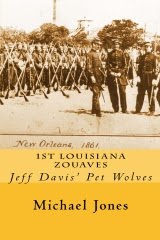
1862: Burnside's Army of the Potomac retreats back to Falmouth, Va., and after being signally defeated at the Battle of Fredericksburg by General Lee's Army of Northern Virginia. John W. Thompson Jr, a Federal soldier, wrote "Louisiana sent those famous cosmopolitan Zouaves called the Louisiana Tigers, and there were Florida troops who, undismayed in fire, stampeded the night after Fredericksburg, when the Aurora Borealis snapped and crackled over that field of the frozen dead hard by the Rappahannock ..." (Wikipedia) He may have been referring to the 1st Battalion (Coppens) Louisiana Zouaves (book-This is the story of one of the most unique and famed Louisiana units in the War for Southern Independence, the 1st Louisiana Zouaves. Made up largely of foreigners from many countries, the men wore the gaudy French Zouave uniform and fought with a fierce determination for the new Southern Republic. They fought in the Peninsula Campaign of 1862 and numerous other battles throughout the war. ).

1st Bn. La. (Coppens) Zouaves
(Library of Congress)
Click on the image to enlarge it.

Capt. Alfred Coppens, standing,
and his brother, Lt. Col. Gason Coppens.

In New Orleans, Federal Major General Banks takes command of the Army of the Gulf and the occupation of New Orleans. In Alexandria, La., Confederate Major General Richard Taylor is building the Army of Western Louisiana into one of the best in the Confederacy.

1863: General Joseph E. Johnston takes command of the Army of Tennessee from the failed General Braxton Bragg. Johnston rebuilds the morale of the army by treating the enlisted men more fairly, but not at the expense of proper military discipline, and working to better their food, clothing, and furlough opportunities.

CONFEDERATE GENERAL BIRTHDAYS, Dec. 16

Major General Henry Heth was born in 1825 in Chesterfield, Virginia. He graduated from West Point in the class of 1847, ranking at the bottom of his class. In his pre-war career in the U.S. Army, he saw action in the 1855 Battle of Ash Hollow against the Lakota. He resigned from the U.S. Army in 1861 and worked his way up to major general in the Confederate Army. Wounded at Gettysburg, he led his division at the Wilderness, Spotsylvania Court House, North Anna, Cold Harbor, and Petersburg and surrendered with General Lee at Appomattox. Postwar he worked in insurance and was a surveyor in the government. He died Sept. 27, 1899, in Washington, D.C., and is buried in Hollywood Cemetery, Richmond, Va.

Maj. Gen. Henry Heth
👱

Brigadier Samuel Garland Jr. was born this day in 1830 at Lynchburg, Virginia. He graduated from Virginia Military Institute in 1849 and became a lawyer. He was active in the prewar Virginia Militia and was the captain of his company. Garland's militia company joined the 11th Virginia Infantry in 1861 and he advanced brigadier general by May 5, 1862. His battles included First Manassas, Dranesville, Williamsburg, the Seven Days Battles, Second Manassas, Oak Grove, Beaver Dam Creek, Seven Pines, Gaines's Mill, and he was killed at the Battle of South Mountain, Md. on September 14, 1862. Garland was buried in Lynchburg in the Presbyterian Cemetery.

Brig. Gen. Samuel Garland
👱
Robert Selden Garnett was born in 1819 on this day at Essex, Virginia. He graduated from West Point in 1841, and served in the Mexican American War. Garnett was twice brevetted for his gallantry in the battles of Monterrey and Buena Vista. He resigned from the U.S. Army in April 1861, joined the Confederate Army and achieved the rank of brigadier genera.Garnett was in the Battle of Rich Mountain and was then killed in the Battle of Corrick's Ford, Virginia on July 13, 1861. Garnett was buried in Greenwood Cemetery, Brooklyn, New York City, N.Y. He was the first general officer killed in the war.
Brig. Gen. Robert S. Garnett 
👋

Monday, December 15, 2025

Today in History (general history)/ On This Day in Confederate History/ Confederate General Birthdays, December 15.

 Click ðŸ‘‰Today in History (general history) Dec. 15. 

On This Day in Confederate History, Dec. 15.

1862: Last Day of the Battle of Fredericksburg, Va.: Confederate Brig. Gen. Maxcy Gregg died on this day from his mortal wound in the Battle of Fredericksburg, Va. While Gregg and the other Confederate casualties were mourned in the South, the overwhelming and lopsided victory of Gen. Robert E. Lee and his men was greeted by Southerners with jubilation. Topping off other Confederate victories in the South in 1862, hopes of Southern Independence grew. In Tennessee, the Army of Tennessee under Gen. Braxton Bragg is in winter quarters in Middle Tennessee, but Federal Maj. Gen. William Rosecrans and his Army of the Cumberland is planning to attack Bragg late in the month.

Captain Frederick Waugh Smith
General Staff, Wounded Dec. 13, 1862
in the Battle of Fredericksburg, Va.
He was the son of Maj. Gen. Wm.
"Extra Billy" Smith. He survived the
war. Moved to South Africa, married,
returned to the U.S. and returned to
South Africa and died there in 1928, aged 85.
(Liljenquist Collection, Library of Congress/colorized with AI))

1863: The second day of the Battle of Bean's Station, Tenn. took place on this day. On the first day, Brig. Gen. Bushrod Johnson's, Brig. Gen. Lafayette McLaw's, and Brig. Gen. Jospeph Kershaw's Brigade of Lt. Gen. James Longstreet's Corps clashed with a brigade of Federal Brig. Gen. John Shackelford's Brigade of mounted and cavalry at Bean's Station. Johnson's Tennessee Brigade attacked from the South and Brig. Gen. Archibald Gracie's and Kershaw's brigades from the North. The blue coats fought a fighting retreat and broke through the encircling Confederates. The battle continued the next morning, the 15th, with Longstreet's Confederates advanced against the Federals but they managed to entrench before reinforcements arrived, and the Southerners were able to get their forces up. Confederate casualties totaled about 900 and Federal casualties about 700. Longstreet's Corps returned to Bean's Station which ended the Knoxville Campaign with a Confederate victory.

Brig. Gen. Bushrod Johnson


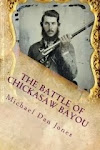
The Vicksburg 28th/29th Louisiana Infantry Regiment was involved in the 1862-63 defense of the "Gibraltar of the Mississippi," Vicksburg, from the first attack by the Union fleet of Admiral Farragut, to the final siege by Lt. Gen. Ulysses S. Grant. The regiment had its finest hour in the war during the Battle of Chickasaw Bayou, Miss., on Dec. 28, 1862, when it was compared to the Spartans at the Battle of Thermopylae in Ancient Greece, for holding off an enemy force many times its size. The regiment was made up of men from throughout Louisiana who endured incredible hardships and danger for their sacred cause of Southern Independence. Included in the book is a roster of the regiment, photographs, maps, footnotes, bibliography, and index.

👋

Confederate General Birthdays, Dec. 15.

None.

Sunday, December 14, 2025

Today in History (general history)/ On This Day in Confederate History/ Confederate General Birthdays, December 14.

Click ðŸ‘‰TODAY IN HISTORY (general history), Dec. 14.

ON THIS DAY IN CONFEDERATE HISTORY, Dec. 14.
1862: The fourth day of the Battle of Fredericksburg--General Burnside asked General Lee for a truce so they could recover their wounded from the battlefield. Confederate Sgt. Richard Rowland Kirkland of the 2nd South Carolina Infantry gathered canteens and went out to bring water and aid to the suffering wounded the night of the 13th and the morning of the 14th before the cease-fire. Seeing he was helping the Federal wounded, the Federals held their fire. He gained the name "Angel of Marye's Heights." The Federal Army was prepared to retreat. They suffered 12,653 casualties to 5,377 Confederates.
Kirkland Memorial
Fredericksburg & Spotsylvania National Military Park
(NPS Photo)
Click the image to enlarge
1863: The Battle of Bean's Station, Tenn.: Confederate Lt. Gen. James Longstreet with 12,000 men, but only 4,200 were engaged in the battle, attacked Federal Maj. Gen. James Shackelford's 5,000 cavalry and mounted infantry at Bean's Station in the Knoxville Campaign. After intense combat, the Yankees retreated. The Federals lost 115 men killed, wounded, and missing and the Confederates had a total of 222 casualties. 
Lt. General James Longstreet

CONFEDERATE GENERAL
 BIRTHDAYS, Dec. 14.

Brigadier General Daniel Harris Reynolds was born in 1832 in Centerburg, Ohio. Starting the war as a captain and colonel in the 1st Arkansas Mounted Rifles, he fought in the Battle of Oak Hill (Wilson's Creek) in Missouri in 1861, the Battle of Pea Ridge in Arkansas in 1862, the Tullahoma Campaign in 1863, and as a brigadier general in 1864, led a brigade in the Atlanta Campaign, the Franklin-Nashville Campaign in 1864, and the Carolinas Campaign in 1865. He lost his leg in the Battle of Bentonville at the end of the war. After the war, he served in the Arkansas Senate. He died on March 14, 1902, and is buried at Lake Village Cemetery.

Brig. Gen. Daniel H. Reynolds
👱

Brigadier General Allen Thomas was born in 1830 in Howard, Maryland. He was the colonel of the Vicksburg 28th Louisiana Infantry and led it gallantly at the Battle of Chickasaw Bayou in December 1862, and commanded it throughout the Siege of Vicksburg, Miss. in 1863. He was promoted to brigadier general and led a Louisiana Brigade in the Trans-Mississippi Department in the last year of the war. After the war, he became a professor of agriculture at LSU in Baton Rouge, coiner at the U.S. New Orleans Mint, and U.S. Minister to Venezuela. He moved to Waveland, Miss. in 1907 and died there on Dec. 3, 1907, and was buried at Ascension Catholic Church Cemetery in Donaldsonville, La.

Brig. Gen. Allen Thomas

The Vicksburg 28th/29th Louisiana Infantry Regiment was involved in the 1862-63 defense of the "Gibraltar of the Mississippi," Vicksburg, from the first attack by the Union fleet of Admiral Farragut, to the final siege by Lt. Gen. Ulysses S. Grant. The regiment had its finest hour in the war during the Battle of Chickasaw Bayou, Miss., on Dec. 28, 1862, when it was compared to the Spartans at the Battle of Thermopylae in Ancient Greece, for holding off an enemy force many times its size. The regiment was made up of men from throughout Louisiana who endured incredible hardships and danger for their sacred cause of Southern Independence. Included in the book is a roster of the regiment, photographs, maps, footnotes, bibliography, and index.

👋

Saturday, December 13, 2025

Today in History (general history)/ On This Day in Confederate History/ Confederate General Birthdays, December 13.

Click ðŸ‘‰Today in History: December 13 (historynet.com), Dec. 13

ON THIS DAY IN CONFEDERATE HISTORY, Dec. 13

1861: Battle of Camp Allegheny (Allegheny Mountain), Pocahontas County, (West) Virginia. Confederate Colonel Edward Johnson's Confederates repulsed an attack by Federal Brigadier General Robert Milroy's Federals. The Confederate casualties numbered 146 to the Federals numbered 137. The victory gained Johnson the nickname "Allegheny" Johnson. He was promoted to brigadier general dated from Dec. 13, 1861. Johnson would eventually become a major general and one of General Lee's best division commanders.

Maj. Gen. Edward "Allegheny" Johnson

1862: Third Day of the Battle of Fredericksburg -- General Burnsides launches his Federal Army of the Potomac on a futile and bloody charge on General Lee's Confederate Army of Northern Virginia firmly entrenched in Mayre's Heights. The charge is repulsed with massive casualties on the Federal side. But among the Confederate casualties is the mortally wounded Confederate Brig. Gen. Thomas Reade Rootes Cobb of Georgia, whose brigade was defending the "Sunken Road" part of the Confederate defense line. On the Federal side, Brig. Gen. George Dashiell Bayard was mortally wounded by an enemy shell. Also, Federal Brig. Conrad Feger Jackson was killed in action by a gunshot wound to the head in the attack.

Major Thomas A. Brander
was wounded Dec. 13, 1862
at the Battle of Fredericksburg, Va.
Co. A, 20th Va. Infantry Regiment
(Liljenquist Family Collection, Library of Congress)

1864: Confederate Fort McAllister, Savannah, Georgia, falls to Sherman's bummers. The fort was defended by only 230 Confederates under Maj. George Wayne Anderson. The fort was quickly overrun by the attacking Federals. Lt. Gen. William J. Hardee, seeing the futility in trying to defend Savannah with his greatly outnumbered 10,000-man garrison, chose to evacuate the city and save his army to fight another day. 

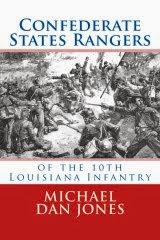
This is the history of Company K, Confederate States Rangers,

and the regiment to which it belonged, the 10th Louisiana Infantry.

It fought in nearly every major engagement of General Robert E. Lee's

Army of Northern Virginia, including the Yorktown Peninsula of 1862, the

Seven Days, Cedar Run, Second Manassas, Sharpsburg (Antietam),

Fredericksburg, Chancellorsville, Gettysburg, Mine Run, The Wilderness,

Spotsylvania Court House, the Shenandoah Valley Campaign of 1864,

Petersburg, and Appomattox. The book features photographs, illustrations,

maps, a bibliography, and an Index.

CONFEDERATE GENERAL BIRTHDAYS, Dec. 13

None.